
It’s time to bring that punchy mojo into your mixes with the best FET compressor plugins out there!
When I want my drums to slam, my vocals to pop, or my bass to punch through the mix, I always reach for a FET compressor every time. There’s just something about that fast attack, snappy response, and in-your-face character that makes things sound alive.
FET stands for Field Effect Transistor, a type of analog-style compression known for its ultra-fast response times and colorful, aggressive tone. But don’t worry, I’m not gonna get too nerdy here.
Just to say, the most iconic example is the legendary 1176, which has been slapped on everything from Led Zeppelin drums to modern pop vocals. I’ve used a bunch of these in both hardware and plugin form, and trust me, it’s better to start with guidance.
In 2026, we’re lucky to have a ton of killer options: some aim to faithfully recreate vintage tones, while others add modern touches like mix knobs, sidechain filtering, and even stereo width controls. I’ve tested a whole bunch of them in real sessions, and I’ve narrowed it down to the top 10 I’d actually use in my own mixes.
So, whether you’re producing pop, rock, metal, hip-hop, or ambient weirdness like I do, this list has something for you. Let’s break ‘em down one by one and find your new go-to FET crusher.
1. Pulsar Audio 1178
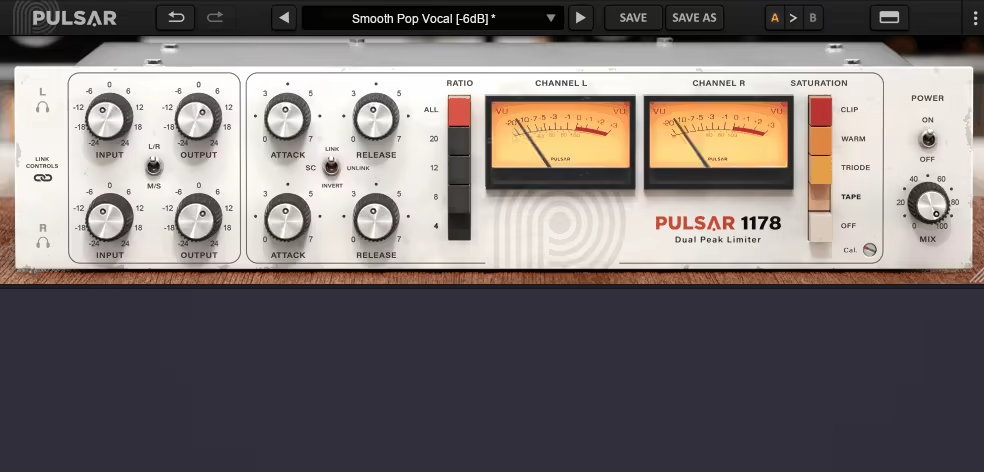
Out of all the FET compressor plugins I’ve played with, this one brings the muscle and the finesse as it’s modeled after the legendary 1178 hardware with some slick modern tricks that make it way more flexible than the old-school boxes added.
What I love about Pulsar 1178 is how it gives you that punchy, aggressive FET compression vibe but with way more control and clarity than you’d expect from a plugin emulation. Fast, snappy, and surprisingly clean when you need it to be.
The interface is slick and super intuitive; it nails that hardware look without feeling clunky or dated. Everything is laid out logically, and I never felt lost hunting for a knob or wondering what a control did.
Plus, it’s got meters that actually feel helpful (bless). The workflow’s fast and musical; I was smashing drums and taming vocals in minutes without fiddling endlessly. No weird menu diving. Just grab it, twist a few things, and boom!
- Modernized 1176 Emulation
This thing isn’t just a vintage rehash. The emulation is spot-on, but what sets it apart is the clarity. I ran it on a drum bus and got all the punch without the usual mud. Compared to some of the muddier 1176 clones I’ve used, Pulsar 1178 feels like it hits the gym and eats clean.
- Sidechain EQ and Lookahead
One of my favorites here is the sidechain filtering and lookahead in an 1176-style comp? Wild. I used the high-pass SC to stop the kick from triggering the comp so much and suddenly the bass was punchy and controlled. The lookahead makes it ridiculously good on transients too.
- Mix Knob and External Sidechain
That parallel compression workflow is baked right in. I love dialing in just enough of the smashed signal with the dry, and the external sidechain option opens up way more mix tricks.
Used it recently to duck synth pads behind a vocal without squashing the whole thing, so smooth.
Honestly, the only “con” I’ve run into is that it can eat up a bit more CPU if you push the oversampling up. Not a huge deal unless you’re running 20 of these on a potato. My tip? Freeze your tracks if you’re stacking ’em deep.
This one’s become my go-to for aggressive vocals, clacky bass guitars, and anything that needs to punch through without losing its soul.
It’s like having an angry but helpful studio assistant who always makes things sound better. If you’re doing rock, hip-hop, pop or anything with attitude, you’re gonna love this beast.
Pulsar 1178 comes in VST, AU, and AAX formats for macOS and Windows users.
2. Antelope Audio FET-A76

What really makes the FET-A76 stand out for me is how it nails that fierce, punchy sound from the classic FET era while running at near zero latency thanks to Antelope’s proprietary FPGA technology.
I love that FET-A76 is not just another digital emulation, I’m actually getting the analog character built directly into my hardware interface, so my drums and vocals instantly pop out of the speakers with authentic energy.
The “all-buttons” mode is a total game changer for crunchy, explosive compression, and every time I dial it in on drum room mics or electric guitars, I get a smile on my face.
The interface feels pretty familiar and super fast. I’ve used plenty of FET plugins and hardware, and I honestly appreciate how the FET-A76 delivers the classic layout: just input, output, ratio, and those beautifully tactile controls.
It’s always a breeze finding the sweet spot, and it never gets in the way of my workflow. Switching ratios is immediate (and the hidden “all-buttons” mode is both fun and powerful when I want to get wild).
- Ultra-Fast Attack for Peak Control
What I really enjoy about the FET-A76 is how unbelievably fast the attack is. I can tame even the sharpest snare hits or vocal transients in real time, which makes a huge difference with unruly material.
On drum busses, it grips the peaks in this super-musical way that feels totally natural, no lifeless pumping, just tight, punchy energy.
- All-Buttons Mode for Explosive Character
This is hands-down my favorite feature. When I enable all 4 ratio buttons, the FET-A76 shifts into this wild, aggressive beast.
There’s extra harmonic distortion that adds serious attitude. I love using this trick on drum rooms or electric guitars when I want them to punch through a rock mix. It’s crazy how it transforms even mediocre tracks into something bold and exciting.
- Analog Sound, Zero Latency
Because all the processing is happening right on the Antelope hardware, thanks to FPGA tech, there’s zero risk of CPU overload eating up my DAW performance.
I can stack the FET-A76 across as many tracks as I want and still track live instruments without any noticeable delay. That’s something I truly appreciate when I’m working on big sessions or collaborating in real time.
If there’s one downside, it’s that you need compatible Antelope Audio hardware to run it, so it’s not your average plugin that works in any DAW by itself. I recommend setting up your Antelope interface and session routing ahead of time to keep everything running smoothly.
FET-A76 has become my go-to whenever I need to mix elements to leap out and grab attention, especially on drums, bass, and lead vocals. I always stack it with an Opto 2A for lush vocals or use it all on its own when I need a track to sound urgent and alive.
FET-A76 comes as a DSP-powered effect on Antelope Audio hardware, available for macOS and Windows users.
3. Arturia FET-76

Arturia FET-76 is more than another 1176 clone; it’s like they took the revered DNA of the original, with all its aggressive punch and vibrant tone, and then infused it with a suite of genuinely innovative digital tools.
What immediately grabs me about the Arturia FET-76 is its incredibly powerful Advanced Sidechain Panel, featuring a versatile EQ and a unique Time Warp function. These aren’t just tacked-on extras; they fundamentally expand how I can use that classic, aggressive 1176 character.
The interface feels instantly familiar, with classic input/output, attack, release, and ratio controls, so I can dial in tones without overthinking. Then I pop open that advanced panel and boom, I’m tweaking sidechain EQ, messing with Time Warp pre-delay, and feeling like a mad scientist.
- TAE® Analog Modeling & “All Buttons” Mode
This thing absolutely nails the classic FET aggression; I love slamming the British mode on drum rooms or edgy vocals for that gritty, exploding-in-your-face sound.
- Advanced Sidechain Panel with Time Warp & EQ
The Time Warp function adds a creative delay before compression kicks in, and the sidechain EQ gives me laser precision. I’ve made basses pump beautifully with kicks or de-essed vocals like a boss.
- Modern Enhancements for Creative Flexibility
Having a Dry/Wet Mix knob built in is a total workflow win, and the Compression Range lets me tame things subtly or just run audio through for its tasty tone with no compression at all.
- Versatile Detection Modes & External Sidechain
With five detection modes including M/S processing, I get surgical on my stereo image, and the external sidechain input is perfect for classic ducking effects or funky rhythmic interplay.
Just a heads-up: Windows ARM processors aren’t supported, so double-check your system if that’s your setup. Honestly, I’ve been using the FET-76 on everything from vocals to buses. It gives me vintage character with modern freedom, and I’m here for it.
Arturia FET-76 comes in VST, AAX, Audio Unit, and NKS formats for macOS and Windows users.
4. Slate Digital FG-116

Well, if you like flipping between gritty vintage tones and clean, punchy modern flavors without having to load up a different plugin every time, this might be the FET compressor VST for you.
What makes the FG-116 Blue Series a total gem for me isn’t just its take on the 1176; it’s the fact that you get 4 different circuit models in one plugin, each with its own distinct vibe.
The layout sticks to that familiar 1176-style interface with input, output, attack, release, and ratio, but Slate adds handy extras like a Mix knob for parallel compression and a highpass sidechain filter, which seriously upgrade the workflow.
I even dig the little touches like the subtle “virtual wear” on each instance, it gives the plugin some personality that makes me smile.
- Four Distinct Circuit Models (Vintage & Modern)
This is the heart of the Blue Series, I use Vintage Circuit 1 when I want a mid-forward vocal bite, or switch to Modern Circuit 2 for a clean, controlled punch on my drum bus. Each model truly sounds different, so it’s like having a rack of hardware in one window.
- Built-in Mix Knob for Parallel Compression
The Mix knob is an absolute workflow booster, I’m constantly blending in crushed drums or vocals for that punchy, in-your-face vibe while still keeping some of the track’s natural feel.
- Highpass Sidechain Filter
With one click of the Sidechain button, low-end junk stops triggering the compressor. I use this all the time to keep kicks from making the whole mix pump like crazy.
- Modeled Analog Preamp Coloration
Here’s a neat trick: Shift-click the attack knob and you’re using the Blue Series just for analog-style saturation, no compression. I love doing this to add warmth or grit to clean sources, and each circuit adds its own flavor.
There’s no traditional all-buttons-in mode, which might bug hardcore 1176 fans, but honestly, I’ve never missed it with everything else on offer. My go-to move is testing each circuit on a track, they all shine in different situations, and that’s why this one’s a regular in my mix chain.
Slate Digital FG-116 Blue Series comes in AAX, VST2, VST3, and AU formats for macOS and Windows users (requires iLok).
5. Overloud Gem Comp76

Gem Comp76 grabs my attention because it offers something most 1176 plugins don’t: 3 distinct hardware revisions in one unit, paired with genuinely clever modern tools like Mid-Sides processing and parallel compression.
When I tested Comp76 I enjoyed being able to shape the vibe of a snare or vocal with a single click, without having to juggle different plugins.
The interface has a cool, relic-style design that doesn’t try too hard to mimic the original, which I actually find refreshing.
I especially enjoy the scribble strips, those little virtual notes are awesome for keeping track of my mix moves when I circle back to projects later. Heads up though: the attack and release knobs work in reverse from traditional 1176s (1 = fastest), which definitely threw me off at first.
- 3 Switchable 1176 Revisions
Having 3 hardware-style flavors in one plugin is a total workflow booster for me. I switch between them constantly to match the source, bright and punchy for snare, smoother and rounder for bass and it’s like carrying a rack of vintage gear in my DAW.
- Mid-Sides Processing & Parallel Knob
The M/S mode gives me creative freedom on stereo tracks, letting me tighten the center or widen the edges without compromise. And with the Parallel knob, I can dial in punchy compression without killing the vibe of the dry track, way faster than setting up a mix bus.
- Variable Saturation & Low-Frequency Sensitivity
I use the saturation control not just for analog warmth but to creatively shape tone, sometimes I leave compression off just to get that mojo. The low-frequency sensitivity is a must for clean, focused mixes, keeping the low end tight even under heavy compression.
- Low CPU Load
One thing I count on is how easy this plugin is on my system; I can stack it across sessions without even thinking. That’s a rare luxury when you’re juggling tons of tracks in a big mix.
The reversed knob behavior might take a minute to adjust to, but it’s a small tradeoff for the tone and flexibility you get. Gem Comp76 has earned its spot in my regular rotation, especially when I need that gritty FET snap with modern control baked in.
Overloud Gem Comp76 comes in AudioUnit, VST, and AAX plug-in formats for macOS and Windows users.
6. Softube FET Compressor Mk II

This compressor stands out with its ability to nail the sound of the legendary 1176 compressor while packing in a bunch of modern features that make it way more flexible in real-world mixes.
I’ve used plenty of vintage-style comps, but the FET Compressor Mk II gives me that classic aggression with way more control and it never feels like I’m wrestling with it.
The interface is clean and super easy to navigate. I love how everything is right there in front of you; no hidden menus, no weird signal flow tricks.
Dialing in compression feels quick and easy, and the added controls like Dry/Wet and Stereo Link don’t clutter things up. It’s designed to keep you moving, not fiddling.
- Ultra-fast 20-microsecond attack
This is no joke, this thing is really fast. I’ve used it on drums where I needed to lock down the transients instantly, and it just handles it like a champ without making the track sound over-squashed.
- Dual Drive with FET and Transformer options
The fact that you can choose between FET Drive, Transformer Drive, or blend both is killer.
I’ve added that extra harmonic push on bass tracks, then switched over to a smoother transformer tone for vocals, it’s like having multiple analog flavors baked into one box.
- High Frequency Make-up
Sometimes heavy compression eats the shimmer out of your highs, but this feature brings it back without sounding artificial. It’s a game-changer for preserving detail on overheads, acoustic guitars, and bright vocal takes.
The extra Low/High ratio switch is clever, but I’ll admit it took me a moment to realize it was expanding the ratio options it’s worth poking around to unlock all it can do. Still, once you do, you’ve got way more flexibility than the original ever offered.
I reach for this plugin when I want something that punches hard but still gives me room to fine-tune. Whether I’m smashing a room mic or finessing a lead vocal, it gives me classic tone with modern control. Definitely a go-to when I want vintage mojo without vintage limits.
Softube FET Compressor Mk II comes in VST, VST3, AU, and AAX formats for macOS and Windows users.
7. Waves CLA-76

For me Waves CLA-76 stands out with its smooth vintage vibe, as it gives you two of Chris Lord-Alge’s personal 1176s, “Bluey” and “Blacky,” each with a unique tone.
I like having these iconic flavors in one plugin, and being able to jump between “bite” and “smooth” at the click of a button makes mixing super intuitive.
The CLA-76 interface is dead-simple and fast, which I totally appreciate when I’m in the zone. Classic layout with Input, Output, Attack, Release, and Ratio buttons, but Waves spiced it up with modern extras like a Mix knob for parallel compression and a Trim control that saves me from constant gain staging.
- “Bluey” and “Blacky” Models for Tonal Versatility
I think this dual-model setup is a goldmine. “Bluey” slaps hard with that aggressive, forward character, which is amazing on snares and edgy vocals, while “Blacky” smooths things out with warmth and control, perfect for bass or more delicate vocal work.
- Exclusive ALL Ratio Mode for Explosive Sound
The ALL mode is pure chaos in the best way. When I need to destroy room mics or go full-on New York-style parallel crush, this thing absolutely delivers that signature slammed tone.
- Modeled Preamp Distortion for Aggressive Edge
This feature is secretly one of my favorite parts, as when I crank the input, I get that dirty, harmonic-rich edge that makes basslines gnarlier and vocals more alive. It’s compression and character in one go.
- Super-Fast Attack Time & Zero Latency
The lightning-fast attack lets me catch transient spikes like a ninja. Plus, the zero-latency performance means I can track with it in real time, which is a total game-changer in live or vocal sessions.
There’s also a pile of Chris Lord-Alge presets that I find really helpful for quick setups or inspiration.
My go-to move is to treat this like a tone box; push it hard, pick the model that suits the track’s mood, and ride that FET wave. CLA-76 is easily one of the most dependable, plug-and-play compressors in my toolbox.
CLA-76 comes in VST3, AAX, and AU (Mac only) formats for macOS and Windows users.
8. Universal Audio 1176
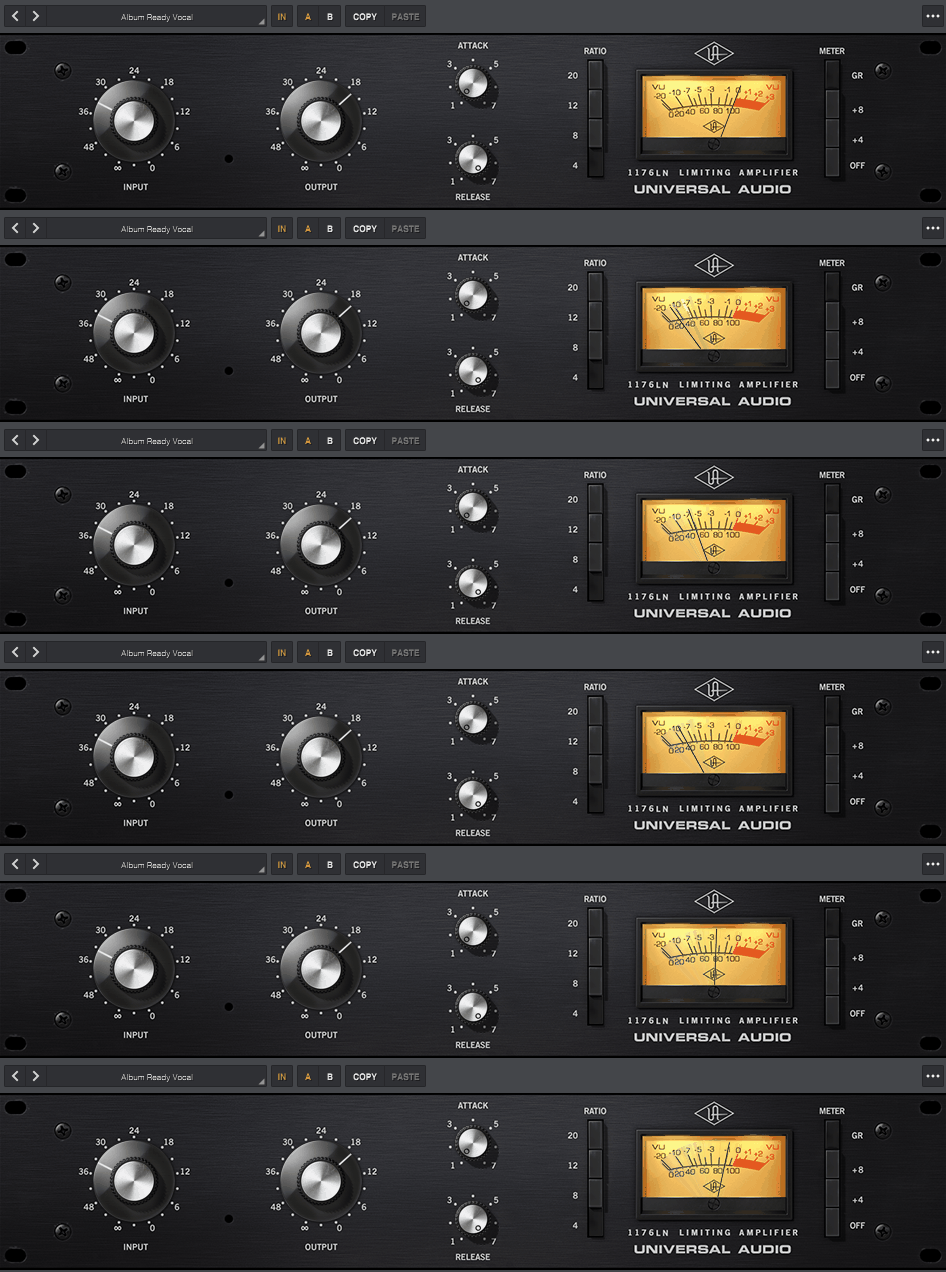
What sets the Universal Audio 1176 Classic Limiter Collection apart is how it gives you 3 legendary flavors of 1176 goodness in one beautifully modeled package.
With this collection, you’re stepping into a vintage gear museum where every model has its own story and vibe, and swapping between them depending on the mood of the track is fun and super handy.
The UA 1176 interface nails that iconic 1176 layout, which makes it super intuitive if you’ve used the hardware or even other emulations.
I especially dig the modern upgrades like the Mix knob and Sidechain Filter, letting me work faster and with more precision, while still getting that gritty FET magic. And props to UA for the improved VU meters; they look crisp and actually help with gain staging.
- 3 Distinct 1176 Revisions (Rev A, Rev E, 1176AE)
This is my favorite feature by a mile. I can jump from the crunchy, colorful Rev A to the tighter, more polished Rev E, or go with the 1176AE when I want slower attacks and a gentler touch and trust me, that flexibility is gold on vocals and drum busses.
- Authentic “All-Button” and “No Ratio” Modes
The All-Button mode slams like a champ, adding instant attitude and grit perfect for room mics or gnarly vocals. And I love the No Ratio trick for sneaking in some subtle transformer mojo without squashing the dynamics.
- Modern Workflow Enhancements: Mix Control & Sidechain Filter
The Mix knob is a total time-saver for parallel compression. I use it constantly on kick and bass to add punch without killing dynamics.
The Sidechain Filter, meanwhile, keeps the lows from going nuts and ruining everything below 100 Hz, which is super handy on full mixes or thick acoustic strums.
UA’s full-circuit emulation brings a richness and realism that’s hard to beat, it’s like they bottled the actual hardware soul. You don’t just hear compression; you hear vibe, saturation, and that analog glue we all chase.
There are also some great presets from big-name engineers that I like to use as jumping-off points.
My advice would be to treat each revision like a different color on your palette, and don’t be afraid to push them as they respond like the real deal. The 1176 Classic Limiter Collection is one of those rare plugins that actually lives up to the hardware legend.
Universal Audio 1176 is available in UAD Native (AAX, VST3, AU) and Apollo Realtime/UAD-2 formats for macOS and Windows (iLok account required).
9. T-Racks Black 76
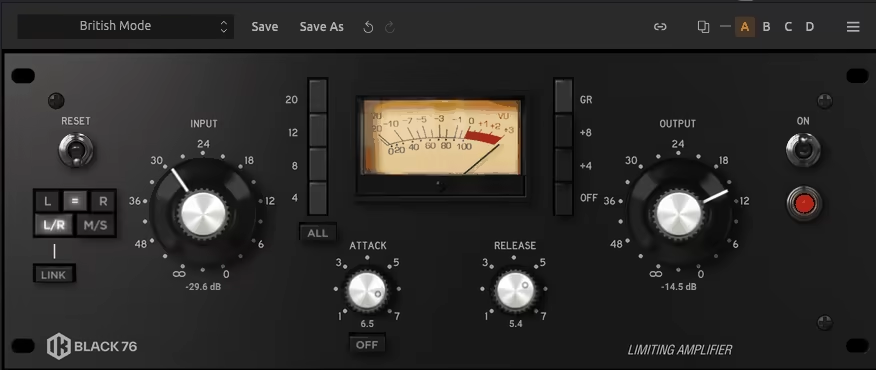
What I really appreciate about the IK Multimedia Black 76 is its straightforward dedication to capturing the essence of the classic “black face” UREI 1176LN, especially how it nails that famous “all-buttons-in” character for extreme compression.
When I need that aggressive, punchy FET sound without fuss, Black 76 delivers with a simple interface and a vibe that’s impressively close to the hardware.
The large, easy-to-navigate interface makes dialing in settings quick and intuitive. I enjoy the fine knob control for those precise tweaks.
It sticks to the classic 1176 layout, so if you know the hardware, you’ll feel right at home, plus it has the compressor ‘off’ setting on the attack control for running signal through the amp circuit, which I find great for subtle warmth.
- Authentic “All-Buttons-In” Mode
The Black 76 really shines with its dedicated “ALL” ratio button that nails that iconic, super-aggressive compression sound. I use this mode all the time on drum room mics to get that explosive punch or on parallel tracks to add serious attitude.
- Captures the “Black Face” Aggression and Speed
I’m consistently drawn to how the Black 76 captures that signature bright, forward character and the incredibly fast attack (down to 20 microseconds!) of the “black face” 1176LN.
When I need a vocal to sit right on top of a dense mix with authority, or a snare to have that immediate, sharp crack, this plugin delivers that distinct, focused energy.
- Intuitive Design with Generous Operating Range
What I really enjoy about working with this plugin is its large, uncluttered interface; it feels incredibly direct and responsive, almost like working with a well-maintained hardware unit.
I find it has a very forgiving operating range with plenty of headroom, meaning I can really dig in and drive the input hard to get that classic FET saturation without it feeling constricted or falling apart.
- M/S and L/R Processing Modes
Inside the T-RackS shell, you get M/S (Mid/Side) and L/R (Left/Right) processing modes, with independent settings for each channel if you want. This gives me more creative flexibility for stereo compression tricks that really open up the mix.
One thing I wish it had is a built-in mix knob for easy parallel compression, but it’s easy enough to handle that externally.
My tip? Don’t be shy to push the input level, as this compressor thrives when driven, and that’s where the magic happens. The Black 76 is my go-to when I want that classic FET aggression, fast and fuss-free.
IK Multimedia Black 76 comes in Audio Units, VST 2, VST 3, and AAX formats for both macOS and Windows users.
10. Lindell Audio 7X-500
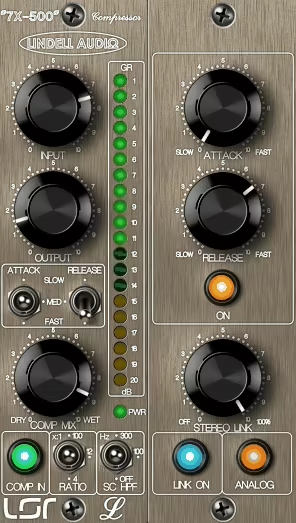
The moment I dropped the Lindell 7X-500 plugin on a drum bus and cranked that 100:1 ratio, I was hooked; it’s got this raw, unapologetically aggressive character clearly inspired by the 1176, but with Lindell’s own edgy twist.
Plus, they threw in genuinely useful extras like the Analog warmth switch that just makes everything feel way more alive.
What I personally love is how 7X-500 nails that super-fast, grabby FET sound for energetic rock vocals or explosive room mics, while letting me dial in continuously variable attack and release for precision, the original hardware or its 3-step emulation couldn’t touch.
There’s the Mix knob, essential for my parallel compression chains and that brilliant Analog button. Flicking that on adds subtle but tangible heft and vibe from the modeled transformer saturation that really glues things together, especially when I’m pushing the input hard.
- Aggressive FET Character with Lindell’s Edge
This thing bites in a way I find incredibly satisfying. It’s not a polite compressor, perfect when I want drums to explode or a bass guitar to snarl and cut through a dense mix.
- Variable Attack/Release
While the 3-step mode is great for quick settings, I spend most time with the continuous controls to perfectly tailor how the compressor grabs and lets go. This is clutch when shaping snappy snare transients or dialing room mic pump without sounding fake.
- Analog Warmth & Nonlinearities Switch
I’m a sucker for plugins with analog mojo, and this Analog button is fantastic. It’s not just generic saturation, I hear subtle hum and transformer rounding, especially when driven, adding great color even with minimal compression.
- Mix Control for Parallel Processing
The Mix control is implemented perfectly here. I crank compression with the 100:1 ratio for that smashed sound, then blend back dry signal to keep vocals huge but clear.
The adjustable stereo link is a nice touch for bus work, too. My workflow often starts with 3-step attack/release for speed, then switches to continuous mode to fine-tune the envelope.
The Lindell 7X-500 plugin has quickly become one of my favorite FET emulations because it delivers that raw, energetic sound I love, with smart, modern tools giving me killer control and creative options.
Lindell Audio 7X-500 Plugin comes in AAX, AU, and VST3 formats for macOS and Windows users.
Last Words
So there you have it, my top picks for FET compressor plugins that are absolutely killing it in 2026! As you can see, that legendary lightning-fast, punchy, and often beautifully aggressive character of FET compression is alive and well in the digital world.
What I truly love is the sheer variety available now; whether you’re after a painstakingly faithful recreation of a vintage icon or a modern take packed with innovative features, there’s a FET plugin out there ready to inject some serious energy and vibe into your tracks.
Ultimately, the “best” one is the one that inspires you and helps you get the sounds you’re hearing in your head. I really encourage you to demo a few of these, push them hard, and discover which one becomes your next go-to for adding that unmistakable FET magic to your mixes. Happy compressing, and I hope you find a new favorite (or ten!) to play with!
