
Let’s take a look at our list of the best spring reverb plugins to add that fairy dust to your mixes.
Whenever jamming in your studio, playing some sweet guitar licks, or smoothing out a nice vocal take, and you feel something missing in your tone, chances are it’s a good reverb you are lacking. It’s not the melody or the groove, but it’s often the vibe, the space, and the magic. So, step in the spring reverb!
I must say that spring reverb can be a bit of a mystery in the initial stages. It is a bit like trying to explain why pineapple on a pizza is controversial. It has this unique, almost twangy sound that’s a little unpredictable but incredibly charming.
With great plugins today, you can replicate that retro sound with zero back pain that you like from surf rock, lo-fi beats, or any shimmering effect.
So, like always, not all the spring reverb units are the same, and that is why I will take a walk in the road with my favorite spring reverb VSTs. I’ve tested these bad boys, argued with myself over the rankings, and maybe even shed a tear of joy over a particularly lush decay tail. So, get ready, and let’s go!
1. Pulsar Primavera

What sets Pulsar Audio’s Primavera apart is its ability to transform the charm of vintage spring reverb into something infinitely more versatile.
Instead of simply emulating classic hardware, Primavera reimagines it, giving you tools to tweak, manipulate, and enhance the reverb in ways traditional units never could.
I like the unique interface that feels both creative and purposeful. The layout organizes everything in a logical flow, making it easy to experiment without getting lost. And the ability to resize the GUI might be a small detail but it’s something I always appreciate in a plugin.
- 6 Signature Spring Tanks
Primavera offers 6 unique spring reverb emulations, each modeled with meticulous attention to the electronic and mechanical behavior of the original hardware.
From the lush Great British Spring to the gritty Tubby inspired by classic dub sounds, there’s a tank for every vibe. I’ve found the RE201 particularly versatile, working beautifully on vocals, synths, and guitars alike.
- Tension and Excitation Controls
The Tension knob adjusts the stiffness of the springs, letting you shape the reverb’s tonal character from bright and tight to soft and bass-heavy. The Excitation control adds a touch of spring “boing” for a playful or dramatic effect. It’s perfect for adding quirky textures or creating signature sound effects.
- Integrated Preamp with Drive and Saturation
Primavera spring reverb plugin includes a built-in preamp section that lets you add grit and warmth to your signal. With the choice between tube or germanium transistor saturation, you can dial in anything from subtle color to full-on distortion.
I can only say that its design with many controls can be overwhelming for beginners, but the presets make the workflow easier as they are good starting points for tweaking. Primavera is a great unit for those who want more control over their reverb sound.
Primavera is available in AAX, AU, VST2, and VST3 formats for macOS and Windows users.
2. Waves Magma Springs
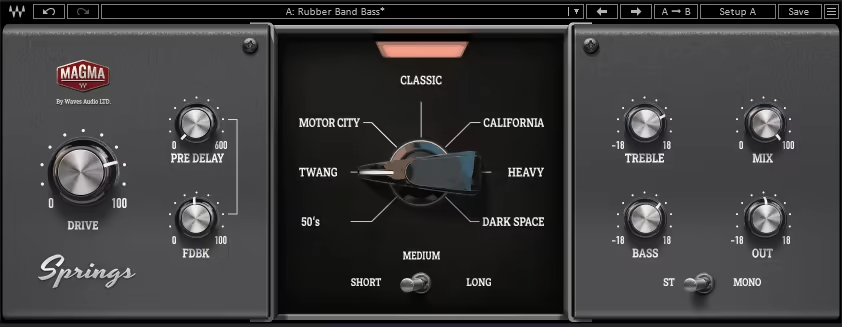
My first fellow plugin is Waves Magma Springs, which takes the vintage spring reverb magic and supercharges it.
I love how Magma Springs blends retro charm with modern flexibility. With its 7 unique spring models wrapped in analog Magma tube warmth, it offers a treasure trove of tones to explore.
The interface is simple, tactile, and fun. It is easy to do anything from dialing in a subtle ambiance to experimenting with wild creative effects using the Pre-Delay and Feedback controls, which are plugins that inspire you.
- 7 Unique Spring Models
Each spring unit brings its own personality to the table, from lush and mellow to bright and snappy. The choices are Medium, 50s, Twang, Motor City, Classic, California, Heavy, and Dark Space with self-explanatory names.
- Magma Analog Tube Sound
Well, let me tell you, the analog warmth here is real. It gives your reverb that rich, lived-in quality that makes it feel like it’s part of the track, not just sitting on top of it.
- Creative Controls for Wild FX
Pre-Delay and Feedback let you go beyond traditional spring reverb sounds. Think rhythmic reflections, cascading echoes, and otherworldly textures that bring a fresh twist to your mix.
I think the best use of Magma Springs is on guitars, but the real surprise is that it’s also fantastic for vocals, drums, and even synths. It adds a gritty, authentic vibe that modern reverbs just can’t replicate.
Honestly, the only downside might be that it’s so retro-focused. If you’re after pristine, crystal-clear reverbs, this isn’t it. But hey, that’s not the point of a spring reverb anyway.
If you’re ready to dive into the warm, clangy world of spring reverb, Magma Springs deserves a spot on your radar.
Waves Magma Springs is available in VST, AU, and AAX formats for macOS and Windows users.
3. Eventide Spring
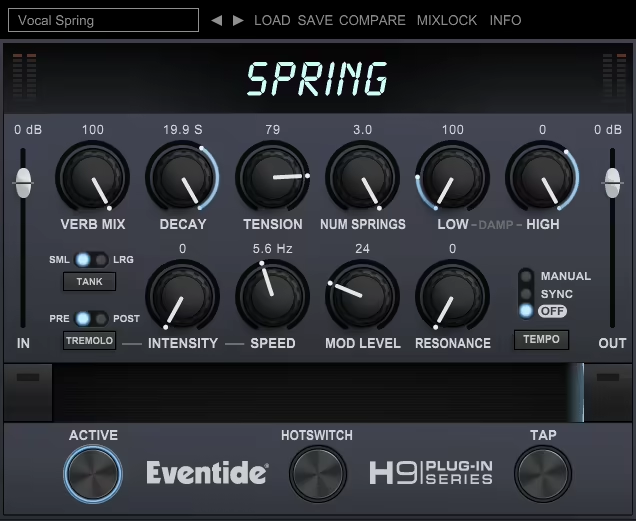
Eventide’s Spring reverb plugin is a creative tool for anyone looking to inject personality and movement into their sound.
From subtle ambiance to wild, metallic textures, this plugin takes the classic spring reverb concept and flips it on its head, offering a modern twist without losing its vintage soul. I like that you can craft reverb tones that can surprise you with a few tweaks, as you can’t always predict where this plugin lands.
What makes Spring so special? It’s not just about mimicking a spring tank; it’s about giving you the tools to sculpt and manipulate the sound in ways that weren’t possible with traditional hardware.
I think Eventide has taken the quirks and imperfections we love about spring reverb and turned them into features, making this plugin both nostalgic and forward-thinking.
- Tweakable Spring Parameters
You can adjust spring tension, number of springs, and even damping frequencies to craft anything from authentic amp sounds to wild experimental textures.
- Tremolo Integration
The built-in tremolo, which can be routed pre or post-reverb, adds a rhythmic pulse or subtle movement for extra depth, which I enjoyed working with to add some unique flavor to the effects.
- The Ribbon Controller
This feature allows me to morph seamlessly between two sets of settings in real time, creating dynamic transitions that are perfect for live performances or evolving mixes.
I like to use this unit on guitars to create evolving textures and even on drums to give them a trashy, lo-fi edge. The tempo-sync feature lets you lock reverb decay and tremolo rate to your DAW, making it easy to craft effects that sit perfectly in time with your track.
The only con is that there’s a slight learning curve if you’re new to spring reverb, especially with all the tweakable parameters. But, in the end, if you are after a versatile spring reverb VST to create different tones, this is a solid choice.
Eventide Spring is available as a VST2, VST3, AU, and AAX plugin for macOS and Windows users.
4. AudioThing Springs
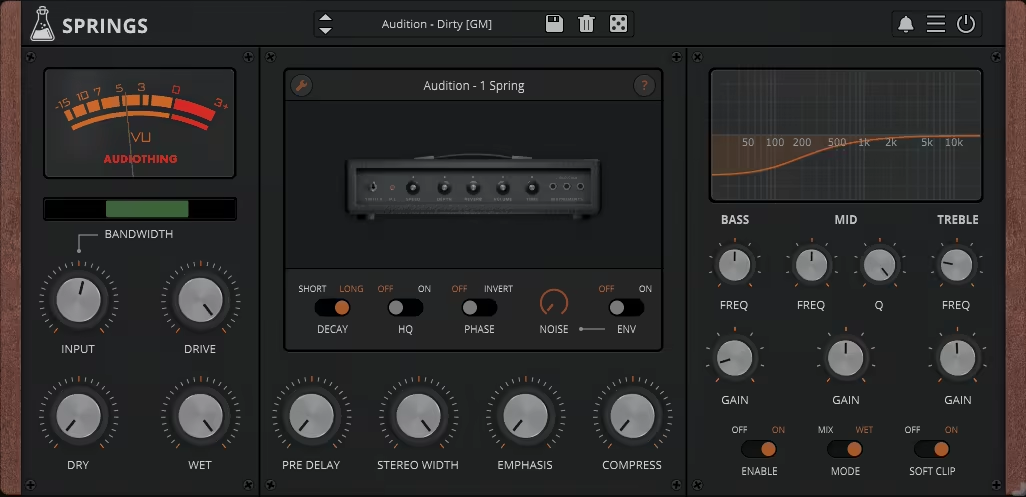
What I love about AudioThing Springs is how it doesn’t just stop at delivering vintage spring reverb as it elevates the whole experience with its built-in Baxandall EQ.
Most reverb plugins focus purely on the reverb itself, but this one gives you control over shaping the tone in a way that feels musical and intuitive.
For a control freak like me, this is a great tool, especially when I’m working on tracks that need both warmth and character without sounding overprocessed.
The Springs interface is clean and easy to navigate, which I appreciate when I’m juggling multiple plugins in a mix. Plus, the resizable window is a nice touch, no more squinting at tiny knobs on a cluttered screen.
- 8 Vintage Spring Reverbs
What sets this unit apart is its variety as each of the 8 emulations has a distinct personality, from the lush resonance of a six-spring pipe to the quirky charm of a tiny single-spring unit. The combination of convolution and modeling captures the authentic imperfections that give spring reverbs their character.
- Upgraded Baxandall EQ
The Baxandall EQ is where the magic happens. Unlike the standard two-band version found in vintage amps, Springs gives you a mid band with adjustable Q which lets me fine-tune the tone, whether I’m cutting boomy lows or enhancing shimmering highs.
- Bandwidth Control for Input Signal
The Bandwidth control lets you filter the signal going into the spring emulation, which is perfect for taming harshness or dialing in a more focused sound.
I’ve found this feature particularly useful when working with vocals or percussive elements that need clarity without losing vibe.
For me, AudioThing Springs is a good balance of versatility and ease of use. It also has a good range of presets and a randomizer for beginners to work with. It’s versatile enough to handle guitars, synths, drums, and even vocals, making it an essential tool in my plugin collection.
AudioThing Springs comes in VST2, VST3, AU, AAX, and CLAP formats for macOS and Windows users.
5. Arturia Rev SPRING-636
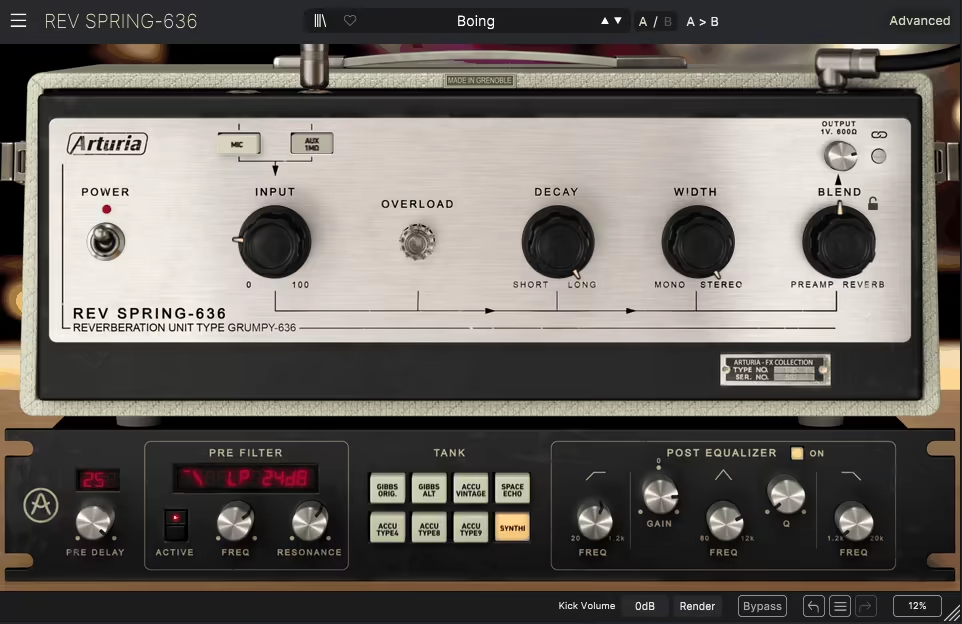
SPRING-636 takes the iconic Grampian 636 spring reverb and modernizes it, offering an authentic yet versatile tool for any mix.
For me, the highlight of Spring-636 is how it captures the distinctive spring “boing” while adding new, creative features. I love its vintage reggae tones while pushing the boundaries with experimental effects; it’s all here.
The interface is designed with a vintage vibe, following the original unit with clear controls and helpful tutorials. It aims for a balance between vintage sound and modern convenience, making it a joy to work with in any session.
- Legendary Grampian 636 Emulation
At the heart of this tool is the faithful recreation of the iconic Grampian spring reverb, beloved by artists like Pete Townshend and Lee “Scratch” Perry. Its distinct sound shaped the landscapes of reggae, ska, and dub.
- Germanium Vintage Preamp
The built-in Germanium preamp adds an unmistakable warmth and grit to your signal. I like to crank it up to unleash a crunchy, distorted tone, which is perfect for pushing the reverb into wild, experimental territory.
- 8 Swappable Spring Tanks
With 8 meticulously modeled spring tanks with unique characters to go from zingy and bright to dark and dense in seconds. I’ve found this variety especially useful when switching between genres or experimenting with different textures on synths and vocals.
I think the versatility here is the star of the show, as the ability to fine-tune pre-delay, pre-filters, and post-EQ means you can tailor the reverb to fit any mix. And if you’re feeling playful, the physical “kick” response lets you tap into the chaotic fun of actual spring tanks.
For producers, musicians, and sound designers alike, SPRING-636 isn’t just a plugin it’s an adventure. Yes, it might take some time to explore all the features, but for chasing classic tones or experimenting with modern sounds, this reverb delivers character, charm, and endless inspiration.
SPRING-636 is available in VST, AU, AAX, and NKS formats for macOS and Windows users.
6. Softube Spring Reverb
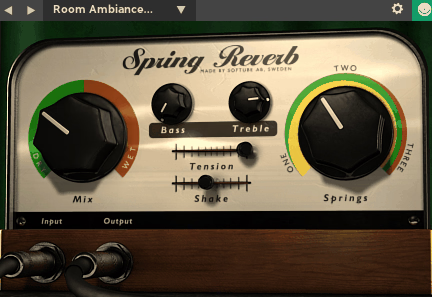
Softube’s Spring Reverb plugin isn’t just about capturing the twangy charm of a classic spring tank; it’s about giving you the tools to craft a sound that’s vibrant, gritty, and bursting with personality.
What really sets Spring Reverb apart is the Shake control, a fully automatable feature that replicates the explosive “kicking the amp” effect of real spring reverbs.
When I loaded up the plugin I immediately noticed that everything is logically laid out in the simple interface, and controls like Tension and Springs are right at your fingertips, making it easy to shape the reverb’s character without getting lost in menus.
- Adjustable Spring Count and Tension
The Springs knob lets you choose between 1 to 3 spring pairs, adjusting the sound from bright and pronounced to smooth and dense. You can pair this with the Tension control to fine-tune the reverb’s tone, tailoring it to your track’s needs.
- Authentic Tube Simulation
Modeled after the same technology used in Softube’s Amp Room, the plugin’s Bass and Treble controls allow you to shape the reverb’s tonal balance with vintage warmth and grit. I think it’s a simple yet powerful way to add depth to your mix.
- Shake Control
The Shake slider is a standout feature for me that simulates the chaotic “boing” of physically shaking a spring tank. This is ideal for dramatic builds or creative sound design; it’s a feature that takes this plugin beyond traditional reverb applications.
Softube’s Spring Reverb VST shines on guitar tracks, capturing the authentic vibe of a classic amp reverb. But it’s just as effective on vocals, snares, and percussion, adding a raw, edgy character that makes your mix stand out.
I enjoyed the plugin, as it is designed with spring reverb enthusiasts in mind, so its sound might not suit every mix. If you’re after pristine digital reverbs, this isn’t your tool.
Softube Spring Reverb is available in VST, VST3, AU, and AAX formats for macOS and Windows users.
7. Physical Audio Dual Spring Reverb
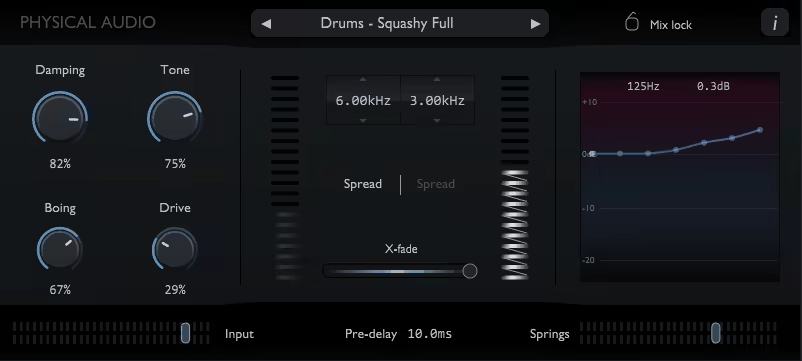
Dual Spring Reverb actually models wave propagation in helical springs, taking the spring reverb approach to a new horizon.
That’s right, Dual Spring Reverb is built on pure physics, which means you’re not just hearing a spring; you’re hearing how a spring works.
I love how this depth translates into such vibrant, natural tones that feel alive. By adding a colorful spectrum of overtones, I like how this unit shines with guitars, synths, and drums.
The interface’s main attraction is that it’s deeply customizable. You can instantly tweak everything from spring tension to chirp spread without feeling overwhelmed.
The design keeps things clean and user-friendly, so whether I’m going for subtle ambiance or playful chaos, dialing in the vibe I want is a breeze.
- Pure Physical Modeling of Springs
Dual Spring Reverb’s wave propagation modeling is the main actor here, as it’s the real deal in a virtual sense. You can control two separate springs independently, tweaking echo time and chirp cutoff frequency.
I like using these features to create everything from tight, springy slaps on drum tracks to lush, dripping textures on synths.
- Global Controls for Tone and Character
The global parameters like boing level (yes, that’s what it’s called) and damping give you the creative freedom to sculpt the reverb’s personality. For anything from smooth and mellow to bright and zippy, these controls let you tailor the effect precisely.
- 7-Band EQ for Precise Shaping
The built-in EQ is a great addition as after crafting the perfect spring tone; you can fine-tune it further, cutting out any unnecessary frequencies or boosting areas that make the reverb stand out in the mix.
In my experience, this EQ adds so much versatility, letting you adapt the effect to different instruments seamlessly.
For me, Dual Spring Reverb excels in percussion and guitars. On synths, it brings out a warm, vintage edge that’s hard to achieve otherwise. The chirp and tension control especially stand out when creating spacey or experimental soundscapes.
Dual Spring Reverb is available in VST3, AU, and AAX formats for macOS and Windows users.
8. Boz Digital Labs ReCoil
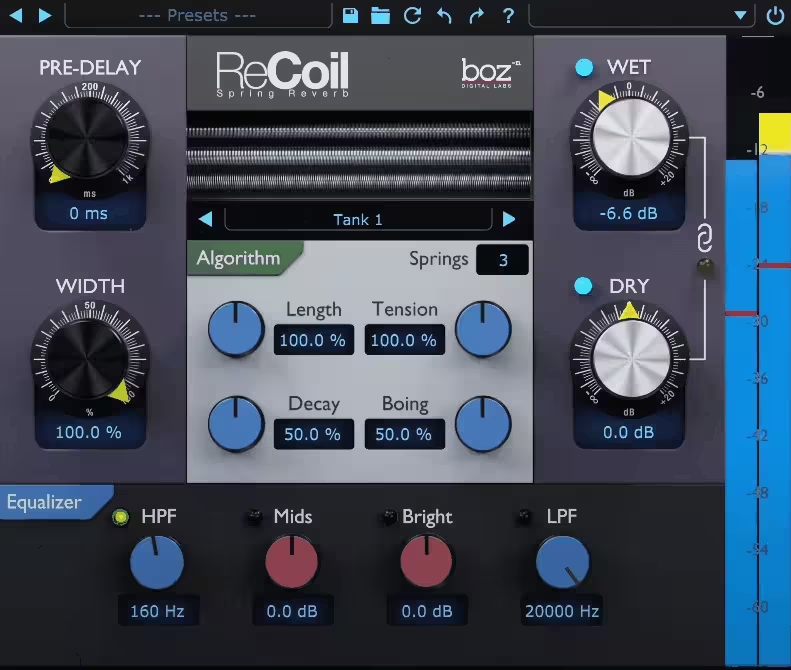
What I love about ReCoil is how it transforms the inherently mono spring reverb into a lush stereo effect while keeping its iconic, vintage vibe intact.
With its two modes, algorithmic for deep customization and impulse for hyper-realistic spring sounds, ReCoil is a nice plugin for chasing the boingy charm of vintage tanks or experimenting with quirky sources like Slinkies and doorstops.
Here, I especially appreciate the stereo configuration options, which let you pan each spring for a naturally wide sound. Also, the onboard 4-band EQ is another standout, providing quick, effective tonal shaping right within the plugin.
- Algorithmic and Impulse Modes
ReCoil lets you choose between algorithmic modeling for full creative control and impulse-based reverb for unmatched realism. I’ve used impulse mode for lifelike vintage sounds, while algorithmic mode shines for experimenting with decay, tension, and the delightfully named “boing” control.
- Wide Variety of Springs
ReCoil spring reverb plguin models everything from slinkies to doorstops, adding a playful, experimental edge. Switching between one to three springs adjusts the sound from highly “boingy” to smooth and diffuse, perfect for tailoring the vibe to your track.
- True Stereo Reverb
Most spring reverbs are mono, but this unit takes things up a notch by letting you pan each spring independently, creating a rich, wide stereo image that works beautifully on guitars, synths, and more.
The playful variety of spring models may feel gimmicky to purists, but for anyone who loves creative sound design, it’s a dream.
I gotta say that, beginners might find the tweakability overwhelming, but the presets provide a solid starting point.
With its blend of realism, creative tools, and stereo flexibility, this is a versatile plugin that’s equally at home in vintage-inspired and contemporary productions.
Boz Digital Labs ReCoil is available in VST2.4, VST3, AU, and AAX formats for macOS and Windows users.
9. Fuse Audio VREV-305 Vintage Spring Reverb
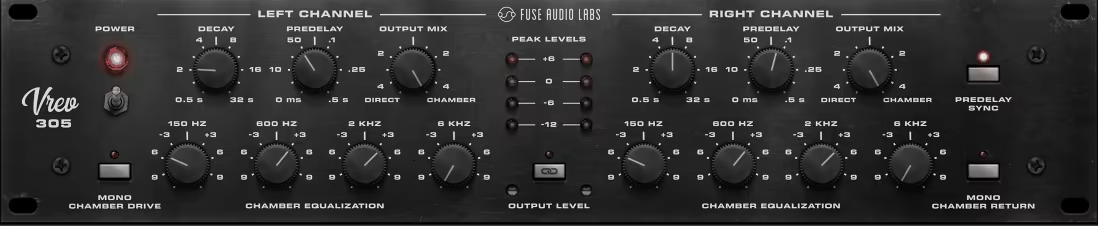
VREV-305 takes its place in the list for its unique 12-spring design, which creates dense, plate-like reverb tails without the typical twangy artifacts you’d expect from a spring reverb VST.
Modeled after an ultra-rare 1970s spring chamber reverb system, VREV-305 is a fantastic option for adding harmonic richness and lush textures to your mix. I love how the logarithmic timing of the springs, mirroring a musical scale, results in reverb tails that feel organic and musical.
The interface comes with a tweaking matrix that makes customization quick and intuitive. It’s handy for dialing in rich, atmospheric effects without getting bogged down in excessive controls.
The separate pre-delay for each channel and stereo-summing options are standout features, giving you fine-tuned control over spatial effects and mix balance.
- 12-Spring Chamber Design
This reverb’s 12-spring topology is unlike anything I’ve used before. The tempered timing of the springs creates lush, dense tails with a harmonic complexity that feels musical and inspiring. It’s perfect for creating plate-like ambiance with a unique spring flavor.
- Customizable Decay and EQ
Unlike the hardware it’s based on, VREV-305 frees you from fixed decay times, offering full control over reverb length. The interactive EQ section helps a lot, letting you adapt the reverb’s tone to fit with your source material, whether it’s drums, guitars, or vocals.
- Stereo and Pre-Delay Controls
The per-channel pre-delay and stereo summing options give this plugin a level of spatial control that’s rare in spring reverbs. I’ve used this feature to create wide, immersive mixes that retain clarity and detail.
I’ve found it especially useful for atmospheric tracks, where its rich, musical tails add a sense of space and dimension to guitars and synths.
On the dark side of the moon, its minimalist control scheme might feel limiting to users looking for extensive tweaking options. However, the simplicity is a feature, not a bug, as it lets you focus on crafting great sound quickly and effectively. If you love spring and plate reverbs but want something fresh and unique, VREV-305 is a no-brainer.
VREV-305 is available in VST2, VST3, AU, and AAX formats for macOS and Windows users.
10. U-he Twangström
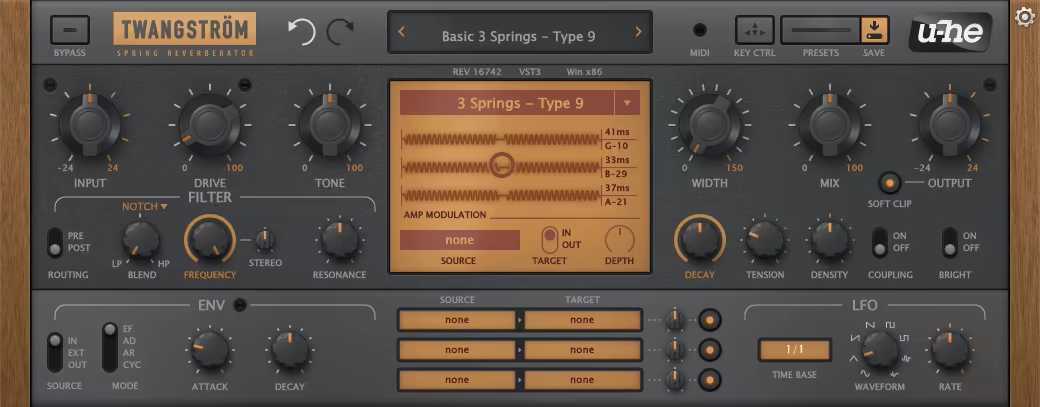
The last spring reverb plugin, U-he Twangström, stands out because of its deep modulation capabilities and physical modeling approach to spring reverb.
Twangström doesn’t just emulate the sound of spring reverb but recreates its physics. I love how it captures the quirky, twangy charm of real springs while letting you push the effect far beyond traditional boundaries, creating a balance between versatility and sound.
The interface is packed with controls, giving users many creative possibilities. From shaping the spring behavior to tweaking the multi-mode filter and envelope, everything feels accessible without being overwhelming. The modulation matrix is a highlight, offering endless ways to bring movement and life to your reverb.
- Realistic Spring Physics Modeling
Twangström uses physical modeling to simulate wave propagation through springs, resulting in a highly dynamic and realistic reverb. The Tank Controls let you adjust parameters like Decay, Tension, and Density, giving you precise control over the reverb’s character.
- Shake Control for Spring Twang
The Shake parameter emulates the chaotic, rattling effect of shaking a real spring tank. It’s a fun feature that can be manually controlled or modulated for subtle agitation or dramatic explosions.
Each time, I loved adding it to create an organic, unpredictable quality to synths and guitars.
- Advanced Modulation and Filtering
The built-in modulation matrix allows you to automate and modulate nearly every parameter, including the Shake. Pair this with the multi-mode filter, which morphs smoothly between low-pass, high-pass, and band-pass, and you’ve got a sound design powerhouse.
In the end, I think this is a solid spring reverb for chasing vintage tones or crafting unique ambiances, as its combination of realism, modulation, and flexibility makes it a good addition to your plugin arsenal.
Twangström is available in CLAP, AU, VST2, VST3, and AAX formats for macOS, Windows, and Linux users.
