
If you’re chasing that iconic, punchy sound that seems to make vocals leap out of the mix or give drums a solid smack, here are the top 1176 compressors you can find today.
1176 compressors have been studio staples for decades, known for their lightning-fast attack and rich, colorful tone. Luckily for us, the VST world has done a solid job of recreating it.
Before we jump in, let’s break it down real quick: What exactly is a 1176 VST plugin? At its core, it’s a software version of the legendary UREI 1176 hardware compressor, first introduced in the late ’60s.
The original unit is famous for its ultra-fast attack, aggressive character, and ability to add serious vibe without muddying things up. Whether you’re smoothing out vocals, slamming a snare drum, or gluing a mix bus together, these plugins are built to bring that same grit, punch, and energy, minus the rack space (and the four-figure price tag).
I’ve spent a lot of time trying different versions; some are super faithful to the original hardware, others take creative liberties. In 2026, there are more options than ever, and a few of them genuinely impressed me.
So here it is, my favorites among the 1176 VST plugins you can grab. No hype, no filler….just great tools that deliver. Let’s go!
1. Pulsar Smasher
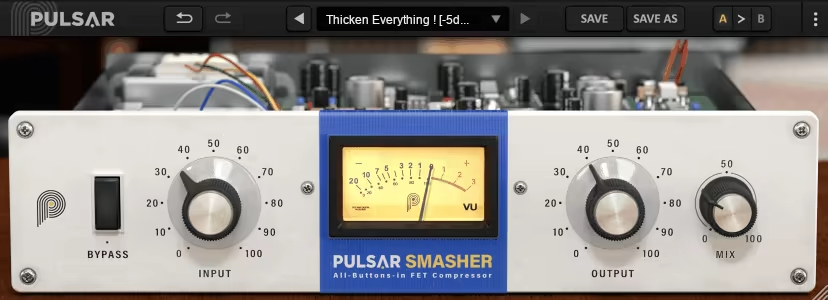
So here’s my first pick, Pulsar Smasher, and the reason is that it doesn’t care about nuance, subtlety, or being polite, and honestly, I kinda love that.
This thing is basically a one-trick pony, but that trick is absolutely wrecking your audio in the best way possible. If you’ve ever smashed all the buttons on a 1176 and thought, “yeah, this is the sound,” then you’ll feel right at home.
When I loaded Pulsar Smasher up for the first time, I actually laughed a little. There’s barely anything on the UI; no attack, no release, no ratio knobs, just an input, output, mix knob, and a bypass switch. That’s it.
It felt like Pulsar was saying, “Trust me, you don’t need controls, you need chaos.” And you know what? They weren’t wrong.
- All Buttons In Compression
This is the core of the whole thing. It’s stuck in “British mode” 24/7, so there’s no off switch for the madness. I tossed it on a drum buss, pushed the input, and it instantly gave me that crunchy, snappy, over-the-top sound I’m always chasing with parallel compression.
- Mix Knob for Parallel Stuff
Since it goes full savage mode out of the gate, the mix knob is a lifesaver. I usually blend in just enough to get that dirty glue without completely nuking my transients. It works great on bass too when I want that gritty, fuzzy vibe.
- Topology Preservation Tech
Look, I’m not gonna pretend I understand the science behind it, but it sounds killer. Whatever Pulsar did under the hood makes this thing feel legit, like hardware vibes without the rack-mounted price tag.
- Low CPU Hit
I’ve dropped this on multiple tracks in a session and my CPU barely blinked. That’s a win in my book, especially when I’m knee-deep in 10 drum takes and 3 guitar layers that all need attitude.
- Stereo Linked Sidechain
I didn’t think I’d care about this until I noticed my stereo image wasn’t going all wobbly under heavy compression. It just sounds tighter and more focused when you’re squashing stuff hard.
Now, to be clear, this thing isn’t a gentle tool. It’s not something I’d use on vocals unless I was going for that over-the-radio-distortion thing. I mean, there’s no way to fine-tune the envelope, it’s just more input = more destruction. And yeah, sometimes that’s exactly what I want.
So no, it’s not versatile. But I keep reaching for it when my drums are sounding too clean or when I want to make a bass part punch harder. I even tried it on some electric guitars and got this raw, blown-out tone that sat in the mix perfectly.
Honestly, Smasher feels more like a creative effect than a standard compressor. I don’t use it on every track, but when I do, it adds a character I can’t get from anything else in my plugin folder.
Smasher comes in VST2.4, VST3, AU, and AAX formats for macOS and Windows users.
2. Arturia Comp FET-76

There’s something about the FET-A76 that instantly grabs me; it nails that punchy, aggressive vibe of vintage FET compressors, but runs at practically zero latency thanks to Antelope’s slick FPGA tech.
I really like FET-76 as I’m actually getting that rich analog mojo baked right into my Antelope hardware, and it seriously makes my drums and vocals pop with real, in-your-face character.
- All-Buttons Mode
This feature alone is worth the hype. Hitting all 4 ratio buttons kicks it into beast mode, giving me that gritty, explosive compression that makes drum room mics or guitars come alive.
There’s this beautiful harmonic crunch that turns even flat takes into something gnarly and bold. Every time I flip that switch, I can’t help but grin.
- Familiar Interface, Zero Fuss
I’ve used a ton of FET-style gear, and I love how the FET-A76 sticks to the classic layout: input, output, ratio, and that silky-smooth tweakability.
It’s super fast to dial in, and I never feel like I’m fighting the controls. Switching ratios is instant, and discovering the hidden “all-buttons” trick adds some real spice to my sessions.
- Fast Attack That Tames Peaks
One thing that really impresses me is how lightning-quick the attack is. I can easily wrangle unruly snares or vocal spikes in real time, it makes a big difference when things start getting wild.
On drum busses, it clamps down just right without over-compression, just tight, musical punch that keeps the energy flowing.
- Analog Tone, No CPU Stress
Since all the heavy lifting happens on Antelope’s FPGA-powered hardware, I don’t have to worry about crushing my CPU.
I can slap the FET-A76 on multiple tracks and still record live without lag, which is a total lifesaver during big projects or collabs.
If there’s one catch, it’s that you need an Antelope Audio interface to run this thing; it’s not your average plugin you can throw into any DAW.
FET-A76 is my weapon when I want elements to jump out of the mix. I love stacking it with an Opto 2A for silky vocals or running it solo when I need raw, urgent energy.
FET-A76 is available as a DSP-powered plugin via Antelope hardware and works great on both macOS and Windows.
3. Waves CLA-76

For me, the Waves CLA-76 is a total beast when it comes to that old-school compressor mojo.
What really sets it apart is that it brings you not just one, but two legendary 1176 units straight from Chris Lord-Alge’s personal stash, “Bluey” and “Blacky.”
Each has its own sonic attitude and I love being able to jump from gritty and aggressive to warm and buttery with a single click.
The CLA-76 layout is simple and speedy; exactly what I want when I’m deep in the mixing zone.
You’ve got the familiar controls: Input, Output, Attack, Release, and Ratio, but Waves didn’t stop there. They added some really practical upgrades like a Blend knob for instant parallel compression and a Level Trim that saves me from fiddling with gain staging every five minutes.
- Dual Tone Engines: “Bluey” & “Blacky”
I can’t overstate how handy this two-model setup is. “Bluey” brings a raw, upfront energy that makes snares snap and vocals pop, while “Blacky” smooths things out beautifully, my go-to for rounding off bass and mellow vocal takes.
- Crush Mode: All-Ratios Engaged
This thing goes full-on wild when you engage all the ratio buttons at once. It’s a chaos switch, in a good way, and I use it all the time for smashing drum rooms or cooking up aggressive parallel channels.
- Analog Grit with Input Drive
Hidden gem right here: crank the input, and you unlock a gnarly, analog-style saturation that adds edge and attitude. It’s like getting a preamp and compressor rolled into one, and it makes everything sound more alive.
- Fast-Attack and Live-Ready Performance
The attack time is lightning-quick, and it grabs transients like a hawk. And with zero latency, I can actually use it while tracking, which is a game-changer for vocals and live instruments.
One thing I really appreciate is the collection of Chris Lord-Alge presets, which are great for quickly starting a mix or finding a creative spark.
Personally, I treat the CLA-76 more like a tone sculptor than just a compressor. I love pushing it to its limits, picking whichever model fits the mood, and letting it add that signature FET flavor.
The CLA-76 is one of the most dependable tools in my arsenal, and it keeps earning its spot in my go-to chain.
CLA-76 comes in VST3, AAX, and AU (Mac only) formats for macOS and Windows users.
4. T-Racks 6 Black 76
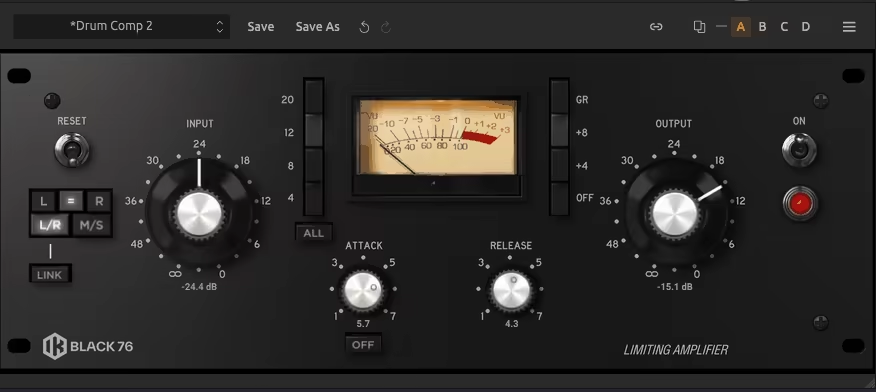
The main reason IK Multimedia Black 76 made it to the list is how laser-focused it is on recreating that legendary “black face” UREI 1176LN sound.
When I need that aggressive, in-your-face compression, especially the “all-buttons-in” madness, Black 76 delivers without any fluff.
The interface is big, clean, and fast to use. It sticks to the classic 1176 layout, which is pretty cool.
I also love that you can bypass the compression via the attack knob trick, which lets you run audio through the circuit for some subtle analog-style warmth.
- All-In Ratio Mode
This is the Black ’76’s party trick. The dedicated ALL button activates that explosive, over-the-top compression made famous by the original. I use this on drum rooms, parallel buses, or anything that needs to sound massive and gritty.
- Classic FET Tone with Ultra-Fast Attack
This plugin nails the signature forward sound of the “black face” 1176LN, with an attack time that dips down to a ridiculous 20 microseconds.
When I want a vocal to slice through or a snare to pop hard, this thing comes through like a champ.
- Streamlined Interface, Flexible Gain Staging
The large and uncluttered GUI makes it a breeze to dial in settings. I love how responsive the controls feel, and there’s plenty of headroom so I can slam the input for that gritty FET saturation without things falling apart.
- M/S and L/R Stereo Processing Inside T-RackS
Used within the T-RackS shell, you get access to Mid/Side and Left/Right modes, with independent controls for each channel.
This gives me the freedom to do some creative stereo shaping like smashing the mids while letting the sides breathe.
One downside I found is the lack of built-in mix knob for quick parallel compression, but that’s easy to work around with a utility plugin or bus routing.
My tip would be to crank the input, pick the right ratio, and don’t be afraid to go hard, this plugin loves being pushed.
When I want that classic 1176 aggression with zero fuss, the Black 76 is a good choice. It’s fast, punchy, and gets me damn close to the hardware without the rack space or the price tag.
IK Multimedia Black 76 comes in Audio Units, VST 2, VST 3, and AAX formats for both macOS and Windows users.
5. UAD 1176
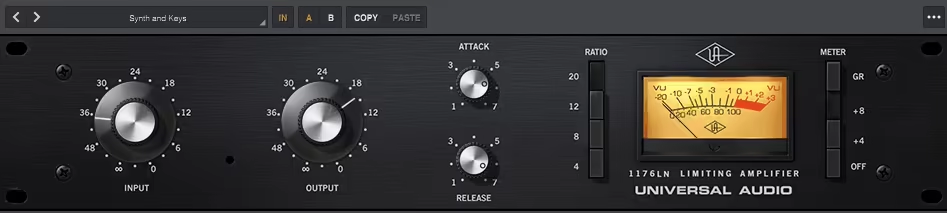
There’s something deeply satisfying about reaching for a plugin and instantly knowing it’ll deliver exactly what the track needs. That’s what the UAD 1176 Classic Limiter Collection does for me.
What makes the UAD 1176 Classic Limiter Collection a total standout is the way it delivers 3 iconic versions of the 1176 in one polished, beautifully modeled suite. It’s like having a mini museum of FET legends at your fingertips, each with its own personality, color, and quirks.
I also love the thoughtful modern additions, like the Mix knob and Sidechain Filter, which add flexibility without messing with the vintage feel. And can I should mention the VU meters; crisp, clean, and actually readable.
- 3 Legendary Revisions in One Plugin
I’m always flipping between Rev A, Rev E, and 1176AE depending on what the mix calls for. Rev A is raw and colorful, Rev E has more polish and control, and AE offers that rare, slower attack, which is awesome when I want things to breathe a bit more.
- Authentic All-Button and No-Ratio Tricks
The All-Button mode gives me that smashed, gritty chaos that works wonders on room mics, parallel drums, or distorted vocals.
The No-Ratio mode is sneakily powerful as you can run a signal through it and enjoy that transformer warmth without clamping down on dynamics.
- Modern Enhancements for Flexible Mixing
The Mix knob saves me a ton of time when I want to dial in some parallel compression without setting up an extra bus.
And the Sidechain Filter keeps the low-end clean by ignoring sub-bass when triggering the compressor. It’s super helpful on full mixes or strummed guitars.
- Full Circuit Modeling and Analog-Style Saturation
What sets this collection apart is how much detail UA packed into the emulation. You don’t just hear compression, cause you hear color, saturation, and that signature analog glue when you push the input hard.
- Factory Presets from Pro Engineers
There are tons of great starting points baked in, from big-name mixers. I’ll often load one up for inspiration and tweak from there. It’s a solid workflow booster when I’m in a creative rut.
My favorite way to use this collection is to treat each model like a different paintbrush. Each one reacts differently to transients, tone, and gain. I test them all, push them hard, and trust them to add something musical every time.
The 1176 Classic Limiter Collection doesn’t just emulate a famous compressor, it delivers 3 studio legends in one plugin, complete with modern tools and serious sonic mojo. This one’s earned a permanent spot in my mixing toolbox.
Universal Audio 1176 is available in UAD Native (AAX, VST3, AU) and Apollo Realtime/UAD-2 formats for macOS and Windows (iLok account required).
6. Brainworx Purple Audio MC77
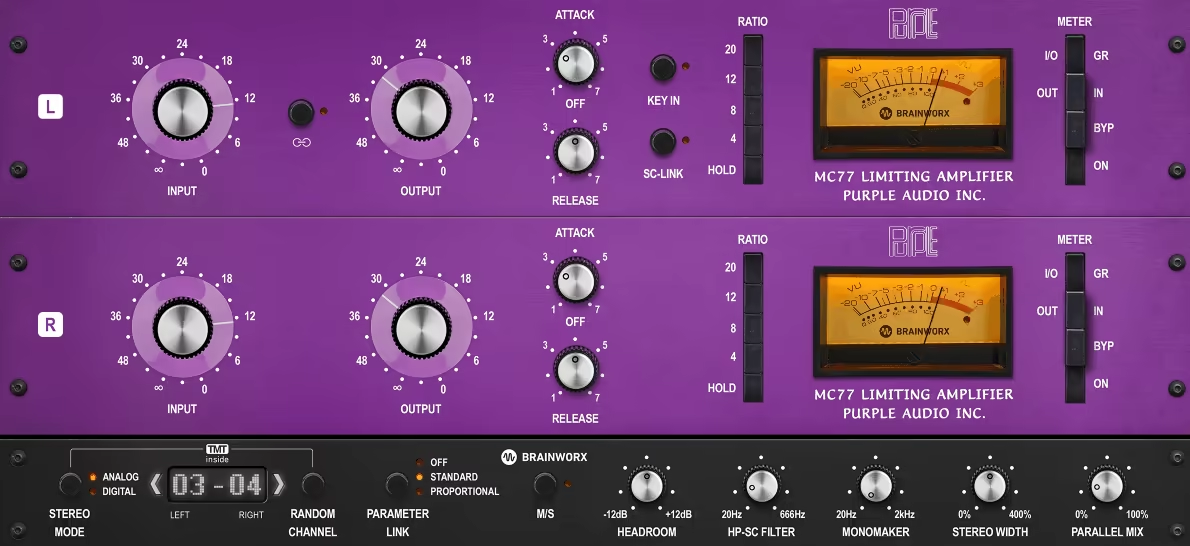
As the name suggests, Brainworx Purple Audio MC77 is a stellar recreation of the Purple Audio MC77 limiter, an enhanced version of the classic “E” revision 1176.
MC77 delivers that iconic, lightning-fast FET compression with some modern extras added. I find it provides the classic tone I love, but with practical additions that make it incredibly versatile in my workflow.
Opening the plugin, you’ll see a familiar 1176 layout, but with powerful extra controls from Brainworx.
It offers the incredibly quick attack and flexible release of the original FET design, allowing for transparent dynamics or extreme brick-wall limiting, which is perfect for drums, bass, and vocals. I appreciate how intuitive it feels, like a piece of classic hardware upgraded for modern production.
- Tolerance Modeling Technology
This technology by Brainworx emulates the subtle sonic variations found between individual hardware units, giving you 32 different analog units in one plugin.
I use this on stereo buses or drums to introduce an authentic analog feel, where each channel has its own unique character, just like in a high-end studio.
- M/S Processing, Mono-Maker, and Stereo Width
These are fantastic tools for shaping your soundstage. M/S processing allows independent compression of mid and side signals, offering immense control over stereo image.
I liked the Mono-Maker to tighten low frequencies by collapsing them to mono, then subtly spread the rest of the mix with the Stereo Width control.
- Parallel Mix & Headroom Control
The Parallel Mix knob is incredibly convenient for blending the compressed and dry signals, eliminating the need for separate parallel routing. It is great for adding punch to drums or making bass sound huge.
The Headroom knob lets you adjust the plugin’s internal operating level, allowing you to drive the emulation for more color or keep it clean, all while maintaining consistent gain staging.
- All Button Mode and Sidechain Filters
Like any faithful 1176 emulation, the MC77 can be aggressive, especially in “All Button Mode.” However, its added features like sidechain filters (excellent for preventing low-end pumping) and the parallel mix knob provide much more flexibility.
Don’t hesitate to push the Input and use the Headroom knob to hear how the emulation reacts; it’s a great way to explore its sonic character.
I’ve found it truly shines on vocals, giving them presence and bite, and it’s a go-to for adding punch to kicks and snares. For bass guitars, it adds nice warmth and aggressive drive.
It’s a powerful tool that excels on individual tracks, buses, and for parallel processing. If you need a versatile, characterful compressor that can go from subtle glue to full-on sonic mayhem, this is definitely one to check out.
The Brainworx MC77 comes in AAX, AU, and VST3 formats.
7. Analog Obsession FETish (FREE)
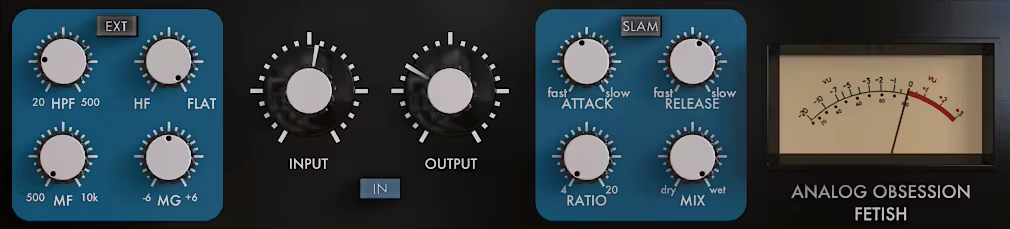
My free pick, Analog Obsession FETISH is a compelling free FET-style compressor (surprised right?), offering a notable option among 1176 emulations.
While I wouldn’t place FETish against premium plugins, it performs quite comparably to other free alternatives like BF76, and I particularly appreciate how it handles metering, which I’ve found to be a common issue with similar freeware.
When I open FETISH, I see a familiar 1176-inspired layout with input/output, attack/release, and ratio switches.
I quickly noticed a unique twist: the attack and release knobs operate opposite to a traditional 1176, but they’re clearly labeled “Slow” and “Fast,” which I actually find pretty intuitive.
I’ve found it to be surprisingly versatile, capable of everything from subtle compression to full-on limiting, adding a nice hint of creamy distortion when pushed.
- 1176-Inspired Design
FETISH provides the classic control scheme and layout of the legendary 1176LN limiting amplifier. This means users can access that iconic FET compression character through standard input/output, attack/release, and ratio controls.
I think this design makes the classic 1176 workflow incredibly accessible, especially for those looking for a free option.
- Opposite-Working Attack & Release
Unlike some other 1176 emulations, FETISH’s attack and release knobs function in reverse, from “Slow” to “Fast.” However, the clear labeling prevents any confusion, and I actually find this approach quite straightforward when I’m dialing in my desired compression speed.
- Versatile Compression Character
Despite being a free plugin, FETISH delivers a good range of compression quality. I’ve used it for subtle gain reduction when I want gentle shaping, but it can also go over-the-top for heavy limiting, introducing a pleasing creamy distortion at more extreme settings.
I found it to be a decent mixing tool that imparted a subtle yet effective “analog vibe” to my tracks.
One thing I keep in mind is that while FETISH is a robust free option, it won’t perfectly replicate the exact character or nuance of premium 1176 emulations. Also, I’ve noticed the gain reduction meter, though functional, can appear a bit murky and blurred, but that’s a minor detail considering it’s free.
Analog Obsession FETISH successfully captures the essence of the 1176’s control scheme and offers a versatile compression character with an appealing analog flavor for free.
FETISH comes in 32-bit and 64-bit VST/AU/AAX formats for PC and Mac.
Last Words
If you’re chasing that punchy, in-your-face FET compression, these 1176 plugin beasts bring the heat in their own unique ways. Whether you’re vibing with vintage grit, surgical control, or modern extras like mix knobs and sidechain filters, there’s a flavor here for every mix and mood.
I’ve found myself swapping between these depending on the vibe, sometimes I want the colorful chaos of “All-Buttons-In”, other times I need smooth control on a bass or vocal. The best part? You don’t need to remortgage your studio to get that legendary 1176 tone anymore.
So go on; crank those inputs, smash some drums, and let your favorite flavor of compression do the talking!
