
If you are looking for a new opto compressor to get that iconic silk sound, here is my pick for the best opto compressor plugins in 2026.
If you’re chasing that silky, musical compression vibe, optical compressors are one of the best tools in the kit. They react smoothly to dynamics, preserve tone, and add a subtle sheen that makes vocals, guitars and even full mixes sound alive.
These plugins aren’t just for tracking vocals or bass; they work wonders on mix buses and mastering chains too. What I love is that they offer smooth gain reduction while keeping detail intact, and many include modern features like parallel blending and side-chain filtering.
In this 2026 roundup, I’ve gathered the 9 best opto compressor plugins I’ve been using lately, those that bring character and clarity without turning on the “squash everything” switch. Some are refined classics, others fresh releases that offer new twists on the opto concept. Let’s dive in and explore the compressors that deliver that silk sound and professional polish every time!
1. NEOLD U2A

What instantly drew me to NEOLD U2A is how it bridges eras; it’s a love letter to the legendary CLA-2A, rebuilt for today’s producers.
I like how U2A delivers that unmistakable opto smoothness while giving me modern precision and tonal control that hardware could never dream of. It’s the kind of compressor that can add polish to a vocal, punch to a drum bus, or subtle glue to an entire mix, all without losing its soul.
The interface feels immediately familiar yet refreshingly streamlined. Every control has a purpose, and nothing gets in the way of creativity. I like that it’s both visually inviting and efficient, just a handful of knobs that respond beautifully and make you want to keep tweaking until the mix feels right.
- Aging Control
The Aging knob is the unique feature here as it lets me move between a clean, freshly calibrated CLA-2A and a worn-in vintage unit with all its quirks intact. I often park it somewhere in the middle to get that perfect balance of warmth and detail; it’s like time-travel for tone.
- Drive & Recovery
The addition of Drive and Recovery knobs turns U2A into something much more flexible than its inspiration.
Drive adds color and harmonic saturation independently from compression, while Recovery reshapes release times for snappier or smoother responses. Together, they let me fine-tune how the compressor breathes with the track, which is amazing on vocals or acoustic guitars.
- R37 Filter & Mix Knob
The R37 sidechain filter lets me control which frequencies trigger compression, so the low end doesn’t pull everything down.
Then there’s the Mix knob, my favorite for parallel work, which lets me blend in just enough compression to make the track sit perfectly without sounding squashed. Those two controls alone make it feel far more musical and responsive than a standard emulation.
If I had to nitpick, I wish there were a few built-in oversampling options, but the sound quality is already so refined that I rarely miss it.
The U2A finds that sweet spot between vintage warmth and modern workflow, making it a go-to for smooth, organic compression on nearly any source.
U2A comes in AAX, AU, and VST3 formats for macOS (12–15) and Windows (10–11).
2. Shadow Hills OptoMax

What sets the Shadow Hills OptoMax apart is how it reinvents optical compression without losing the rich analog soul that made the brand iconic.
OptoMax takes the optical section from the legendary Shadow Hills Mastering Compressor and reimagines it as a full plugin, tuned for both precision and personality. It feels less like another emulation and more like a creative evolution of a classic design, familiar, but brimming with new sonic possibilities.
The interface mirrors that philosophy, as it’s sleek and tactile, with a modern, resizable layout that invites you to dive in. The expandable lower panel gives quick access to deeper functions like harmonics, transformer drive, and sidechain shaping, and it all feels fast, fluid, and built for real-world mixing and mastering.
- Expanded Ratio & Speed Controls
These parameters go far beyond the traditionalCLA-2A-style simplicity. With Ratio and Speed, I can move from slow, blooming opto compression to snappy, aggressive control, great for anything from lush vocals to tight drum buses. It’s like having multiple compressor personalities inside one plugin.
- Push Mode & Tone Sculpting
Engage Push Mode, and OptoMax instantly behaves like a limiter with ultra-fast timing, ideal for modern, forward mixes. Then the Tone control, with its Air and Smooth settings, lets me tailor the top end effortlessly. Air brings sheen and clarity to vocals, while Smooth adds warmth and control to harsh highs.
- Transformer Modes & Harmonic Shaping
This is where the Shadow Hills signature magic lives. Switching between Nickel, Iron, and Steel transformer models changes the harmonic color of the entire mix.
Combined with Harmonics, TX Drive, and Headroom controls, I can dial in subtle saturation or thick analog punch with surgical precision.
The OptoMax also offers advanced sidechain filters, parallel mix control, and artist presets by Bryan Reilly, all designed for instant results.
If there’s a plugin that perfectly bridges analog charm and digital freedom, this is it. I’ve found myself reaching for it on vocals, mix buses, and even full masters whenever I want that unmistakable Shadow Hills glow.
OptoMax comes in VST2, VST3, AU, and AAX formats for macOS (12 and higher) and Windows (10 and higher).
3. Softube OPTO Compressor

Softube OPTO Compressor stands out as it isn’t just recreating anCLA-2A, it rethinks it.
Softube didn’t stop at cloning the original circuitry; they expanded its behavior with time-adjustable attack and release, something the real unit never had. That simple addition makes it far more adaptable, letting me dial in the same vintage tone but with modern precision.
The OPTO Compressor layout feels classic but refined. Two main knobs give that familiar “set-and-forget” vibe, while new workflow features, like Drive, Sidechain, and Dry/Wet, sit comfortably within reach. It looks vintage, but it behaves like a 2026 tool built for fast, focused mixing.
- Time Control for Response Shaping
Unlike the original’s fixed timing, the Time control lets me adjust the compressor’s overall reaction speed.
On slow settings, it gives that signature, lazy optical bloom; on faster ones, it can handle transient-heavy sources with ease. This single knob turns a once-specialized vocal compressor into a versatile mix weapon.
- Drive and Harmonic Character
The Drive knob separates coloration from compression, something engineers have begged for since the ‘60s. I can add that rich, tube-saturated tone without changing the gain reduction curve, perfect for warming sterile digital recordings. It’s subtle but makes everything feel more tactile and alive.
- Stereo Link, High-Frequency Make-Up, and Sidechain Filtering
The Stereo Link switch and Sidechain filters give me full control over how the compressor reacts to different frequency ranges and channels.
Meanwhile, High-Frequency Make-Up restores the air lost during compression, especially handy on vocals or acoustic guitars. Together, they make the OPTO Compressor one of the most balanced optical emulations out there.
It’s not the plugin you grab for aggressive pumping, it’s the one you use when you want tone, consistency, and polish that feels natural. Every knob seems tuned to keep you in that musical sweet spot where compression stops being noticeable and starts sounding expensive.
OPTO Compressor comes in AAX, AU, VST, and VST3 formats for macOS (Ventura 13, Sonoma 14, Sequoia 15) and Windows 10–11 users.
4. Waves CLA-2A

Waves worked with Chris Lord-Alge to capture not just the circuitry of his favorite vintageCLA-2A, but the exact way he uses it.
The result is a plug-in that instantly gives vocals and bass that unmistakable radio-ready thickness you’ve heard on thousands of records.
The CLA-2A interface stays true to the original, two big knobs and a mode switch, but beneath that simplicity are modern touches that make it far more flexible.
The metering is smooth and responsive, and the Mix, Trim, and Sidechain Filter controls give you detailed command over tone and balance. I like that it keeps the old-school vibe while quietly packing in tools that speed up real-world sessions.
- CLA Presets for Every Source
The built-in presets from Chris Lord-Alge are a goldmine. I often start with his vocal chain when I want something upfront and consistent, then tweak the reduction for dynamics. There are also bass, guitar, and drum presets that instantly hit that familiar, punchy CLA sound.
- Tube Modeling and Dual Modes
The tube emulation delivers a creamy saturation that’s subtle but addictive. I can switch between Compressor and Limiter modes depending on whether I’m shaping tone or locking in dynamics. It’s natural even under heavy gain reduction, giving that signature “forward but soft” quality the realCLA-2A is known for.
- Modern Workflow Upgrades
With Mix control, sidechain filtering, and zero-latency operation, this plugin fits effortlessly into modern setups. I use parallel compression right inside the instance, no routing needed. It’s that combination of classic behavior and modern convenience that keeps me reaching for it.
If there’s a limit, it’s that the simplicity can tempt you to overuse it, but used tastefully, it’s magic. I love it for smoothing vocals, gluing bass, or adding polish to acoustic instruments. Few compressors make a track sound “finished” this quickly.
CLA-2A comes in AAX, AU, VST, and VST3 formats for macOS and Windows users.
5. Tone Empire E-LUX
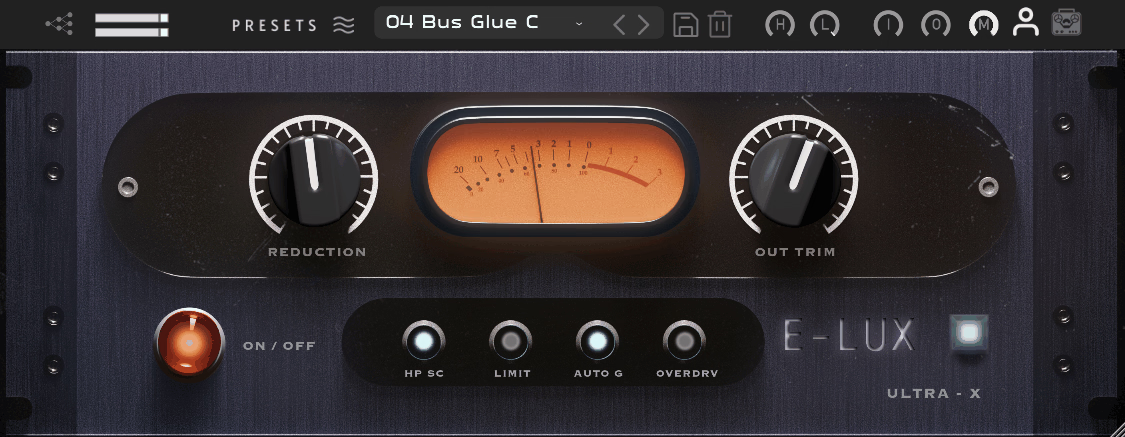
The E-LUX isn’t trying to be another LA-2A clone; it’s Tone Empire’s high-end reinterpretation of tube-based optical compression using modern neural modeling.
Instead of chasing nostalgia, E-LUX focuses on capturing the harmonic depth of 5751 and 6922 dual triode tubes while letting you shape tone with surgical precision. That mix of lush analog tone and flexible digital behavior makes it one of the most distinctive new optical compressors I’ve used this year.
The interface offers dedicated switches for Compression, Limit, and Overdrive, with the 80 Hz sidechain option placed right where you need it. The workflow is fast: dial your threshold, engage Overdrive, and it feels like you’ve just sent your track through a boutique analog rack.
- Neural Tube Modeling (NM2)
Tone Empire’s NM2 modeling engine is what gives E-LUX its lifelike tube tone. It doesn’t just simulate compression curves; it captures how the tubes react dynamically, so the tone blooms naturally as the signal pushes harder. On vocals, it delivers that glossy smoothness that usually takes analog gear (and patience) to achieve.
- Overdrive Transformer Stage
The Overdrive mode is the hidden gem here. It drives the virtual iron transformers to introduce controlled saturation, thickening low mids, and adding density without harshness. On bass and drum buses, it behaves like a soft limiter and tone enhancer rolled into one, gluing everything together effortlessly.
- Sidechain Control and Dual Modes
The 80 Hz high-pass sidechain prevents low-end energy from triggering excessive compression, which is crucial when you’re mastering or working on full mixes. I often toggle between 3:1 Compression for vocals and 10:1 Limit for drum buses; both feel distinct, with the limiter tightening things up while keeping transients intact.
E-LUX feels deliberate; every feature has a sonic purpose. It’s the kind of plugin you reach for when you need that boutique, tube-driven smoothness but also want control over how it reacts. Not flashy, not vintage cosplay, just refined, modern optical compression that earns the “luxury” label.
E-LUX comes in VST3, AU, and AAX formats for macOS (Mojave or later, Apple Silicon and Intel) and Windows 10 or later.
6. Slate Digital Custom Opto Compressor

The Custom Opto is Slate Digital’s modern reimagining of the LA-2A, designed for engineers who love that tube-optical smoothness but want finer control over how it behaves.
Instead of being locked into the traditional two-mode operation, Custom Opto adds continuous Speed and Ratio controls, giving it a range that stretches from soft, leveling compression to punchy, aggressive limiting. It keeps the musicality of the original circuit while expanding it into territory where you’d usually reach for a 1176 or VCA.
In the Virtual Mix Rack, the module feels fluid and intuitive. The familiar Peak Reduction and Output Gain knobs remain front and center, but the new layout integrates features like Mix, Stereo Link, and the standout Tone selector without adding clutter.
The GUI makes it easy to dial in character quickly, whether you’re working on vocals, guitars, or a drum bus; the workflow feels immediate and musical.
- Speed Control for Dynamic Shaping
The Speed knob simultaneously adjusts attack and release times, letting you tailor the compressor’s responsiveness without sacrificing the optical vibe.
On slower settings, it behaves like a classic LA-2A, wrapping around transients; push it faster, and it becomes surprisingly punchy. This single control makes Custom Opto far more versatile than its inspiration.
- Continuously Variable Ratio
Unlike the fixed Compress/Limit toggle of the hardware, Custom Opto’s Ratio knob moves smoothly from 1:1 to 10:1. This allows me to fine-tune compression intensity for each source, gentle glue on a vocal or firm control on a snare. It’s the difference between an “always-on” sweetener and a true mix-shaping tool.
- Tone Control with Five Character Profiles
The 5-way Tone selector (Flat, Smooth, Warm, Aggro, Airy) transforms how the sidechain reacts, effectively letting you EQ the compressor’s behavior. “Smooth” softens the midrange for silky vocals,
“Aggro” sharpens attack for drums, and “Airy” adds lift on acoustic instruments or overheads. I often exaggerate it temporarily to hear what it’s doing, then back it down for the perfect balance.
There’s a slight harmonic lift baked into the sound even with no gain reduction, giving mixes a forward presence that feels flattering rather than hyped.
I wouldn’t mind separate attack and release controls for surgical work, but honestly, the simplicity keeps it fast and musical. Custom Opto nails that rare mix of warmth, tone, and precision that makes it equally at home on lead vocals, bass, or entire stems.
Custom Opto comes in AAX, AU, and VST formats for macOS and Windows via the Slate Virtual Mix Rack.
7. UVI Opal

What makes UVI Opal special is how boldly it redefines what an optical compressor can be.
Instead of another fixed, vintage-style leveller, Opal gives you 7 distinct optical models, each taken from a real hardware unit in different studios around the world. That single design choice turns it from a faithful LA-2A homage into a flexible tone-shaping tool that can go from delicate vocal smoothing to aggressive drum control.
The interface balances modern precision with classic workflow. You get familiar Peak Reduction and Make-Up Gain controls front and center, but around them are tools that stretch what “opto” even means, Responsiveness, Mid Presence, Tube Simulation, and a gain-reduction graph that visualizes what your ears are hearing.
- 7 Optical Models
Each profile, from NYC Custom to DTW Vintage, behaves differently in envelope shape and harmonic color.
The differences aren’t subtle; switching models can transform a polite vocal compressor into a transient-snapping drum tamer. It’s like having seven personalities of the LA-2A in one window.
- Responsiveness Control
This parameter rewrites the rulebook for optical compression. By adjusting Responsiveness, you can change both attack and release behavior dynamically. I found this invaluable for tailoring the plugin to different material, faster for punchy sources like percussion, slower for leveling vocals or bass.
- Drive and Tube Simulation
Engage Tube Simulation and turn up Drive to introduce analog-style harmonics. The saturation here isn’t cosmetic; it thickens mids and adds subtle bloom at higher levels.
It’s one of the few opto compressors where you can dial in the exact amount of tube color you want instead of being stuck with a fixed circuit flavor.
I’ve used Opal on vocals, bass, and acoustic instruments, and it consistently delivers a refined, “record-ready” polish.
The only downside is the Treble switch, which interacts oddly with the tube stage; disable both, and you’ll notice a drop in top-end clarity. Still, the sheer adaptability makes it a standout among optical compressors, especially for those who’ve always found the LA-2A too limited or slow.
Opal comes in VST3, AU, and AAX formats for macOS and Windows.
8. ACME Audio Opticom XLA-3

The Acme Opticom XLA-3 is one of those rare compressors that feels more like an instrument than a utility.
XLA-3 is loud, unapologetic, and deeply colored a “guitar amp of compressors,” as the hardware’s reputation suggests. The plugin version, developed by Brainworx, captures that raw analog swagger perfectly while adding digital flexibility that makes it usable far beyond its vintage roots.
The interface stays true to the original’s minimal control scheme: just Input, Response, and Output. But beneath that simplicity lies serious tone-shaping power with 3 compression modes (Slow, Normal, and Fast) determining how the opto-electric circuit reacts, ranging from syrupy smooth leveling to gritty, explosive dynamics.
The plugin adds modern extras like parallel mix, output trim, and an adjustable noise floor, turning what was once a one-trick pony into a multi-purpose creative compressor.
- Three-Mode Opto Circuit
Each mode engages a different optical cell behavior, giving you clean, warm, or aggressive compression curves.
The Slow mode gently massages transients, perfect for vocals or pads; Normal adds harmonic texture; and Fast mode gets punchy enough for drums or bass. I often blend modes with the Mix knob to keep the transient definition while adding analog glue.
- Amp Mode for Color Without Compression
Flip on Amp Mode, and the XLA-3 transforms into a tube-style saturator. It bypasses gain reduction entirely, letting you use the circuit purely for tone. It’s one of my favorite tricks for adding density to guitars or vocals that feel too sterile; you get warmth and harmonics without squashing dynamics.
- Saturation and Gain Staging
Push the Output Gain to saturate, then back off with Output Trim to balance levels. The saturation feels authentic, thick low mids and creamy harmonics that never get harsh. It’s especially flattering on drum buses, where it adds punch and body reminiscent of analog tape.
There’s nothing “transparent” about this compressor, and that’s exactly the point. It’s built to add attitude, depth, and movement, not to disappear. If you want smooth, invisible gain control, look elsewhere. But if you want your tracks to sound alive, the XLA-3 delivers a bold, unmistakable flavor.
Acme Opticom XLA-3 is available in AAX, AU, and VST3 formats for macOS and Windows via Plugin Alliance.
9. Tone Empire OptoRED

The last pick is the OptoRED, which takes one of the most beloved tube-based optical compressors ever made and reimagines it for modern production.
Where the original American hardware was known for its warm, colored tone, Tone Empire’s version flips the script; it’s ultra-clean, transparent, and tuned for precision control.
OptoRED is a part of the company’s new Enhanced Classics series, and that title fits: this isn’t just an emulation, it’s a modernization that keeps the feel of the original while adding the flexibility today’s workflows demand.
The interface is smooth and practical, centered around one main Compression knob that controls threshold, a Comp/Limit switch for ratio selection, and a Wet/Dry Mix for instant parallel compression.
Extra touches like Lo-Cut, Sidechain, and AutoGain make it equally at home on tracking, mixing, or bus duties. It’s one of those plugins that feels like a hybrid, simple like analog, yet detailed like digital.
- Extended Optical Design
Unlike most LA-2A-style plugins, OptoRED includes a built-in sidechain circuit and low-cut filter, letting you shape exactly how the compressor reacts to low-end energy. This makes it perfect for taming bass-heavy material or cleaning up vocal proximity without resorting to EQ.
- Clean Gain and Auto Compensation
The AutoGain circuit ensures smooth level matching as you dial in more compression. When you push harder, the plugin compensates automatically, keeping your signal consistent, a small but crucial feature that keeps you in the creative zone.
- Modern Workflow Features
The inclusion of Wet/Dry Mix, Lo-Cut, and Limiter mode transforms this optical compressor into a full production tool. I love using it on vocals for its clean glue, then flipping it to Limit mode on synths or percussion for tight, controlled movement.
There’s no added tube coloration or harmonic saturation here, that’s deliberate. The OptoRED is designed to stay invisible, letting your tone speak for itself while still delivering classic optical smoothness. It’s a “modern classic” in every sense, as versatile as it is transparent.
OptoRED is available for macOS (AU, VST3, AAX) and Windows (VST3, AAX) in 64-bit formats.
Last Words
From warm vintage tubes to transparent modern precision, these Opto compressor plugins prove that optical design is far from outdated.
Each one brings its own flavor, some glow with analog grit, others glide with digital clarity, but all share that unmistakable sense of musical movement.
Whether you’re chasing creamy vocal glue, punchy drum control, or subtle mix cohesion, these plugins show that the art of compression is as much about emotion as it is about dynamics.
