
If you’ve ever found yourself stuck in a creative rut, staring at your DAW, wondering how to inject some life into your music, I totally get you. One of the easiest ways to spice things up is by adding an arpeggiator. So, here is my list of the best Arpeggiator VST plugins you can find today!
I’ve spent quite a bit of time experimenting with various plugins, and trust me, they can completely transform a track. What I love about an arpeggiator is how it takes a simple chord progression and turns it into something dynamic and interesting. It’s like adding a little rhythm section to your melody without having to do all the heavy lifting yourself.
I’ve tried a lot of arpeggiator plugins over the years, and while some have definitely stood out, others… well, let’s just say they didn’t make the cut. But that’s the beauty of these tools, as there are so many options out there that you’re bound to find something that clicks with your workflow.
Today, I’m excited to share the best ones I’ve found, each with its own unique features, from simple and intuitive to more advanced with tons of customization. Whether you’re a beginner or a seasoned producer, there’s something here that will help you breathe life into your music. Let’s go!
1. Pitch Innovations Eternal Arps
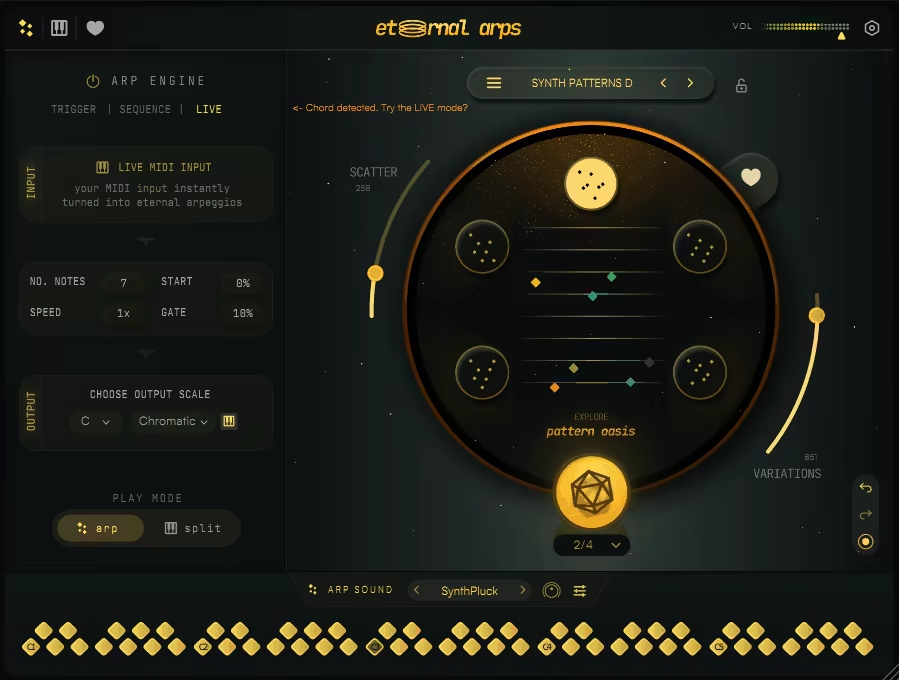
Eternal Arps offers a refreshing take on arpeggiation by introducing a more organic, dynamic feel to MIDI patterns. Unlike traditional arpeggiators that can sound rigid or mechanical, this unit brings a natural, flowing vibe to your melodies.
I really enjoy how Eternal Arps adds a sense of movement and life to simple chords, almost as if the arpeggios were evolving in real-time, just like a live musician would play them.
- 300+ Presets
One of the standout features is the large collection of over 300 presets, covering styles from cinematic to electronic.
I love how this instantly gives you something to work with, whether you’re looking for smooth, melodic progressions or intricate, complex patterns.
- Magic Dice
The Magic Dice function is another fun tool, generating random patterns for when you’re feeling uninspired or just want to explore something unexpected.
- Deep Customization
While the plugin shines in offering a human-like touch, it might feel a bit too advanced for beginners just looking for basic arpeggiation patterns. The interface is intuitive, but diving into deeper customization options requires some learning.
If you’re into arpeggios that feel more like real instruments, this is a great way to add extra musicality to your productions. I recommend playing around with the presets and Magic Dice to see how they fit into your workflow.
Eternal Arps comes in VST, VST3, AU, and AAX formats for macOS and Windows platforms.
2. BLEASS Arpeggiator
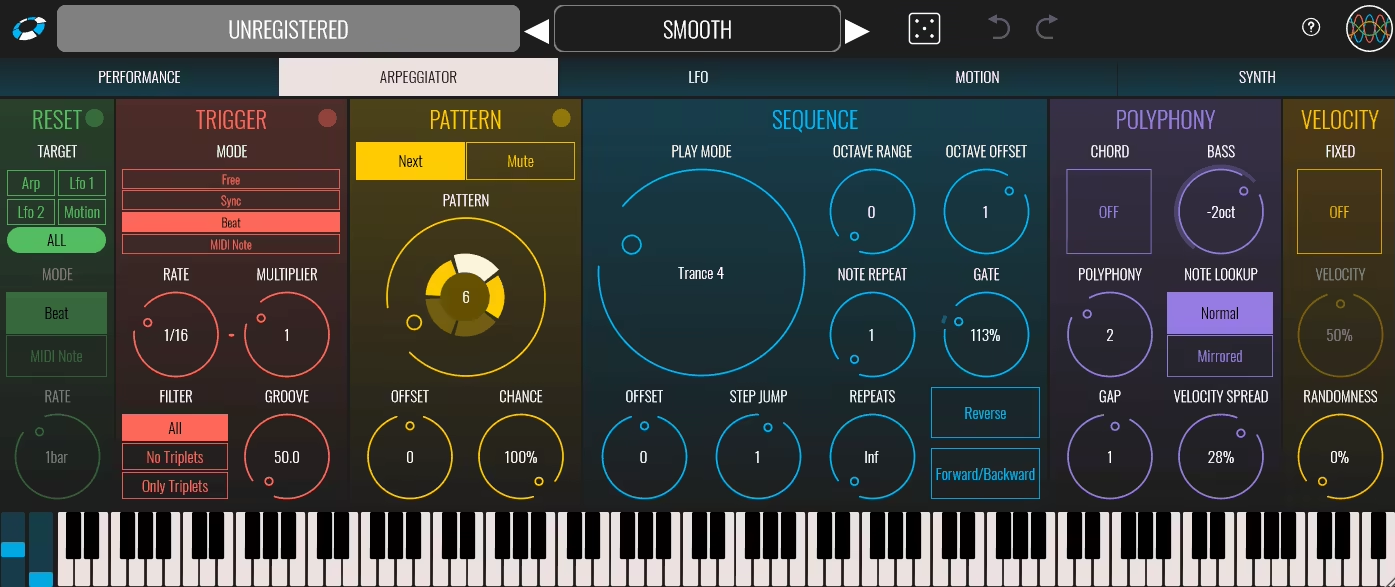
This arpeggiator plugin offers a fresh and hands-on approach to creating intricate rhythmic patterns. What I really appreciate is how it balances classic arpeggiation with innovative features, encouraging experimentation.
Unlike typical arpeggiators that stick to simple note sequences, Arpeggiator VST plugin supports complex polyrhythms, polyphony, and deep modulation, making it an incredibly versatile tool for electronic music production.
- Intuitive GUI With Real-Time Control
One of the standout features is the intuitive user interface, which is perfect for those who love tweaking sounds in real time.
The inclusion of two XY modulation pads is a game-changer, especially for mobile setups. If you’re using it on an iPad, these pads make the process tactile and fun.
- Built-in FM synth for quick sound generation
You can adjust arpeggio patterns in a granular way, and with the built-in FM synth, you can generate bright, punchy sounds directly within the plugin, great for quick results without external routing.
- Motion Sequencer for evolving arpeggios
The Motion Sequencer isn’t just about static arpeggios; it lets you modulate parameters over time, adding a layer of movement that keeps each repetition unique and engaging.
Highly customizable LFOs give even more room for creative expression.
While this plugin has a lot to offer, it does come with a bit of a learning curve, especially if you dive deep into the modulation options. But once you get the hang of it, it can be an invaluable tool for both studio production and live performances.
If you’re after an arpeggiator that pushes beyond basic functionality, this one’s definitely worth exploring!
Arpeggiator comes in VST3, AU, and AAX formats for macOS and Windows platforms.
3. Arturia – ARP2600 V

If you’ve ever been curious about the classic ARP 2600, this plugin with built-in arp brings the legendary synth into the modern era with extra perks that make it more accessible and flexible.
What I really love about this VST arpeggiator plugin is how it keeps the spirit of the original alive while adding features that expand its versatility.
The ARP2600 V stays faithful to the original’s semi-modular layout, featuring its iconic trio of oscillators, resonant low-pass filter, and classic sequencer, the same elements that helped shape electronic music.
- Modern Upgrades
I really appreciate the addition of polyphony up to 32 voices and MIDI control, which help bring this vintage powerhouse into the digital age.
It also includes delay, chorus, and an interactive LFO, giving you extra creative potential for evolving sounds.
- Sound Authenticity vs. Digital Convenience
While the plugin shines in flexibility and nostalgia, some users have pointed out that it doesn’t exactly replicate the hardware’s sound.
I agree that the resonance output at higher frequencies isn’t quite as strong as the original, but for most, this won’t be a dealbreaker.
- Massive Preset Collection
With over 500 presets and built-in reverb, delay, and chorus, there’s plenty to explore.
If you’re comfortable with modular synths and love deep, hands-on patching, this plugin will feel like home. If you’re new to the ARP universe, be prepared for a learning curve, but once you master it, the sound design possibilities are incredible.
ARP2600 V comes in VST, AAX, Audio Unit, and, NKS formats for macOS and Windows platforms.
4. VPS Avenger 2

A powerhouse when it comes to arpeggiation and sound design; Avenger 2.
It’s not just about making arps but about designing them within a full synth environment that lets you go deep into every detail.
My favorite part about Avenger 2 is its flexibility, whether you’re working on complex soundscapes or simple melodies, this thing can do it all with a level of control that’s hard to beat.
- Oscillators With Wavetables and Samples
One of the standouts for me is its oscillators, you get everything from classic analog waveforms to a huge library of wavetables and samples, all of which can be easily modulated.
This makes it perfect for evolving arpeggios that keep your track interesting.
- Massive Modulation System
The modulation system is like an all-you-can-eat buffet of modulation sources. You can assign up to 256 modulation destinations, each fully customizable, which is great if you love experimenting with movement in your patterns.
- Multi-Layered Arpeggiators and Step Sequencing
Another thing I enjoy is how Avenger 2 handles arpeggiators, as you can load up to 8 separate arpeggiators at once, each with its own patterns and settings.
This makes it easy to layer different styles or create evolving arpeggios, especially with the built-in step sequencers.
After using it for a while, I found that there’s a catch, if you prefer a minimal, streamlined interface, the huge number of options might feel overwhelming at first. There’s a lot to get used to, but if you enjoy diving deep into sound design, it’s worth it.
If you want an arpeggiator plugin that goes beyond simple patterns and gives you full control over shaping sound at every stage, this plugin is definitely worth checking out.
Avenger 2 comes in VST2, VST3, AU, and AAX formats for macOS and Windows platforms.
5. Stepic By Devicemeister

If you wish your step sequencer could do more than just trigger notes, Stepic is here to help.
I think Stepic takes sequencing to a new level with polyphonic capabilities and in-depth modulation options, making it perfect for producers looking to break out of standard DAW limitations.
- 16-Step Sequencer Expandable up to 16 bars
The heart of Stepic is its 16-step sequencer, which can be expanded to 16 bars, giving you a massive 4096 steps to work with.
What makes it shine for me is the independent sequence parameters, where pitch, duration, and octave can each have dedicated sequences, creating an evolving soundscape.
- Chord Editor and Advanced Randomization
I appreciated the chord editor, which lets you assign individual chords per step, adding a lot of musical depth.
If you want more variation, the randomization functions, including probability, note repeats, and random step orders, keep things unpredictable.
- Deep Modulation Control
One of the most compelling features for me is its ability to automate not just notes but also parameters from your favorite synths or effects.
With 8 modulation lanes, you can control everything from filter cutoff to wavetable position, making it a powerful tool for evolving textures.
- Seamless MIDI CC Integration
The plugin is fully MIDI CC-compatible, so it integrates smoothly with both software and hardware setups.
On the downside, the learning curve is steeper than with simpler step sequencers.
With over 200 randomization and sequencing options, beginners might feel overwhelmed.
But if you take the time to learn it, Stepic becomes an indispensable tool for adding intricate movement and variation to your compositions.
Stepic comes in VST3 and AU formats for macOS and Windows platforms.
6. W.A. Production MIDIQ
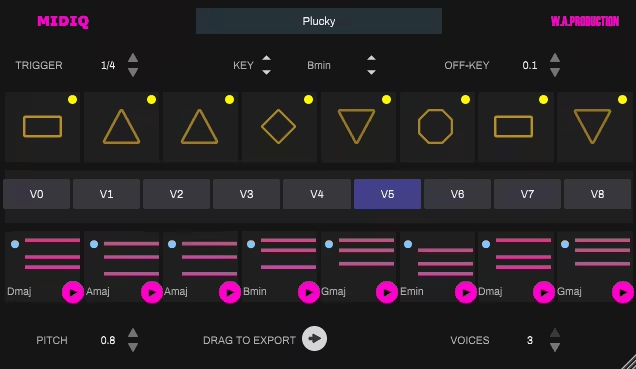
This plugin acts like a magic trick for music production, letting you generate entire chord progressions with just a few clicks.
MIDIQ makes it easy to create dynamic MIDI chord progressions, perfect for when you’re stuck or need a quick way to explore new harmonic ideas. It’s like having a creative partner that helps you discover endless chord variations with minimal effort.
- Intuitive “Slot Machine” Interface
I really had fun using this intuitive interface, which feels almost like a slot machine for music patterns.
You set the basic progression structure, and the plugin’s intelligent algorithms generate different chord sequences to explore.
- Effortless Harmony Exploration
I’m always amazed at how quickly I can find new harmonies or unexpected progressions just by clicking a few buttons. If you don’t like a particular chord, just swap it for another variation, it’s that simple.
- Versatile for Experimentation
A key strength of this software is its versatility. You can layer chords across multiple tracks, route them through an arpeggiator, or manipulate it further in your DAW.
The copy-and-paste function makes sharing chord data seamless, and preset data is automatically saved in your session.
On the downside, it lacks deep customization options compared to more complex MIDI processors. While it’s great for fast, inspired ideas, it’s not necessarily a tool you’d rely on for full-scale composition control.
If you need a spark of inspiration or a way to push your music in new directions, MIDIQ could easily become one of your go-to plugins.
I highly recommend trying it, especially if you want to streamline your workflow and stay focused on creativity.
MIDIQ is available in VST, VST3, and AU formats for macOS and Windows users.
7. Modalics EON-Arp

If you’ve been searching for an arpeggiator plugin that lets you break free from typical patterns, EON-Arp might be your new favorite tool.
For me, what makes EON-Arp stand out is how it encourages experimentation with intricate rhythmic patterns while still giving you full control over every detail.
I think It’s ideal for those who want to shape their arps without feeling restricted.
- 128-Step Sequencing
One of the key features I appreciate is the detailed sequencing control. You can create up to 128 steps, adjusting note positions, lengths, and velocities with precision.
Whether you prefer freeform timing or quantized edits, this plugin lets you mold arpeggios exactly the way you want.
- Built-in Mini Synth with Chord and Scale Presets
The mini synth is a nice touch, though I usually use it alongside my main virtual instruments for more flexibility.
With over 100 chord sequences and built-in scales, it’s a great way to find inspiration fast.
- Snapshot System for Dynamic Arpeggios
Another feature I love is the ability to create 8 different snapshots per preset.
This makes it easy to switch between variations, bringing dynamic movement to your arpeggios. While it works well as a standalone unit, its real power shines when paired with external synths.
EON-Arp’s versatility does come with a small learning curve. If you’re new to advanced arpeggiators, it might take a little time to explore all its options.
But once you dive in, it’s a playground of endless possibilities. The best part? It’s a really affordable unit, making it a fantastic deal for expanding your arpeggio toolkit.
EON-Arp is available in VST, VST3, AAX, and AU formats for macOS and Windows users.
8. u-he Hive 2
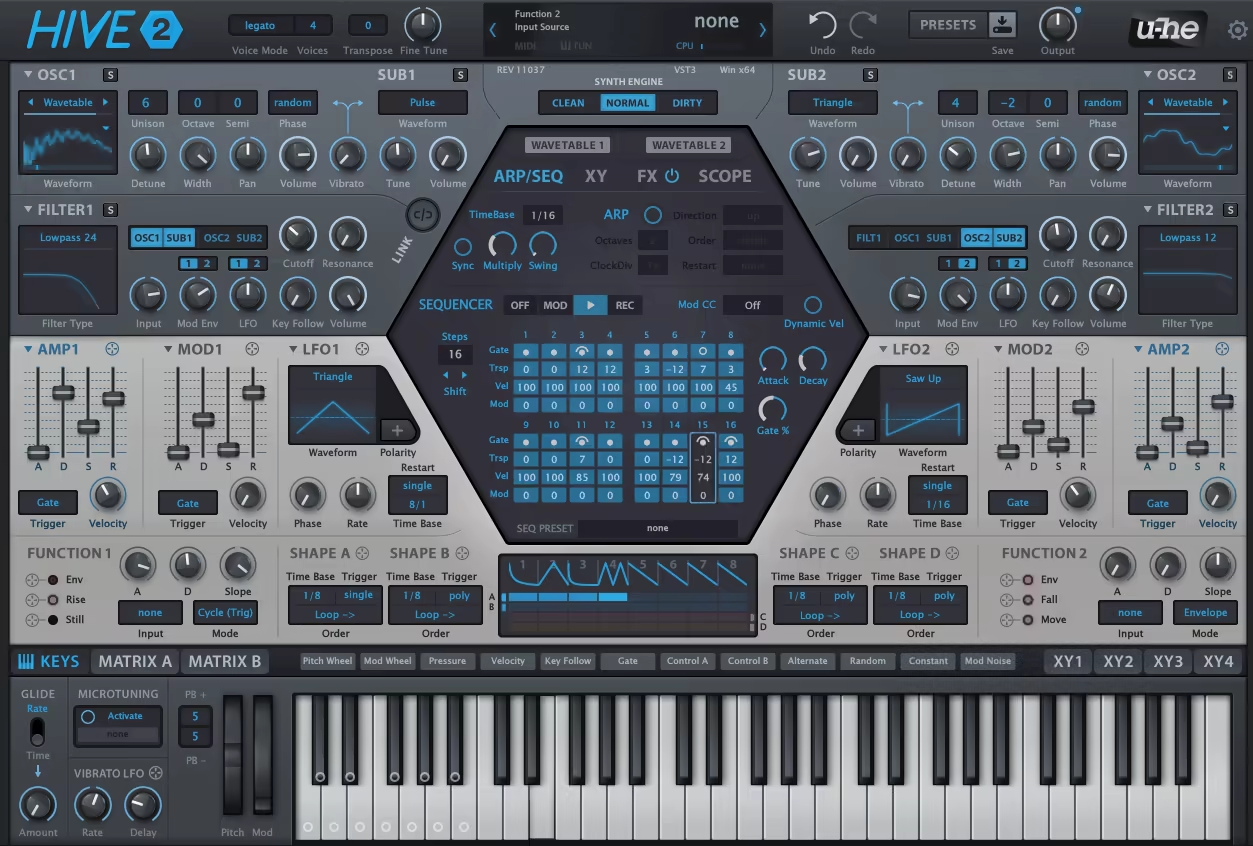
When it comes to synthesizers that balance ease of use with advanced sound design, Hive 2 hits the sweet spot.
With a clean, efficient interface, Hive 2 gives you all the tools needed to create complex, evolving sounds without overwhelming you. Whether I’m working on quick sketches or multi-layered projects, this synth keeps up effortlessly.
- Powerful Synth Engines and Modulation Matrix
I think the star here is that this arpeggiator VST features 3 different synth engines, dual oscillators with wavetable options, and a user-friendly modulation matrix.
The arpeggiator and sequencer are great for rhythmic motion, and the shape sequencer adds depth to your sounds.
- Extensive Effects and Preset Library
With over 2,000 NKS-ready factory presets, this synth offers a vast range of sounds.
It also includes 7 rearrangeable effects, such as distortion, chorus, delay, phaser, EQ, reverb, and compressor, all easily customizable, giving me super high versatility.
- Intuitive Modulation System
One of the things I enjoy most is the ease of modulation. You can quickly assign parameters using drag-and-drop functionality, making complex sound design feel effortless.
The sound quality is top-notch, and its low CPU usage makes it efficient for dense productions without causing lag.
The interface, while clean and intuitive, might feel too minimal for those used to more detailed synth layouts.
Some may wish for more visual feedback when diving into deep sound design, but once you get used to it, the simplicity becomes a strength.
Overall, Hive 2 is an efficient and flexible synth that rewards experimentation. Whether you’re a beginner or an experienced producer, this tool delivers great sounds without slowing down your workflow.
Hive 2 comes in AU2, VST2, and VST3 formats for macOS and Windows users.
