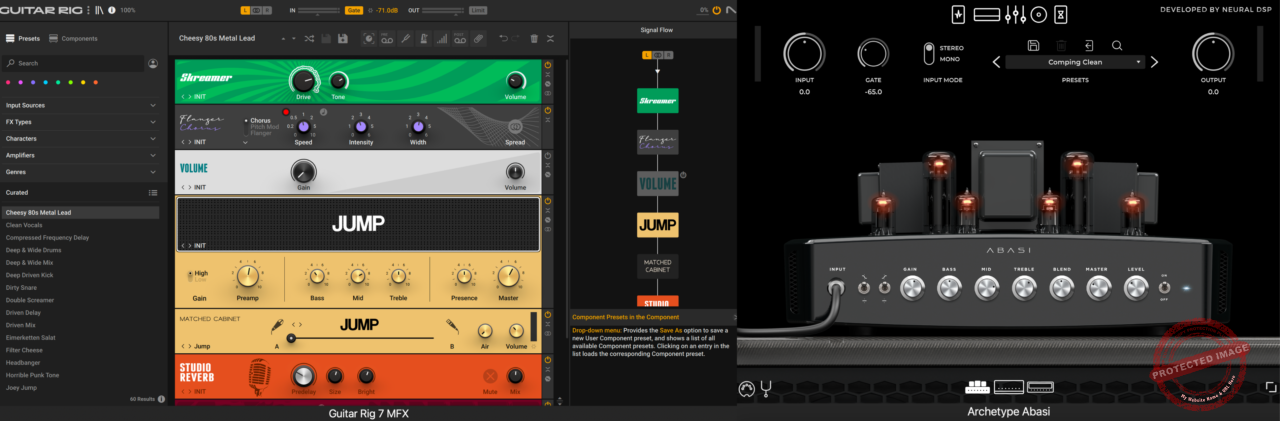
Today, we’re diving into two heavyweights in the world of amp simulation and effects: Native Instruments’ Guitar Rig and Neural DSP’s Amp Plugins.
Alright, let’s dive into the world of guitar tone, shall we? Whether you’re a bedroom shredder, a tone-chasing perfectionist, or just someone who loves fiddling with gear for hours (guilty!), this comparison’s got your name all over it. We’re talking about two big dogs here: Guitar Rig, the all-rounder toolkit, versus Neural DSP Archetypes, the tone-obsessed detail master.
Now, let me be real with you. I’ve spent more time with these plugins than I’d ever admit to my non-guitarist friends. For me, Guitar Rig is like that dependable friend who always comes to the party with snacks and drinks: super versatile and ready for anything.
But Neural DSP is more like the guy who spends 30 minutes perfectly crafting a single shot, so it’s all about precision and doing one thing really, really well.
So, which one’s your vibe? Are you after a chameleon that can handle any genre, or are you chasing that one perfect tone? Let’s break it down into the features, the sounds, and the workflow so you can decide which one deserves a spot in your setup.
Also, consider reading our detailed review of Guitar RIG 7 Pro here.
Let’s go!
| Feature | Neural DSP Archetype Plugins | Native Instruments Guitar Rig 7 Pro |
| Core Focus | High-quality amp simulations tailored to specific amps or artists | Comprehensive suite of guitar and bass effects, amps, and cabinets for all genres |
| Number of Amps | Typically, 3 amps per Archetype, with multiple plugins available (John Petrucci, Tom Morello, Tone King, etc.) | 26 guitar and bass amps, including emulations of Fender, Vox, Ampeg, Soldano, and more |
| Number of Effects | Pre- and post-effects per Archetype (varies by plugin), including compressors, overdrives, and EQs | 115 stompboxes and rack effects, including lo-fi effects, fuzz, saturation, and modulation |
| Standalone Mode | Yes, supports standalone use for practice without requiring a DAW | Yes, can be used standalone for live performance or practice without a DAW |
| Presets | Factory and artist presets available for quick tone setups | 100 new presets included, with easy filtering by style or genre |
| Unique Features | – Neural Network-powered amp modeling
– Ambience extraction for ADR and sound design – Highly graphical UI |
– New Impulse Response loader for custom amp setups
– Lo-fi effects like Tape Wobble and Noise Machine for analog vibes |
| DAW Integration | Compatible with all major DAWs, including Ableton Live, Cubase, and more | VST3, AU, AAX plugin support for all major DAWs |
| Ease of Use | Highly graphical interface, intuitive click-and-drag controls, real-time adjustments | Easy-to-navigate interface with drag-and-drop functionality for effects chains |
| Target Audience | Guitarists and producers looking for specific amp tones or artist-focused sounds | Broad appeal to guitarists of all styles, from clean blues to heavy metal |
| Pricing | Varies by Archetype (~$99-$149 per plugin). | $199 for Guitar Rig 7 Pro. |
| Strengths | – Realistic amp tones
– Artist-specific plugins – Precise and customizable sound shaping |
– Versatile for all styles
– Massive library of amps and effects – Excellent for both live and studio use |
| Limitations | – Focused on individual amp types or artist sounds
– Multiple purchases needed for variety |
– Not an essential upgrade for v6 users
– Some amp models could be more dynamic |
Sound and Character
Let’s come to the main point, as this is the most important focus when it comes to amp simulation tools. The tonal quality and versatility are what makes guitarists fall in love with these types of plugins.
- Neural DSP: Precision and Realism

When it comes to tone, Neural DSP is all about nailing the details. Their Archetypes are meticulously crafted to replicate the nuances of specific amps and artists.
For me, playing through the Mateus Asato Archetype felt like sitting in a studio with a boutique amp that’s been mic’d to perfection. Each plugin has a unique character, whether it’s the crushing heaviness of Fortin Nameless or the clean, funky tones of Cory Wong.
The standout feature here is how responsive the plugins are. I love how the dynamics change based on your playing. Neural DSP amps feel alive, reacting to every pick scrape and volume knob adjustment like the real deal. If you’re chasing authenticity and that “in-the-room” feel, Neural delivers in spades.
- Native Instruments Guitar Rig 7 Pro: Versatility at Its Best

Guitar Rig 7 Pro doesn’t focus on replicating specific amps with the same pinpoint accuracy as Neural DSP, but that’s not necessarily a bad thing. Its strength lies in its variety and flexibility.
With 26 amps and 115 effects, it covers everything from sparkling cleans to roaring leads. For me, it’s like having a toolbox where you can mix and match components to build a tone that’s uniquely yours.
The lo-fi effects in v7 are a standout addition. I’ve had so much fun messing around with Tape Wobble and Noise Machine, adding a touch of analog imperfection to my tracks. While some amp models (like the AC Box XV) can feel a bit polite, the sheer number of options makes up for it. You can always layer effects or tweak settings to add more character.
- Direct Comparison
For me, Neural DSP takes the crown when it comes to pure amp tone realism. The clarity, depth, and responsiveness of their plugins make them feel like the real thing.
If you’re recording guitar tracks and want them to sound like they were played through a high-end boutique amp, Neural is the way to go. Especially for high-gain tones, I think what they offer is really hard to beat. With archetypes like John Petrucci, Tom Morello, Tone King, Soldano, and more, their precision and tonal quality are unmatched.
That said, Guitar Rig 7 Pro is the better choice for experimentation and genre-hopping. Its versatility and extensive library of effects mean you can craft tones that go far beyond traditional amp sounds.
I’ve found it especially useful for ambient or experimental projects where creativity takes center stage. For a variety of tones, as an all-rounder plugin with a much more cost-effective design, I think Guitar Rig 7 is one step ahead of Neural DSP.
Besides high-gain tones, the tonal quality is not that different, although Neural has it slightly higher. So, if tone realism is your top priority, Neural DSP wins. hands down.Features and Interface
Features and Interface
- Amp Modeling

Neural DSP Archetype Plugins focus heavily on precision and realism. Each plugin is essentially a mini-suite built around 3 amps, meticulously designed to replicate the tones of specific brands or artists.
Whether it’s the crushing high-gain power of Fortin or the smooth, clean tones of Cory Wong, Neural DSP delivers an unmatched sense of authenticity. For me, using their Archetypes feels like stepping into the actual studio of the artist they’re modeled after.
On the other hand, Native Instruments Guitar Rig 7 Pro takes a broader approach. It boasts 26 guitar and bass amps, covering everything from Fender-style bluesy cleans to Soldano-inspired screaming leads.
I must say the modeling of Guitar Rig is not as hyper-focused as Neural DSP, but the amount of modeling is much less. If you want to jump between styles such as from pristine, clean, modern tones to vintage-inspired, overdriven tones, Guitar Rig suits you better.
- Effects Library

When it comes to effects, Guitar Rig 7 Pro is the clear winner in terms of numbers, offering 115 stompboxes and rack effects. From classic delays and reverbs to newer lo-fi effects like Tape Wobble and Noise Machine, the options feel limitless.
I love the freedom to experiment and stack effects in unique chains, especially when crafting ambient or experimental sounds.
Neural DSP, however, takes a more curated approach. Each Archetype includes a set of pre- and post-amp effects tailored to its specific purpose, like overdrives, compressors, and delays.
While there are fewer effects overall, they’re highly relevant to the tone of the plugin. For example, the Tosin Abasi Archetype includes pitch-shifting and modern delays to match his progressive metal style. It’s more about quality than quantity here.
- Customization & Workflow

If you’re looking for plug-and-play simplicity, Neural DSP excels. The graphical interfaces are intuitive, with click-and-drag controls that mimic physical gear.
For me, dialing in a tone feels incredibly natural, and the presets are fantastic starting points. Plus, features like ambience extraction in certain plugins make Neural a unique tool for sound design or film work.
Guitar Rig 7 Pro leans more into customization. Its modular design lets you build elaborate signal chains, complete with multiple amps, effects, and even custom Impulse Responses (IRs).
While it can be overwhelming for beginners, I think the creative freedom is unmatched for seasoned users who love crafting unique sounds.
- Standalone Use vs. DAW Integration

Both platforms support standalone use, which I find super convenient for quick practice sessions without needing a DAW. Neural’s standalone mode lets you load up an Archetype, plug in, and start playing within seconds, which is perfect for when inspiration strikes.
Native Instruments Guitar Rig 7 Pro also excels here, but its DAW integration shines even brighter. It’s seamless in all major DAWs and works exceptionally well as a VST3 or AU plugin. For me, Guitar Rig’s modular interface makes it a powerhouse for studio workflows, especially when layering guitar tracks or processing other instruments.
- Target Audience
Neural DSP feels more tailored to players who know exactly what they’re after, whether it’s John Petrucci’s tones or Fortin amps’ crushing brutality. It’s ideal for guitarists who want realistic tones with minimal tweaking.
Meanwhile, Guitar Rig 7 Pro caters to everyone. Whether you’re a beginner looking for presets or a pro who loves building complex signal chains, it offers something for every guitarist and bassist. I think it is arguably one of the most versatile all-rounder amp suites out there.
Both platforms are great for different uses, and the choice ultimately depends on your priorities. Do you want hyper-realistic amp tones with minimal fuss? Go for Neural DSP. Need a versatile toolkit for all styles and sounds? Guitar Rig 7 Pro is your answer.
Performance
When it comes to CPU efficiency, Neural DSP plugins tend to be lighter. I’ve found them easy to run, even on less powerful systems. They’re optimized for real-time use, which means I can load multiple instances without my computer struggling, which is a huge plus for me when I’m tracking layered guitar parts.
Guitar Rig 7 Pro, on the other hand, can be more demanding, especially with complex signal chains. Adding multiple amps, effects, and cabinets quickly increases the load. While my system can handle it, I’d recommend keeping an eye on CPU usage if you’re using an older machine.
If you’re working on a resource-limited setup, Neural DSP is the better choice for smooth performance. But if you’ve got the hardware to handle it, Guitar Rig 7 Pro offers unmatched flexibility and creative depth.
In Practice
In terms of recording, live use, and creative sound design, these two software have different approaches and performances.
- Recording

When I’m in the studio, Neural DSP is my go-to for clean, polished tracks. The Archetypes excel at capturing authentic amp tones without much tweaking, making them perfect for quick, high-quality recordings.
I love how I can just load a plugin, select a preset, and get professional-sounding results. For layered guitar parts or intricate tones, Neural’s precision really stands out.
Guitar Rig 7 Pro, on the other hand, shines when I want to experiment. Its modular design lets me build unique tones by combining amps, effects, and even custom Impulse Responses.
I find it particularly useful for creative projects where I need something unconventional or layered textures that go beyond traditional guitar sounds.
- Live Performance

For live use, Neural DSP Archetypes in standalone mode are hard to beat. They’re lightweight, reliable, and easy to set up. I’ve used them as my “house amp” for practice and even small gigs, and they deliver consistent results without needing a DAW.
Guitar Rig 7 Pro also supports standalone use, but its strength lies in versatility. If you’re running a more complex live setup, Guitar Rig’s modular approach allows you to create custom rigs tailored to your setlist. That said, it can be more CPU-intensive, so having a powerful system is key.
- Creative Sound Design

For sound design, Native Instruments Guitar Rig 7 Pro is unmatched. Its massive library of effects and modular flexibility make it a playground for creating experimental tones. I’ve used it to craft everything from ambient soundscapes to gritty, lo-fi textures, and the results are always inspiring.
Neural DSP is more focused, but its precision and tonal quality make it a great choice for film scoring or ADR work. Features like ambience extraction and the ability to isolate frequencies give it a unique edge in post-production scenarios.
Conclusion
At the end of the day, the choice between Neural DSP and Guitar Rig comes down to your needs and budget.
The Guitar Rig Pro 7 offers 26 amps, 115 effects, and an incredible amount of versatility for the same price with just one Neural DSP Archetype plugin, making Guitar Rig a much more cost-effective option.
That said, Neural DSP Archetypes are all about precision and authenticity. They deliver stunningly accurate amp tones tailored to specific artists and styles, but this hyper-focus comes at a higher price. If you’re chasing the ultimate recreation of a boutique amp or want pinpoint control over your sound, Neural DSP is worth the investment.
For me, Guitar Rig 7 Pro shines as the versatile all-in-one solution, while Neural DSP is for those moments when tone realism and attention to detail matter most. Both are fantastic tools; it just depends on what fits your workflow and budget!
