
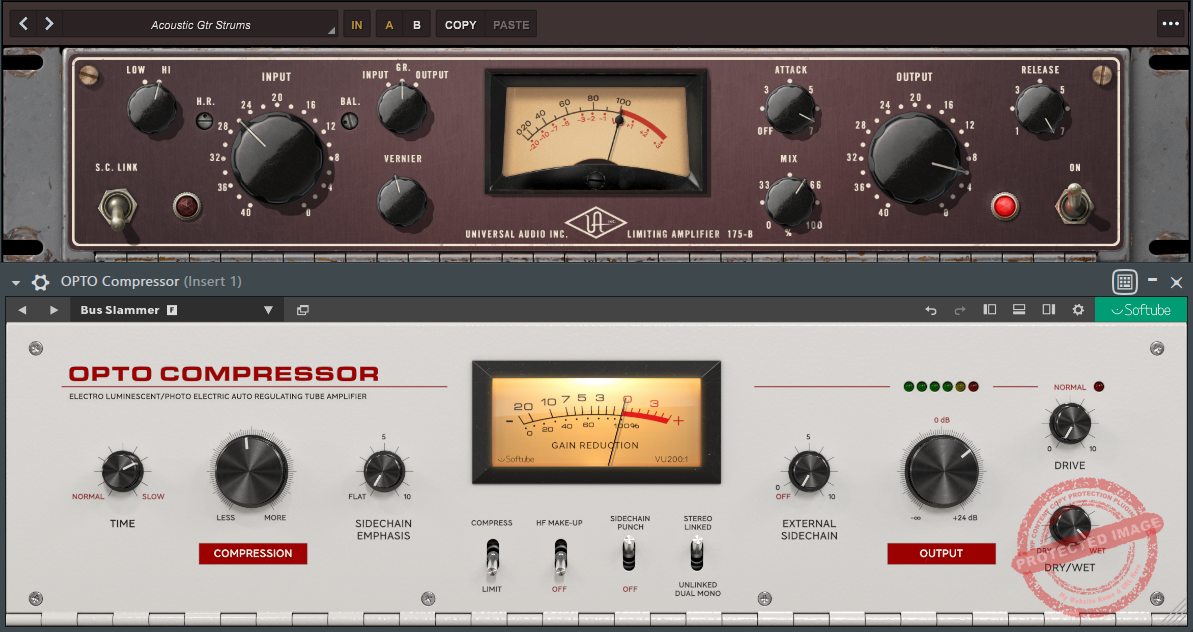
I’ll explore the sound, functionality, and unique characteristics of how UAD vs Softube approach these Pultec EQs and Analog Compressors and make a fair comparison between the two.
Let me start with a confession: I have a thing for vintage gear. No, I don’t own a collection of dusty rack units (yet), but I do spend way too much time trying to decide which digital emulation of these analog hardware could potentially give my tracks that classic and warm analog tone or at least like I kinda know what I’m doing.
In my experience, in the world of Pultec EQs and classic compressors, Universal Audio (UAD) and Softube are the top contenders, each vying for our plugin affection.
If you’ve ever fallen down the rabbit hole of gear emulations, you know the struggle. One moment, you’re admiring the warm, velvety boost of a Pultec EQP-1A and the next, you’re wondering if that subtle midrange sheen is really worth the cost of a small island (or at least a weekend trip).
But when it comes to UAD and Softube, things get even trickier. Both promise immaculate recreations of vintage legends, but which one really nails that analog mojo?
Features
| Feature | UAD Essentials Bundle |
Softube Essentials Bundle
|
| EQ Models | – Pultec Collection: Includes EQP-1A, MEQ-5, and HLF-3C – Century Channel Strip: Features a 3-band EQ |
– British Class A Channel Strip: Includes low/high-shelf EQ, selectable midband, and low/high-pass filters
– Tube-Tech EQ Plug-In Collection: PE 1C Program EQ and ME 1B Mid EQ |
| EQ Sound Quality | – Exceptionally accurate emulations of vintage Pultec analog EQs – Known for smooth, silky boosts and natural tones – Used by top producers like John Mayer, Daft Punk, and Mariah Carey |
– Ultra-boutique emulations of Tube-Tech’s modern Pultec-inspired EQs
– Warm, natural tones ideal for detailed midrange sculpting and mix clarity |
| EQ Versatility | – Broad tonal options with three distinct Pultec models (EQP-1A for low-end, MEQ-5 for mids, and HLF-3C for filtering) – Century Channel Strip provides additional basic EQ |
– Offers versatile tone-shaping with Tube-Tech’s PE 1C for rich, smooth curves and ME 1B for precise midrange control
– British Class A EQ adds additional tonal flexibility |
| Compressor Models | – LA-2A Collection: Three variations of the legendary LA-2A for smooth, transparent compression – 1176 Classic Limiter Collection: Iconic fast compressor with multiple revisions – Fairchild Tube Limiter Collection: Warm, vintage tone – Century Channel Strip Compressor: Simplified LA-3A-inspired compressor- 175-B |
– FET Compressor Mk II: Modeled on the fast, bold 1176 with modern enhancements
– OPTO Compressor: Classic tube-based optical compressor for smooth dynamics – VCA Compressor: Hard-knee vintage compression with added attack and texture |
| Compressor Sound Quality | – Industry-standard recreations of vintage gear with rich, authentic tones – Smooth leveling (LA-2A) and punchy dynamics (1176) – Excellent on vocals, bass, drums, and guitars |
– Highly detailed emulations with added modern features
– FET Mk II delivers bold, aggressive compression – OPTO excels at subtle tube saturation and slow attack; VCA brings snappy punch |
| Compressor Versatility | – Multiple vintage compressor types for a variety of use cases – LA-2A excels in smoothness, while the 1176 brings speed and aggression – External sidechain and mix knob available |
– Modern features like drive, stereo linking, external sidechain, and parallel compression enhance control
– Compressors tailored for precision and creative flexibility |
| Additional Features | – Native and Apollo DSP compatibility – Pultec EQs and compressors offer “analog magic” with minimal effort |
– Includes advanced features such as sidechain filters, stereo linking, and dry/wet mix
– Designed for Console 1 integration and modern workflows |
| Best For | – Producers and engineers who want authentic recreations of legendary analog hardware – Ideal for vintage sound enthusiasts or users in the UAD ecosystem |
– Users who want added functionality and control in classic compressor and EQ designs
– Perfect for modern mixers seeking flexibility with a vintage flavor |
Sound and Character
For any vintage-inspired plugins, I essentially judge them by the character they bring, and both UAD and Softube bring their A-game. Let’s be honest! Half the reason we’re here is to obsess over whether our bass guitar sounds “warm” enough or if that vocal track really needs more “silk.”
Spoiler alert: It always does. Both UAD and Softube claim to bottle that analog magic, but which one actually delivers the goods? Let’s dig in.
- UAD’s Pultec EQP-1A: Authentic Analog Magic
There’s a reason you would have heard people rave about the UAD Pultec EQP-1A. It’s literally like strapping a time machine to your DAW. The moment you turn the knobs, you’re greeted with that unmistakable Pultec warmth. I am honestly a fan of the low-end boost, adding a focused yet thumpy bass that somehow manages to be fat without getting flabby.

The high-end is also just as smooth as if someone spilled honey all over your hi-hats and air frequencies. I’ve found this plugin works quite well on bass guitars, kick drums, and even synth basses when you want to sculpt that low-end thump. For vocals and acoustic guitars, it adds that airy “sheen” without sounding harsh.
- Softube’s Tube-Tech PE 1C: A Modern Homage to a Classic
Softube’s Tube-Tech PE 1C takes the Pultec concept and gives it a boutique, modern twist. Modeled on the Tube-Tech hardware (itself inspired by the original Pultec), it’s a bit more refined, with a polished vibe that feels less vintage and more “high-end modern studio.”

The low-end boost is tighter and more controlled than UAD’s version, which makes it great for genres like pop or electronic music, where precision is key.
On vocals, it shines with a velvety, and while it might lack some of the grittier analog characters of the UAD model, the smooth curves and clean harmonic response are great for shaping midrange instruments like electric guitars or even a snare that needs to pop.
- Comparison: Vintage Grit vs. Modern Precision
Here’s the deal: UAD’s EQ plugins lean heavily into its vintage roots, giving you that warm, gooey analog goodness perfect for rock, blues, and anything retro. On the other hand, Softube’s Tube-Tech PE 1C feels like the modern, classy cousin who drinks artisanal coffee and has a membership to a boutique gym. It’s clean, controlled, and ready for the precision demands of today’s pop and electronic productions.

If you’re chasing that unpredictable analog vibe where imperfections add character, UAD is the way to go. But if you want a tool that feels a bit more polished and flexible in a mix, Softube’s PE 1C might be your new best friend.
- UAD’s LA-2A: Compression with a Smile
Using the UAD LA-2A is like putting your track in the hands of a kindly mixing guru who gently pats it on the back and says, “I got this.” It’s smooth and musical, and this may be controversial, but it is impossible to mess up. Honestly, this plugin is like cheat mode for vocals.
You slap it on, and suddenly, your singer sounds like they just won a Grammy (not exaggerating, lol).

With 3 variations (Silver, Gray, and Legacy), you can pick the flavor of smoothness you want. Each one has its own personality, but they all share that buttery, transparent compression that makes bass, vocals, and acoustic instruments sound like they’ve been hugged by clouds.
Beyond the LA-2A, the UAD Compressor catalog spans a range of legendary hardware recreations, including the 175B and 176 Tube Limiters, the Fairchild Tube Limiter Collection, and other classics like the Neve and SSL G Bus Compressor. The 175B and 176 Tube Limiters, for instance, are known for their rich, harmonically saturated tone.

The 176, often considered a tube-driven alternative to the later 1176, offers a versatile and musical compression that’s perfect for vocals, drums, and bass, adding warmth and character that enhances any track. The Fairchild Tube Limiter Collection, featuring the iconic 660 and 670 models, is known for its lush tube tone, providing smooth, natural dynamics with a touch of vintage saturation.
- Softube’s FET Compressor Mk II: The Sonic Boxer
If the LA-2A is a gentle guru, Softube’s FET Compressor Mk II is the scrappy prizefighter. Its strong midrange processing allows your snare to punch through a mix or make your guitars feel like they’re snarling at you. This compressor is bold, brash, and unapologetically in-your-face.

Imagine added features like drive controls, sidechain options (sidechain filter, sidechain punch, etc.), and parallel compression on 1176. So, yes, it’s like the 1176, but with a few extra tricks up its sleeve. It’s perfect for rock, hip-hop, or any genre where you want your track to grab the listener by the collar and say, “Listen to me!”
- Comparison
The LA-2A and FET Mk II couldn’t be more different. UAD’s LA-2A is the warm blanket of the compression world, which is smooth, subtle, and perfect for ballads and acoustic tracks. Meanwhile, Softube’s FET Compressor is the firecracker, ideal for aggressive genres where you need punch and grit.
If you’re after elegance and simplicity, go with the LA-2A. But if you want to feel like a sonic superhero with all the modern controls, the FET Mk II is your best bet.
I would say that UAD excels at capturing the raw, vintage essence of analog gear. Their Pultec EQP-1A offers rich, velvety tones perfect for low-end weight and airy highs, while the MEQ-5 and HLF-3C round out the lineup with midrange precision and clean filtering. Their compressors are smooth, musical, and ideal for vocals and bass, offering buttery compression straight out of the golden age of recording.

Softube, on the other hand, is more about flexibility and getting hands-on. I would use its Tube-Tech EQs to provide precision with polished, clean tones suited for pop and electronic genres, while the British Class A Channel Strip for a more “versatile” tonal shaping.
The choice boils down to character: UAD is for purists craving analog warmth, while Softube caters to those seeking precision and modern enhancements.
Features and Interface
Low-End Sculpting
Both plugins serve bass frequencies the way a master chef seasons a dish: carefully, precisely, and with flavor that lingers. The UAD Pultec EQ Collection employs its famous “boost-and-cut” trick at the same frequency, delivering a paradoxically punchy yet controlled low-end that baffled and delighted me.
When I tried out Softube’s Tube-Tech PE 1C, on the other hand, it felt like nestling the bass snugly into the mix. Makes sense?
User Interface & Workflow
The UAD Pultec replicates its namesake hardware with almost eerie fidelity. Classic knobs and vintage dials abound, channeling the spirit of analog gear while demanding a bit of respect (and a learning curve) from new users. It’s suitable for you if you appreciate the tactile charm of legacy equipment.
On the other hand, Softube’s Tube-Tech series offers a more contemporary approach, offering a clean and intuitive interface optimized for quick adjustments. Its streamlined control layout reduces visual clutter, enabling faster navigation and promoting efficient workflow during mixing sessions.

Both plugins offer visual cues and straightforward control responses, but the Softube Tube-Tech series emphasizes accessibility without compromising functionality.
Midrange Control
When that midrange muddiness (which is just avoidable in a mix) creeps in, I experience that I can depend on either of the brands. UAD’s MEQ-5 lets you carve precise curves, perfect for vocals and instruments needing clarity without harshness.
Meanwhile, Tube-Tech’s ME 1B keeps things straightforward yet effective, ideal for quick problem-solving or enhancing critical tonal elements.
Performance & Efficiency
Compatibility
| Feature | UAD Plugins | Softube Plugins |
| Operating Systems | macOS 10.15 Catalina or newer; Windows 10 & 11 |
macOS Monterey 12, Ventura 13, Sonoma 14; Windows 10 & 11
|
| DAW Compatibility | AU, VST, VST3, AAX |
AU, VST, VST3, AAX
|
| Hardware Requirements | No UA hardware required |
No additional hardware required
|
| License Requirements | UAD account |
Softube and iLok accounts
|
CPU Usage
I found that the UAD Pultec series takes advantage of DSP offloading when paired with Apollo interfaces, allowing you to conserve CPU resources. In contrast, the Tube-Tech series relies on your computer’s processing power, providing efficient performance but requiring mindful resource management in complex sessions.
In Practice
Mixing Sessions
On kick drums, I’ll dial in the UAD Pultec flavors to add more thump while clearing out the mud and when I need heft and clarity to coexist peacefully in bass guitars. I think they would also work well on cymbals and snare to (non-harshly) brighten them up or give vocals that radio-ready sparkle softly.

Meanwhile, the Tube-Tech PE 1C is my clean, efficient sous-chef for when I need fast, no-fuss EQ adjustments for guitars or keyboards. The curves are smooth, the sound stays natural, and the interface is simple enough to get things done without second-guessing yourself. Think of it as less about color and more about balance.
Mastering Duties
When it’s time to polish masters, the UAD Pultec EQP-1A could be a reliable plugin for its analog emulation and subtle warmth and depth that glue everything together. Its ability to tweak frequencies simultaneously without turning the track into mush is something I really appreciate.
I wouldn’t use them if I needed aggressive, pumping compression effects or hyper-detailed sidechain dynamics, as there are better tools for that job.

I would turn to Softube compressors for parallel compression tasks, enhancing energy, high-frequency make-up for restoring brilliance, and sidechain filtering for targeted control. Furthermore, the PE 1C’s soft curves and the ME 1B’s midrange precision help maintain clarity while subtly polishing the low and high ends.
Live Sound
The UAD Pultec, paired with Apollo hardware, can be a really reliable “roadie.” Pardon my alliteration, but its DSP-powered performance would keep your CPU from waving a white flag mid-show, and the analog warmth brings an inviting character to live instruments and vocals. The Pultec curves also work well in harsh environments, taming shrill frequencies and adding body where it’s needed most.
The Softube plugins bring a simpler, no-nonsense approach to the stage and can be a live engineer’s dependable sidekick. Quick, precise adjustments are essential when dealing with feedback or shifting room acoustics, and this plugin doesn’t mess around. Its straightforward design and efficient CPU usage ensure I can focus on the music without stressing over system overload.
UAD vs Softube: Final Thoughts
UAD’s Pultec EQ and LA-2A compressors are industry benchmarks for a reason. They do deliver that warmth, depth, and the tactile joy of classic hardware, which they are famous for.
If you value modern features, intuitive interfaces, and a polished, versatile sound, Softube’s plugins could be the better choice for you. Their Tube-Tech EQs and FET compressors bring a clean, refined character that integrates seamlessly into pop, electronic, and modern production workflows.
So, in short, I would go for UAD if I was looking for immersive, nostalgic recreations, and Softube if I was looking for a blend of “vintage” inspiration and digital functionality. Also, the UAD subscription gives you access to not just one but many analog compressors like Neve, SSL, Manley Variable, dbx, Apollo, etc.

Berk Öztuna, a musician from Istanbul, is skilled in handpan, percussion, and guitar, performing and recording his own compositions globally. With expertise in music production and audio technology, he integrates virtual instruments and sound design tools seamlessly into his work. He also writes insightful articles on music production and gear for platforms like Plugin Noise and shares his music on Spotify and Instagram.
DONATE: Love our content? Help us keep Plugin Noise alive in the age of AI — Your donation fuels better content for music creators like you! You can donate here: pluginoise@gmail.com (Every amount counts.)