If you’re a “synth nerd,” you will love this list of the more creative, helpful, and unique free modular synth plugins and VSTs.
As a synth enthusiast, I find the most freedom and joy in modular synths. Of course, they cost more time and a lot of time; I have found myself confused within the loops I create, but the creative satisfaction and control are definitely worth it. I love using it in both live settings and studios, as it has the potential to surprise you with interesting ideas that you wouldn’t normally come across or think about.
Moreover, I never imagined that VST or plugin synth modules could also be so fun to play around with. Yes, they are not as tactile and hands-on but they, for sure, are a great way to get introduced to this crazy world! You can play around with individual electronic modules and connect them together to form a custom synthesizer.

Each module performs a specific function, such as generating oscillations, modifying sound, or adding effects. The patch cables feel missing, but that’s something you only need to get used to when working in a digital setting. All this flexibility allows for more dynamic reconfiguration and the creation of sounds that could be sometimes quirky, sometimes eccentric, sometimes rare, but mostly unexpected.
So, let me take you through some of the coolest free modular synths that you can use in your DAWs. The best part is that these are free to download and I have handpicked synths that work with different operating systems, including Linux, so compatibility is not an issue.
1. Sonigen Modular
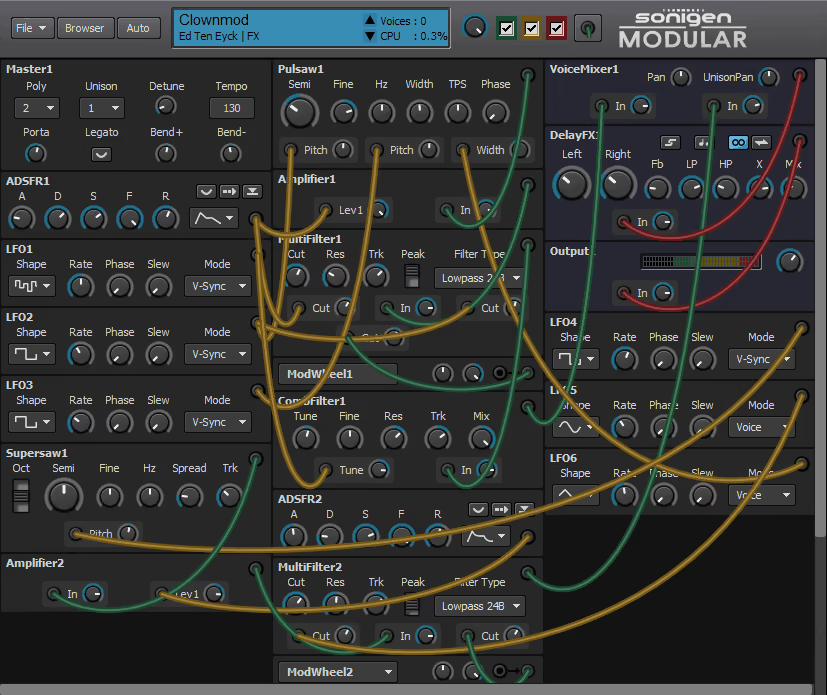
Unlike some modular synth plugins that demand a steep learning curve or struggle with clunky interfaces, Sonigen Modular strikes a decent balance between creative power and intuitive design.
With Sonigen Modular you can add as many modules and patch cables as your imagination requires. I loved the interface, as it is surprisingly fast and user-friendly, with automatic layout management that keeps your screen uncluttered. I find the signal flow easy to follow, thanks to dynamic cable visualizations, and the intelligent handling of unused inputs and knobs minimizes distractions.
- System Adaptability Customizations
Unlike some synths that lower control rates to save CPU, Sonigen processes everything at the full audio sample rate, allowing for cleaner, more accurate modulation and signal fidelity.
And speaking of CPU efficiency, I have to mention that its JIT assembly engine optimizes audio processing dynamically in real-time without compromising performance, a rarity even among modern plugins.
- Supportive Work Environment
What’s more, Sonigen combines modular voice and output effect processing into a single window, so everything you need is neatly integrated into one place. So whether I am set to creating eerie ambient pads or punchy basslines, the seamless workflow lets me stay in the creative zone.
While its non-resizable interface might feel dated, the plugin’s powerful sound design capabilities more than makeup for it. Sonigen Modular also offers a library of presets to get you started, or you can dive in headfirst and patch your own custom sounds.
Sonigen Modular is only available in VST (32-bit format) format, so you cannot use it with DAWs and Operating Systems that don’t support this format version.
2. KBplugs 200 C
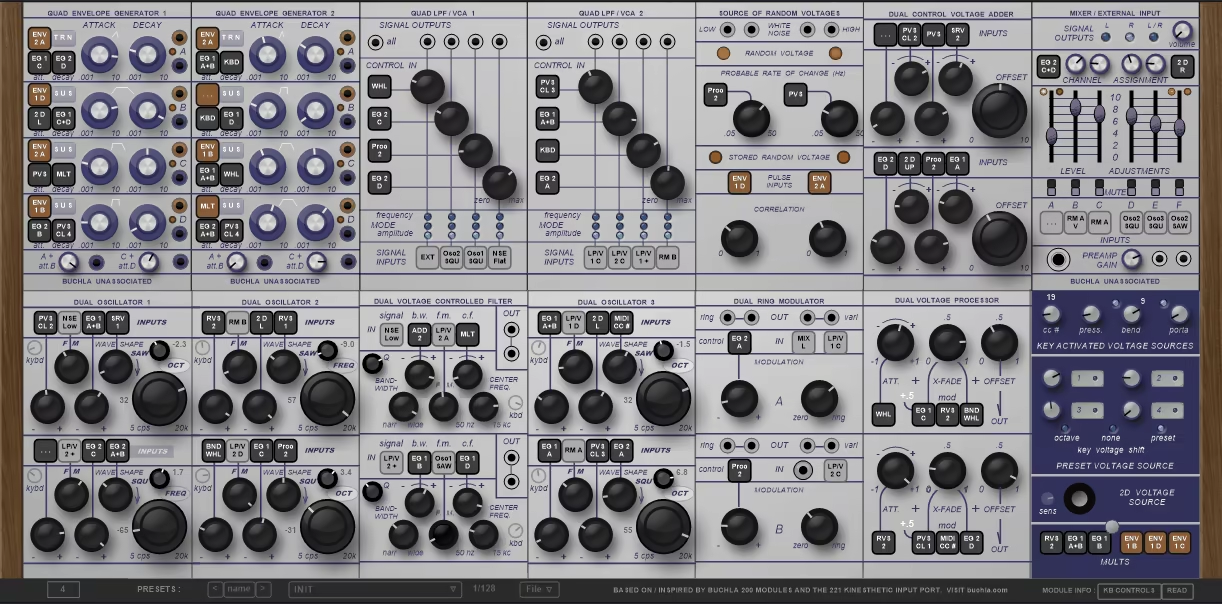
If you’re intrigued by West Coast synthesis’s creative and unconventional approaches, the KBplugs 200C can be a fantastic free choice to explore.
Inspired by the iconic Buchla 200 series, it combines a variety of modules to give you a taste of the unique “West Coast” sound design philosophy. While it’s not a direct emulation of Buchla’s hardware, it offers an accessible way to experiment with its principles in a digital environment.
- 3 Dual Oscillators (258-style)
200 C features three dual oscillators modeled after the classic Buchla 258 module, which allows for frequency modulation (FM), providing rich harmonic textures and complex sound interactions.
With waveform shaping options like saw and other wave types, as well as octave controls, I enjoyed that you can easily move between subtle tonal adjustments and aggressive sonic experimentation.
The FM inputs made it possible for me to create everything from glassy tones to chaotic, metallic effects, making these oscillators quite versatile.
- 2 Quad Envelope Generators
Each of the two envelope generators includes four independent sections (A, B, C, and D), each with its own attack and decay controls. This design gives you the ability to sculpt dynamic modulations across multiple sound layers simultaneously.
With 8 total envelopes at your disposal, you can apply precise time-based modulation to oscillators, filters, or VCAs, making it perfect for crafting intricate, evolving soundscapes. It also has dual VCAs and dual low-pass VCAs.
- Dual Bandpass VCF
200C’s dual bandpass filter provides precise frequency control, letting me isolate or enhance specific tonal ranges. Whether I’m adding subtle color or completely transforming a sound, the bandpass VCF is an essential module for crafting unique timbres.
- Dual Random Voltage Sources
For those who enjoy generative and unpredictable sound design, the random voltage sources are a highlight. These modules introduce controlled chaos into your patches, modulating parameters like pitch, filter cutoff, or amplitude to create constantly evolving soundscapes.
- Dual Ring Modulator and CV Utilities
Another great feature I liked is the ring modulator adding rich harmonic complexity and making it suitable for metallic or bell-like textures/sound design.
Additionally, the CV Processor and CV Adder modules expand your modulation possibilities, letting you combine or manipulate control voltages to achieve intricate modulations and dynamic interactions between modules.
- Drop-Down Patching System
Instead of traditional patch cables, the 200C uses an intuitive drop-down menu system for routing signals and control voltages. This approach simplifies patching without sacrificing flexibility, making it easier to focus on creativity while still allowing for complex signal paths.
KBplugs 200 C is only available in VST (32-bit format) format.
3. KBplugs Synthegrated 80
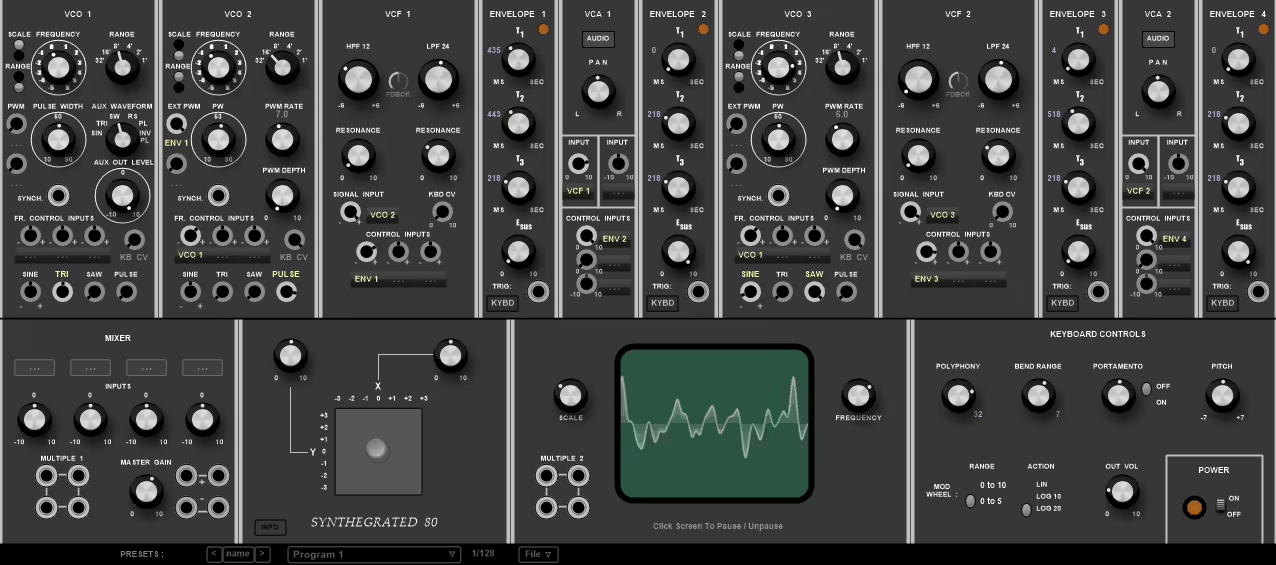
If you’re fascinated by the legendary Moog modular synthesizers but find the idea of owning the real thing daunting (and expensive), KBplugs Synthegrated 80 offers a digital alternative that’s as inspiring as it is accessible.
Synthegrated 80, to me, doesn’t seem like a direct emulation aiming for sonic accuracy. Of course, it takes its cues from the circuits of the original Moog modular systems, presenting a similar workflow and functionality. It’s a hands-on, no-presets kind of plugin that stays true to analog modular synthesis.
- 3 Voltage-Controlled Oscillators (VCOs)
For me the best part of the plugin is that it includes 3 robust oscillators, each offering scale, range, and frequency controls to shape the fundamental tones.
You’ll also find features like pulse-width modulation (PWM) with adjustable rate and depth, as well as sync options to create harmonically rich and dynamic sounds. You get Oscillator waveforms like sine, triangle, saw, and pulse, giving you the tools to craft varying sounds from smooth basslines to piercing leads.
- 2 Voltage-Controlled Filters (VCFs)
Synthegrated 80 includes two filters: a 12 dB/octave high-pass filter (HPF) and a 12 dB/octave low-pass filter (LPF). Both filters come with resonance controls, allowing you to sculpt your sounds with precision, from subtle tonal shaping to dramatic, resonant sweeps.
- 3 Envelope Generators
For shaping amplitude, filter modulation, or other parameters, the plugin features three envelope generators with T1, T2, T3, and Esus controls. I believe these are ADSR controls, and they can also follow your keyboard. This setup mirrors the flexible envelopes found in classic modular systems, enabling nuanced, time-based changes to your sound.
- XY Pad
The XY Pad adds an expressive layer of control, offering assignable knobs for each axis. I use this for real-time performance adjustments or automating complex modulations in patches.
- 4-Channel Mixer
There’s also the 4-channel mixer that provides multiple input options and a master gain control, with individual channels offering assignable knobs and a range from -10 to +10 units. I like this addition as it makes the workflow and controls much more straightforward.
KBplugs Synthegrated 80 is only available in VST (32-bit format) format.
4. Sample Science Modular Synth VCO
Costs $1
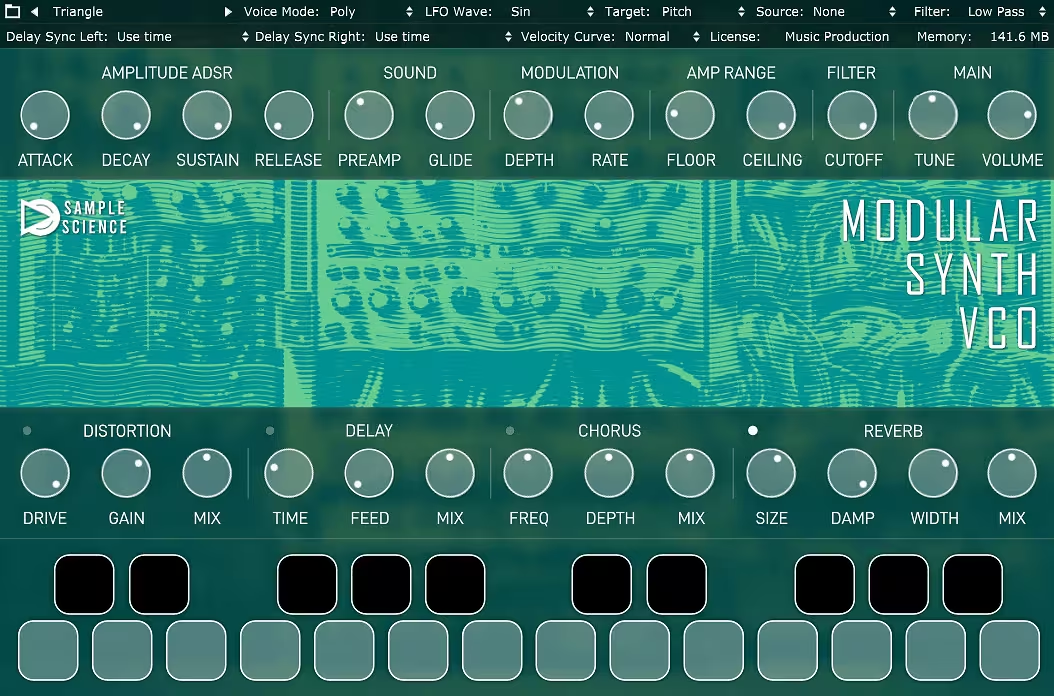
Well, it’s not free actually, it costs $1, but to be honest, it’s free for value you are getting. If you’re a fan of unique, vintage-inspired tones, the SampleScience free Modular Synth VCO plugin is a must-try.
It is designed to emulate the iconic Doepfer A-110-1 analog module and brings an edge of unpredictability to your sound design.
Unlike many pristine digital synths, this one leans into its imperfections, like its waveforms, especially the triangle and sine, which have a “wonderfully flawed,” analog-like instability that adds character and charm.
- Simple Yet Versatile
Don’t let the straightforward interface fool you. Modular Synth VCO is a surprisingly flexible tool that’s suitable for crafting everything from deep basses to soft, lo-fi pads.
I must sat that it also thrives in the lo-fi space but is by no means limited to it. There’s plenty of room to experiment with keys, leads, and other sound textures.
The synth includes four classic waveforms: rectangle, sine, triangle, and saw. Add to this a suite of effects like distortion, delay, chorus, and reverb, and you’ve got a solid toolkit for shaping your sound.
- Customizable Controls for Deep Sound Shaping
With its amplitude ADSR and multi-LFO options, you can mold your sound to fit your vision, whether you want smooth pads with a gentle attack or punchy percussive hits. This is great as it allows me to customize sound however I like.
The highpass and lowpass filters let you sculpt the tone further, while amplitude range controls give you nuanced control over the dynamics.
The synth also offers 3 voice modes: polyphonic for layered harmonies, monophonic for single lines, and legato for smooth transitions between notes.
- Analog Feel Meets Modern Convenience
Even though it’s a digital plugin, the Modular Synth VCO captures the essence of analog sound with its quirky, unstable waveforms. I mean, it’s not the best emulation but it gets the job done.
It also includes handy features like MIDI learn and customizable velocity curves to suit your playing style.
Sample Science Modular Synth VCO is available in VTS, VST3, and AU plugin formats and is compatible with Windows 8.1/10/11 or macOS 10.12 and later operating systems.
4. Full Bucket MusiC ModulAir
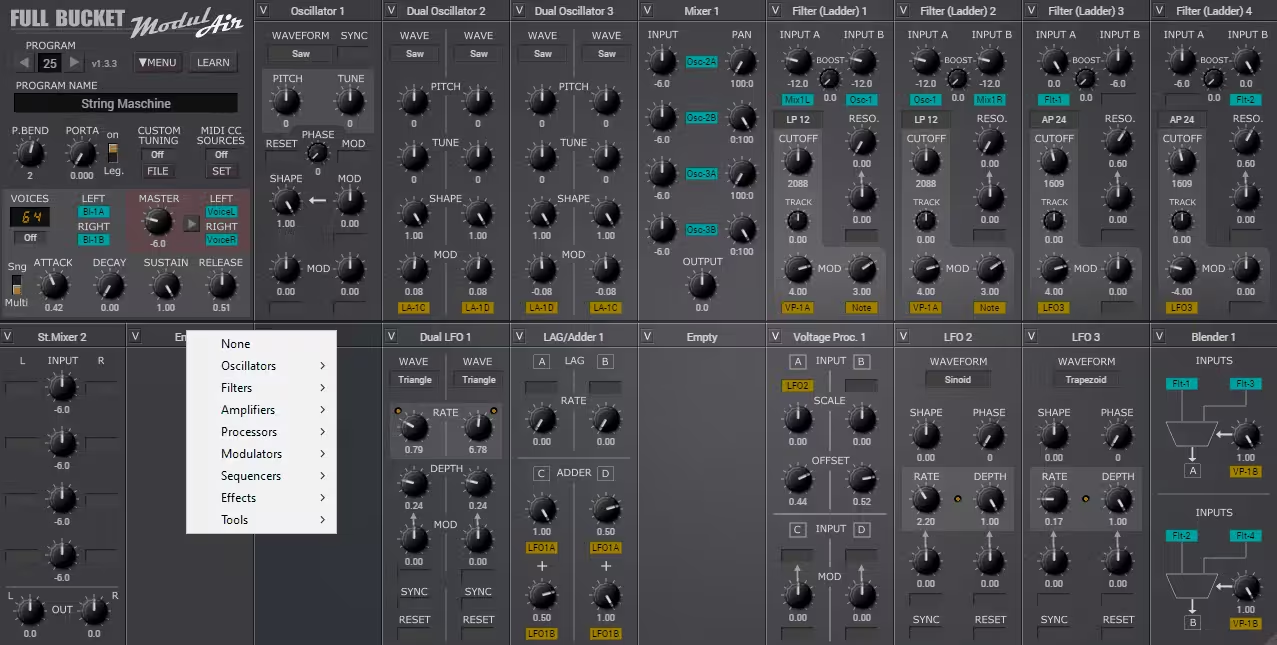
Developed by Full Bucket Music, this polyphonic (up to 64 voices) free modular synth plugin promises creative possibilities without straining your wallet or CPU.
With 57 module types, support for up to 18 modules per patch, and a resizable interface, ModulAir is based on a truly customizable experience, as it even supports advanced features like MIDI Learn and micro-tuning.
- Unconventional Workflow
Sure, the documentation is a bit “quirky,” and the learning curve might make you scratch your head at times, but that’s half the fun for me, as you also get features like MIDI Learn and micro-tuning options that will cater to you if you want to advance in terms of workflow.
- Versatile Sounds
Another standout feature I would like to mention is its ability to mimic classic modular systems, offering vintage-style warmth and character ideal for retro enthusiasts. It also allows for modern sounds, albeit with some effort and know-how. Whether you’re designing delicate pads, experimental textures, or rhythmically evolving sequences, ModulAir can be a versatile tool.
However, please note that ModulAir has some limitations, too, like a lack of preset architectural setups. Its off-beat routing may give you creative freedom, but it could be tricky to use.
Also, I think the absence of pre-wiring means every sound you design is truly your own, from oscillators to filters and modulators. That might feel a bit overwhelming for newcomers, but I can assure you that mastering this hands-on approach can be deeply rewarding.
Full Bucket Musi ModulAir is available in its beta version right now in VST2/3, AU, and CLAP (32/64 bit) plugin formats and is compatible with Windows and MacOS operating systems.
5. Audible Planets
Audible Planets is a unique semi-modular synthesizer that draws inspiration from the celestial mechanics of Ptolemy’s system, offering a fresh take on sound design.
Sounds insane, right? But I have barely scratched the surface yet. Just hear me out. Audible Planets have four oscillators that are modeled as celestial bodies orbiting a fixed point or an equant (a concept borrowed from Ptolemaic astronomy). These orbits generate waveforms with controls for frequency, phase, and harmonic content.
Then there’s a Demodulate knob that adjusts how these orbits influence the sound, transitioning between pure tones and complex, inharmonic textures.
- Modulation Matrix and MPE Integration
Almost every parameter in this synth can be connected to modulation sources like LFOs, envelopes, or even MPE data. What’s particularly exciting is how it handles both monophonic and polyphonic modulations.
That allowed me to create patches that feel alive, responding to every nuance of my performance, whether I was playing subtle dynamics or bending pitches with expressive control.
- Oscillator Section
The four oscillators are quite flexible, with controls for coarse and fine-tuning and options to toggle saw waves and tweak phase settings. Whether I’m building soft, evolving textures or sharp, cutting leads, these oscillators deliver.
The Spread and Pan controls also stood out for me, as they added a sense of movement and width that really fills out the stereo space.
- Built-In Effects and Chains
The effects section is like having a studio rack built right into the synth. With up to eight effects that I was able to arrange in one or two chains, I can experiment endlessly. Amazingly, the effects can also be modulated, so you can create evolving soundscapes where reverb tails swell or distortion crunches harder over time.
However, I would only suggest this plugin if you’re adaptable and okay with adapting to its quirky workflow. I am not sure if this is a plugin that offers a long-term workflow, but it’s definitely a great ground for experimentation. It’s also a bit technical and “nerdy” but quite fun to use, if I am being honest.
Audible Planets is available on GitHub in VST3, LV2 (both for Windows, Mac OS, and Linux), and AU (for Mac OS only) plugin formats.
7. KBplugs minimodular
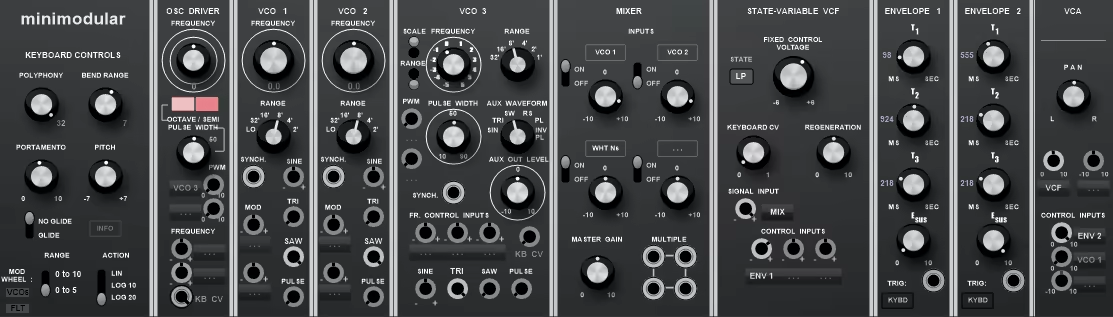
KBplugs minimodular is not just another digital / free modular synth plugin trying to be “vintage.” It fully embraces the modular mindset.
With up to 32-voice polyphony, you have the flexibility to craft lush, layered sounds or go minimalist with monophonic or legato modes for expressive, solo performances. Those who enjoy hands-on modulation also get access to the mod wheel, pitch bend, and porta adjustments.
Its pitch bend range is adjustable, allowing for anything from subtle vibrato to wild pitch dives, while the portamento control makes creating smooth glides between notes effortless.
- Oscillator Driver: Shaping the Sonic Foundation
My favorite feature is the oscillator driver, which literally sets the tone for your patch. The octave and semi-tone adjustments make it easy to fine-tune your sound’s range, whether you’re working on deep basslines or high-pitched leads.
Then there’s also the pulse width modulation (PWM) control, which adds a rich, analog-style movement to your waveforms, creating a sense of depth and liveliness that feels organic.
- Three Voltage-Controlled Oscillators (VCOs): Versatility in Sound Design
The Minimodular features 3 independent VCOs, each offering a range of classic waveforms: sine, triangle, saw, and pulse. These oscillators can be fine-tuned individually, giving you the freedom to stack, detune, or sync them for more complex tones.
- Mixer Section: Crafting the Perfect Blend
The mixer section is deceptively simple but incredibly effective, in my experience. Here, you can bring together signals from all three VCOs, as well as white noise, for added texture and chaos. Each input has its own level of control, so you can balance the elements precisely.
- State-Variable Filter (VCF)
The filter section is where the Minimodular truly shines for me. The state-variable VCF features both lowpass and highpass modes, with a fixed control voltage knob that lets you shape the cutoff point dynamically.
- Envelope Generators: Precision in Dynamics
There are two envelope generators in the plugin that provide control over time-based modulation.
Each envelope includes adjustable attack, decay, sustain, and release times, making it easy to craft anything from punchy percussive hits to evolving pads. The first envelope is perfect for shaping the VCF, while the second can be assigned to the VCA for amplitude control.
- Voltage-Controlled Amplifier (VCA)
The VCA is the final stage before your sound exits the synth, and it’s where you can add dynamic flair.
With controls for amplitude, panning, and inputs for modulation from envelopes or LFOs, the VCA lets you create everything from tightly focused mono signals to expansive, stereo-rich soundscapes. You can use that to add subtle motion or dramatic shifts in your patches, which I found to be great for creating unique effects.
KBplugs minimodular is only available in VST (32-bit format) format.
8. Z3 Audiolabs Bondage
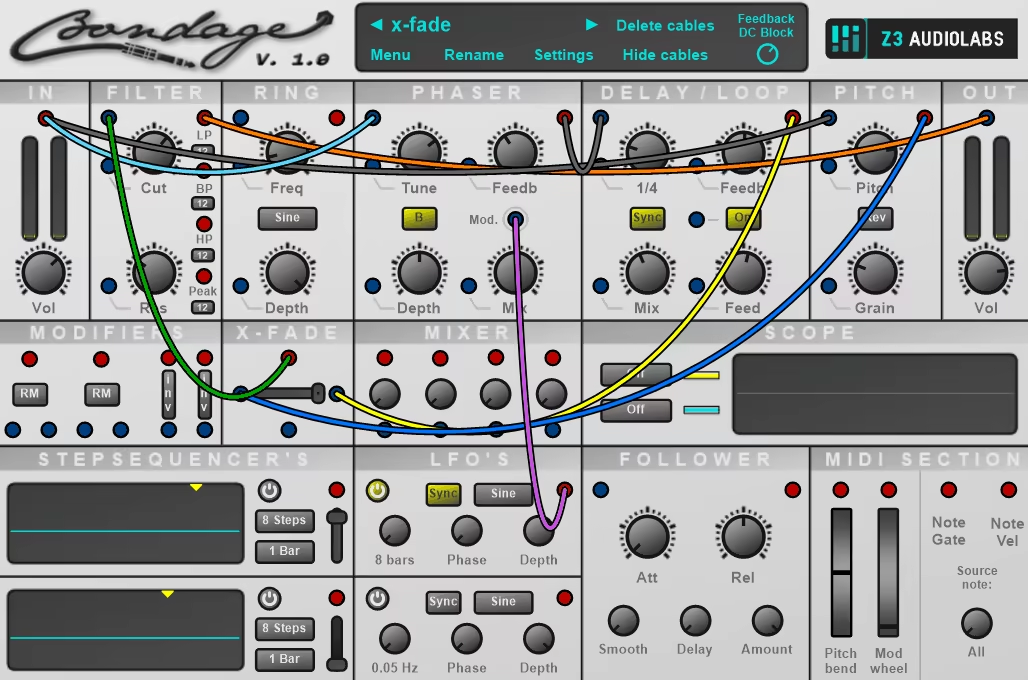
Z3 Audiolabs Bondage is a fully modular structure with 17 distinct modules and is like a playground for sound designers, offering everything you need to sculpt, modulate, and transform your audio.
Whether you’re working with effects, modulation, or mixing, you get complete control over signal flow with this plugin, which is both the best and worst part of it. The ability to route anything to anything means your imagination is the only limit.
And for those complex signal chains that turn your screen into a maze of cables, Bondage offers a neat solution, so you can hide the cables with a single click, and your workspace becomes clean and focused.
- Effects and Modulations
You’ll find 5 powerful effect modules that include high-quality filters, a ring modulator, a phaser, a delay/looper, and a granular pitch shifter for advanced sound shaping. Beyond effects, the toolkit also features 5 modulation sources to inject motion and dynamics, along with a MIDI-in module for seamless integration.
- Expansions
Additional modules like the 4 modifiers, crossfader, a 4-channel mixer, and scope for visualizing signals ensure that Bondage can handle everything you throw at it, from subtle tweaks to intricate soundscapes.
Additionally, its 8 different filter types provide tonal precision, while the granular pitch shifter opens up endless experimental possibilities beyond basic pitch shifts.
- Seamless Connections
I would also like to mention its smooth routing that allows you to rewire modules on the fly without stopping the audio, which is a huge plus for live performers and studio creators alike. I also like the MIDI Learn functionality, so assigning parameters to hardware controllers is as simple as right-clicking a control and moving your hardware knob.
This ease of integration makes Bondage highly adaptable for live performances or tactile studio workflows. Despite its modular depth, Bondage remains approachable. Its intuitive design ensures you won’t feel lost even with complex setups, and the 32 presets can give you a solid start. From there, you can explore customization more deeply and discover the plugin’s full creative potential.
For live performers, Bondage truly shines. Its cable-hiding feature keeps your interface uncluttered, allowing you to focus on tweaking controls during real-time performances. Coupled with real-time rewiring capabilities and robust MIDI integration, this plugin makes staying creative under pressure easier than ever.
Z3 Audiolabs Bondage is only available in VST (32-bit format) format.
9. Meesha Damatriks
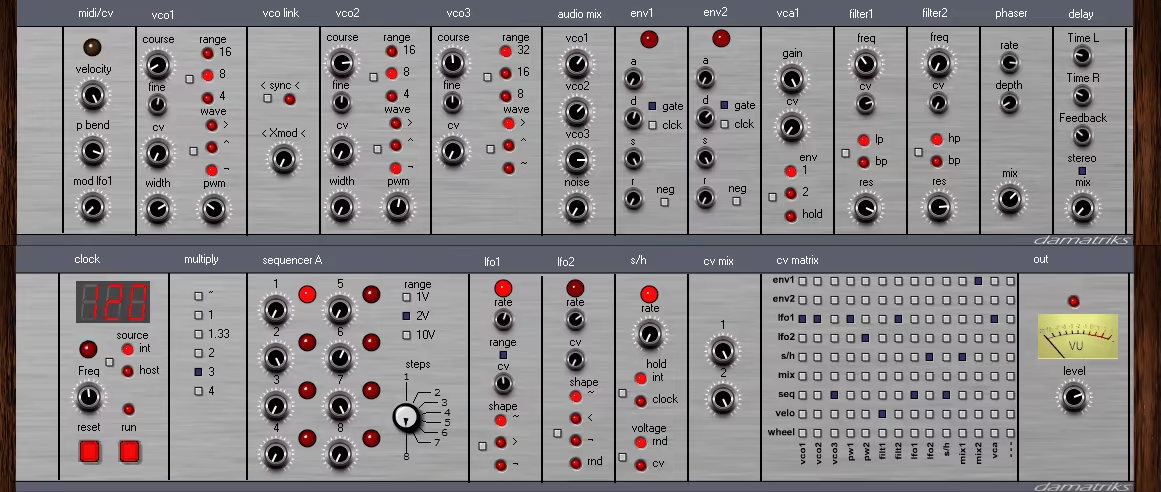
At first glance, Damatriks free modular synth VST plugin feels like stepping into the past with its “double rack space” layout, reminiscent of traditional analog setups.
The hardwired audio path keeps things straightforward, while the monophonic design channels that classic modular feel. Don’t let Damatriks‘ simplicity fool you, though, as this plugin has promising creative potential, and its modules are also quite sparse.
- Module Lineup
With two types of VCOs (Voltage Controlled Oscillators) and options for syncing or cross-modulating them, the plugin offers plenty of ways to shape and manipulate sound.
The mixer includes a built-in noise generator, which I think is perfect for layering textures or adding grit.
Sculpting your sound is easy with the two envelope modules and a pair of distinctive filters, while the stereo delay and phaser add movement and depth to your patches.
- CV (Control Voltage) matrix module
This 9×14 routing system lets you patch control signals between modules in almost infinite combinations, opening up a world of creative possibilities. Whether I’m designing subtle, evolving modulations or diving into chaotic, unpredictable signal paths, the CV matrix is a powerful and intuitive tool.
Supporting your modular adventures are utility modules like two LFOs (Low-Frequency Oscillators), a sample-and-hold module, and a step sequencer for rhythmic and evolving patches. There’s also a clock module with a multiplier for timing precision and a CV mixer for blending control signals.
What I really enjoy about Damatriks is how it balances classic design with accessibility. The workflow feels natural for anyone familiar with modular systems, and I think even newcomers will appreciate its logical layout and ease of use. The monophonic design might feel limiting to some, but it’s perfectly in line with the plugin’s analog-inspired approach and, honestly, part of the charm.
Meesha Damatriks is only available in VST (32-bit format) format.
10. KBplugs Dark Four
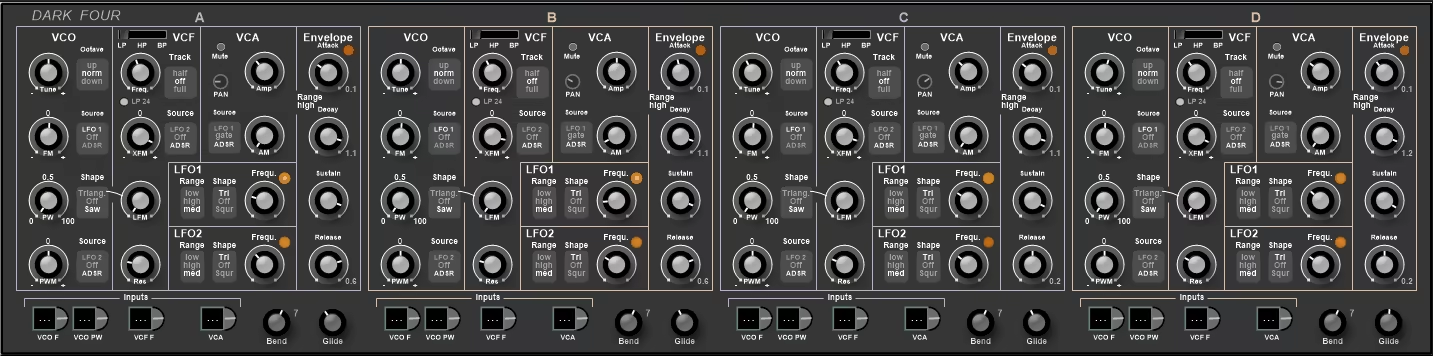
This plugin emulates the functionality of four Doepfer Dark Energy synthesizers, combining features from both the Dark Energy I and II models into a cohesive and versatile tool.
Dark Four’s architecture is built around 4 independent synth voices, each equipped with everything you need for complete sound creation. Each module includes a VCO (Voltage Controlled Oscillator), VCF (Voltage Controlled Filter), VCA (Voltage Controlled Amplifier), ADSR envelope, and two LFOs (Low-Frequency Oscillators), making each a self-contained voice ready for exploration.
- Modulators
The envelopes offer two-time ranges for added flexibility, while the LFOs span three rate ranges, even hitting audio rates for advanced modulation possibilities.
This level of depth means you can create everything from simple patches to deeply complex soundscapes. I found out that customizing each voice is a breeze. Pitch bend ranges, glide controls, and stereo panning are available for each module.
- Analog Filters
What makes Dark Four particularly exciting for me is how it pulls the best of both worlds from its analog inspirations. From the Dark Energy I, you get Tri, Pulse, and Saw waveforms along with a classic 4-pole low-pass filter. Meanwhile, the Dark Energy II-inspired multimode filter adds more sound-shaping flexibility.
- Accessible Interface
The layout is thoughtful and easy to navigate, with modules labeled A, B, C, and D, each color-coded for quick reference. This attention to detail ensures that even complex patches remain manageable for us users.
One of the most enjoyable aspects of Dark Four is its intuitive patching system. Instead of the visual clutter of traditional patch cables, routing is done through simple drop-down menus at the bottom of each synth voice. This streamlined design allows you to connect LFOs, envelopes, and audio outputs between modules with ease.
What I love about Dark Four is how it balances depth and usability. It’s powerful enough for experienced modular enthusiasts to dive into intricate designs yet approachable enough for those new to modular synthesis.
KBplugs Dark Four is only available in VST (32-bit format) format.
11. KBplugs SystemOne D
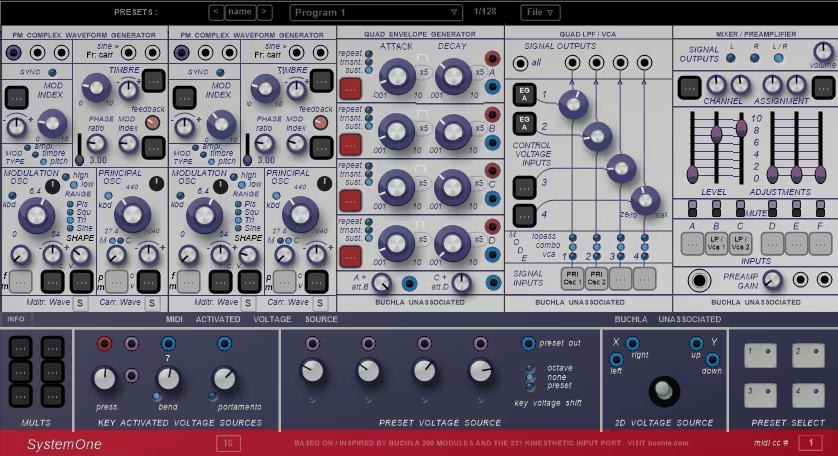
For fans of Buchla’s iconic modular systems, KBplugs System One D delivers a fascinating digital take on this classic sound design playground.
While it doesn’t aim for a 1:1 emulation of the original hardware’s sound, it captures the experimental spirit and workflow that makes Buchla synths so revered.
- Modulation Oscillator: A Gateway to Complex Timbres
System One D consists of a modulation oscillator for creating intricate textures. With four waveforms: pulse, square, triangle, and sine, you can start simple but quickly branch into complex sound territories. The oscillator’s ability to interact with CV and FM patching expands its potential exponentially.
Whether you’re modulating pitch, shaping timbre, or experimenting with audio-rate modulation, the modulation oscillator is pretty inviting.
- Principal Oscillator
The principal oscillator consists of phase modulation (PM) and CV patching capabilities, and becomes capable of everything from smooth, evolving drones to punchy, rhythmically complex tones. I suggest trying to pair the principal oscillator with the modulation oscillator and dial in parameters like feedback, timbre, and modulation index.
- Additional Features: A Modular Toolkit at Your Fingertips
Beyond its standout oscillators and envelopes, System One D gives you access to a range of features, like the Quad Low-Pass Gate/VCA, which is inspired by Buchla’s iconic low-pass gate design. This module lets you sculpt sound in both amplitude and timbre, giving patches a distinctly organic quality.
Further, with signal routing, panning, and gain controls, the plugin’s mixer makes it easy to shape and balance your final output. You can also add some preamp saturation for extra warmth or grit.
Then there also are a variety of voltage tools, including portamento and preset voltage shifts, to ensure seamless integration across your patch.
There are so many more features to talk about that are beyond the scope of this description, but I would still quickly mention controls like Timbre, Feedback, Mod Index, and Phase Ratio that give you a lot of flexibility and scope for creative sound design.
KBplugs System One D is available in VST (32-bit format) format.

Shaurya discovered his passion at the intersection of writing and music. Starting his career as a songwriter and rapper, he gradually picked up FL Studio and soon delved deep into the world of audio engineering and music production. Based in Delhi, India, he has worked with top studios, been featured on Red FM, garnered millions of streams on Spotify, and released music with major labels like Sony and Hitz.