
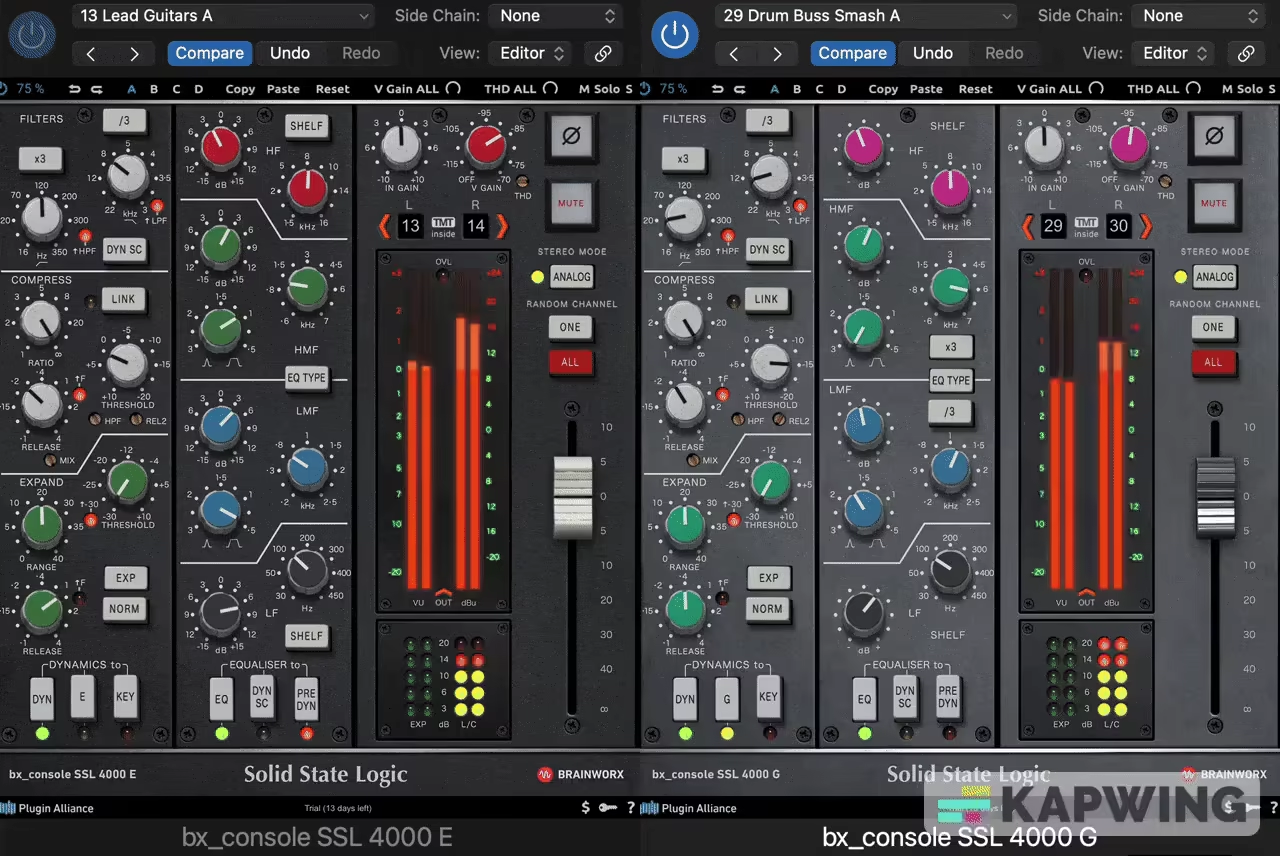
Today, we’re putting two legends head-to-head: the Brainworx SSL 4000 E and SSL 4000 G plugins.
Those of you who have always wanted to mix on an SSL console but lack the spare hundred grand are not alone. These massive, colorful, iconic desks have powered countless hits from the 80s onward, including hard rock and glossy pop.
Well, you are in luck, Brainworx and their TMT (Tolerance Modeling Technology). You can get that SSL sound in your DAW! But here’s the kicker: they’ve recreated two of the most celebrated SSL consoles, and now they want you to choose SSL 4000 G and SSL 4000 E.
Personally, I love the SSL sound. It’s almost magical how these consoles make tracks jump out of the speakers, whether it’s the punch of a drum kit or the way vocals cut through a dense mix. They’ve always been my go-to channel strips for professional projects.
But for Brainworx’s SSL 4000 E vs. G, choosing which one isn’t an easy question as both come with subtly different personalities. Think of the E as the more snarky older sibling who can get things rough and real and the G as the smoother, more refined younger one.
I’ll walk you through the differences, geek out on some standout features, and tell you which one might suit you better. Spoiler: They are both great, but by the end, you’ll know which one belongs in your plugin arsenal. Let’s dive in!
Features
“The legendary sound of the Solid State Logic 4000 series consoles brought to you by Brainworx. With the power of TMT this officially licensed SSL plugin allows you to build a 72 channel analog console in your DAW. Harness the power of the most famous British console ever produced.” Brainworx
| Feature | Plugin 1 (SSL 4000 E) | Plugin 2 (SSL 4000 G) |
| EQ Modes | Black and Brown knob EQ modes | Pink and Orange knob EQ modes |
| Compression Characteristics | Smooth and colored compression | Precise and clean compression |
| THD & V-Gain Controls | Fully adjustable harmonic distortion and noise | Fully adjustable harmonic distortion and noise |
| TMT Channels | 72 distinct analog-modeled channels | 72 distinct analog-modeled channels |
| Gate/Expander Controls | Includes hysteresis control | Includes hysteresis control |
| Filter Ranges | High-pass: up to 1.05 kHz, Low-pass: down to 1 kHz | High-pass: up to 1.05 kHz, Low-pass: down to 1 kHz |
| GUI Scaling | Static size (not scalable) | Static size (not scalable) |
| Plugin Formats | AAX DSP, AAX Native, AU, AAX Audiosuite, VST2, VST3 | AAX DSP, AAX Native, AU, AAX Audiosuite, VST2, VST3 |
Sound and Character
These two channel strips are pretty similar in terms of design, sound, character, and workflow. Only subtle differences play the part that makes them suitable for different purposes. Let’s check them out!
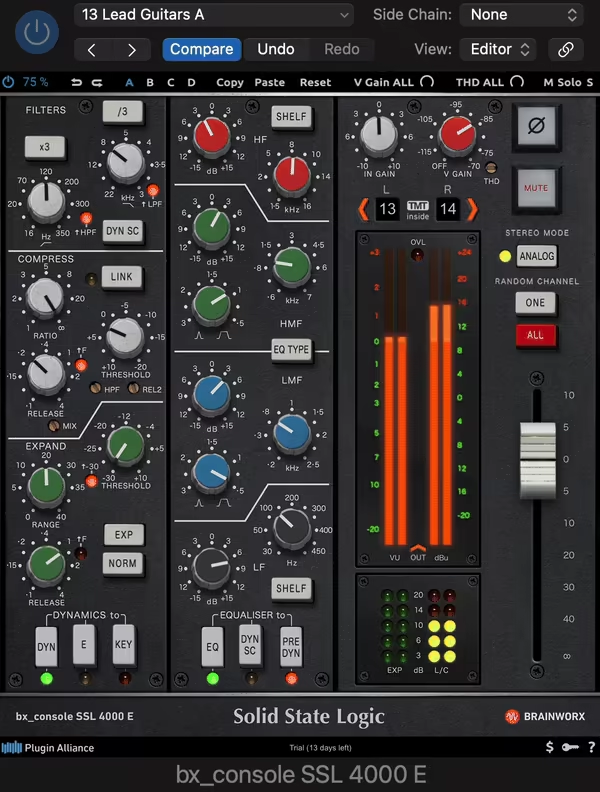
- SSL 4000 E
Just like the original console, the SSL 4000 E has a bold, upfront, and aggressive sound. I love working with it when creating rock mixes, punchy drums, and guitars that need attention.
The key here is the Black and Brown knob EQ modes, as they give the character to the unit.
The Black EQ has a sharper and more surgical approach which is ideal for boosting or carving out specific frequencies to shape the tone. The Brown EQ is smoother and offers a more vintage vibe that is ideal for acoustic instruments or warm vocals.
The E compression is the highlight here, especially if you love adding color to your tracks. It’s smooth but packs a bite, making it excellent for adding punch to drums or taming dynamic vocals.
The ability to engage TMT (Tolerance Modeling Technology) and randomize channels adds subtle but important variations across tracks, simulating the organic imperfections of an analog console.
I think this one is great for genres like rock, pop, or anything that needs that raw, aggressive energy.
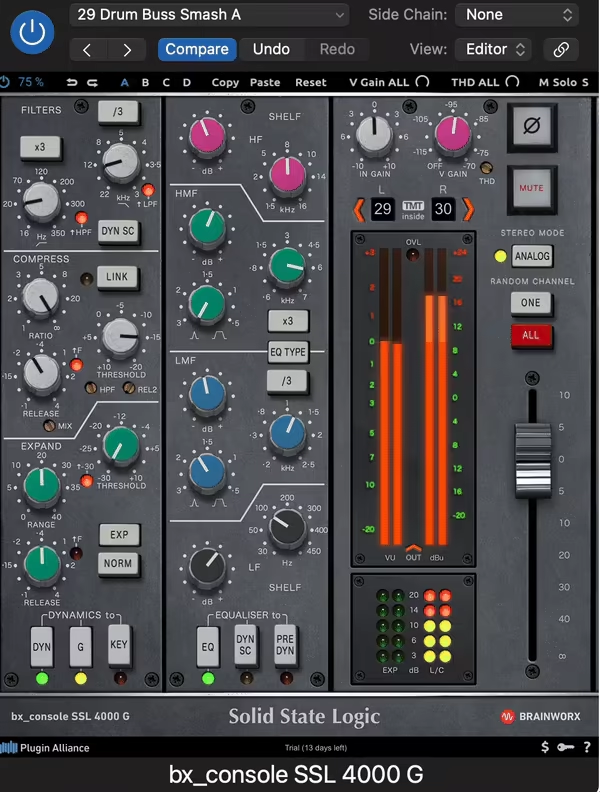
- SSL 4000 G
On the other corner, the SSL 4000 G features a more refined and polished sound. Instead of the raw and forward approach of the E, the G is more sophisticated and smoother.
The Pink and Orange knob EQ modes are the heart of the unit. The Pink EQ has a balanced and musical sound, which works great with vocals and delicate instruments such as strings and pianos.
The Orange EQ is designed with the Pultec style in mind, rounding the low-end, making it great for bass-heavy genres or simply adding depth to low-end frequencies without making the mix muddy.
The G compressor is tight and precise, which lends itself beautifully to genres like R&B, electronic, or modern pop, where clarity and detail are paramount. The same TMT feature adds that analog vibe, but the cleaner response makes it feel a touch more hi-fi.
I found it especially effective on stereo buses or master chains, where it glues the mix together without sacrificing transparency.
- Comparison
As you can see, SSL 4000 E and SSL 4000 G share a similar foundation, but their tonal approaches make them suited for different tasks.
The 4000 E is bold and aggressive, designed to push elements forward, making it ideal for high-energy tracks like rock or dense mixes. The 4000 G, in contrast, is smoother and more refined, offering a polished sound better suited for modern genres where clarity and precision are key.
The EQ modes are where the differences shine. The E’s Black and Brown knobs excel at carving and adding punch, with the Black being sharper and the Brown offering a vintage feel.
The G’s Pink and Orange knobs, however, are more about balance and musicality, with the Orange knob’s Pultec-inspired design adding depth to bass-heavy material. Each EQ set reflects the personality of its respective console, edgy for the E, smooth for the G.
Compression is another key distinction but you have both G and E compressor choices on both units. So, it doesn’t matter which plugin you choose; you will have both compressors on your plugin.
But, when you listen very carefully, the G compressor on the E unit sounds very subtly different than the G compressor on the G unit. The G features a more hi-fi and pristine sound, while the E has more color and is better for dirtying things up. You’ll have to try both compressors on both channels to see which one goes better with your sound.
Features and Interface
EQ Modes
The main difference between the E and G units can be found in the EQ sections.
The SSL 4000 E features Black and Brown knob EQ modes, delivering a more aggressive and sharper tone or a smoother vintage character.
The SSL 4000 G comes with Pink and Orange knob EQ modes, which brings a balanced musical sound or Pultec-style warm low-end.
So, the main difference is the sonic character as E has a more forward approach, while G is more refined.
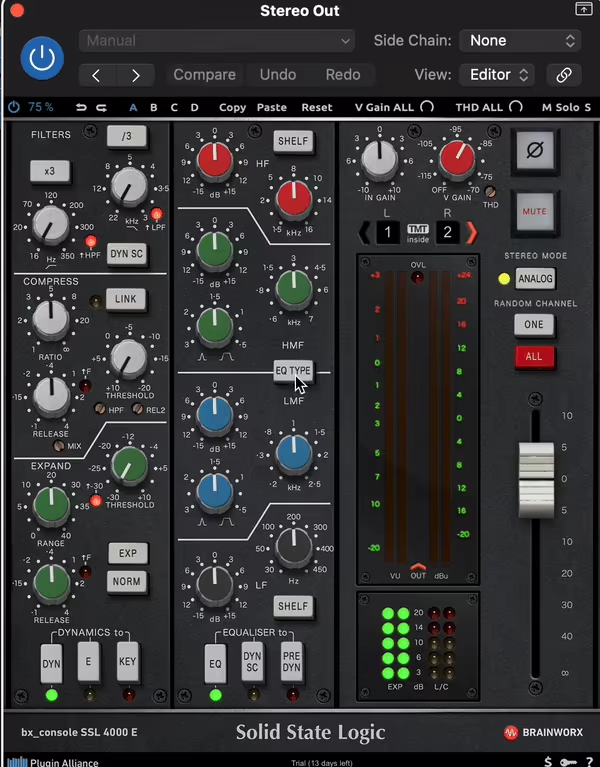
Compression
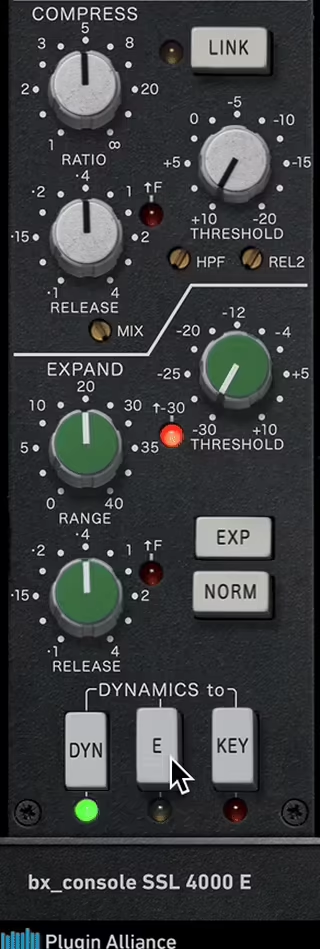
In terms of compression, both units are very similar, as both channel strips come with the G and E compressor choices.
The E compressor has more punch and color, which goes well with high-energy tracks and instruments as it adds great presence.
The G compressor is tighter, more precise, and has a more pristine sound, which is great for subtle control and transparent gluing on buses and mixes.
TMT (Tolerance Modeling Technology)
This is where both plugins shine, as the TMT offers 72 analog-modeled channels with subtle variations for an authentic console experience. This means that both plugins offer pretty impressive organic depth and realism across mixes.
Faithful Emulations of the Original Channel Strips

Both plugins provide a faithful recreation of the original 4000 E and G channel stripS, including its preamp, filters, compression, expander/gate, and 4-band parametric EQ, delivering authentic SSL sound in the box.
Continuously Variable THD and Virtual Gain Controls
These controls on both units allow you to add harmonic saturation and analog-style noise, giving you the flexibility to introduce warmth, grit, or a clean, pristine signal, depending on your needs.
Useful Presets

Both units have a great range of presets that can be used as starting points for tweaking for various applications.
Interface
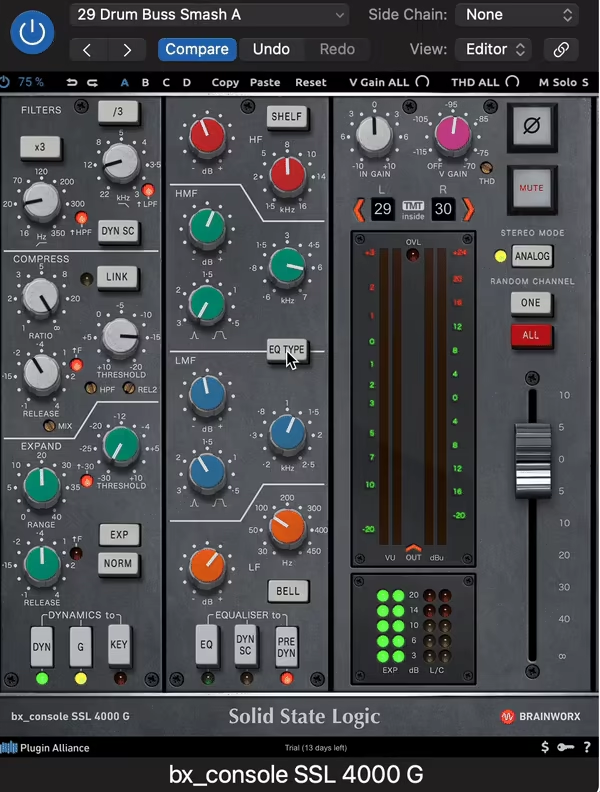
The interfaces of the SSL 4000 E and SSL 4000 G plugins feel like stepping into the cockpit of a vintage studio spaceship but without all the intimidating buttons that make you want to cry.
They’re beautifully laid out, pulling inspiration straight from the original SSL consoles. Well, they are identical to the original hardware, so you can feel like playing with the legendary consoles in your DAW.
On both plugins, everything’s where you’d want it. Filters, dynamics, EQ, and that iconic SSL-style fader all have their own cozy spots, making the layout feel like a workflow dream.
The dark gray tones are easy on the eyes (no staring into the sun while mixing here), and the crisp white labels make it simple to spot what you’re tweaking.
When it comes to running plugins like these on your DAW, performance is always key. Nobody wants their session to grind to a halt because of a CPU-hungry channel strip, right? Luckily, the bx_console SSL 4000 E and G are designed to be surprisingly efficient, even when loaded up across multiple tracks.
One tiny quirk? You can’t resize the interface dynamically, which is a bit of a bummer if you’re rocking a 4K monitor. Oh, and hovering over controls doesn’t show values; you have to click. Not a deal-breaker, but if you’re like me and prone to clumsy clicks, it’s worth noting! Still, they look and feel premium.
Performance
Compatibility
Both plugins work seamlessly on macOS (10.11 and up) and Windows (8 and up), so unless you’re rocking a prehistoric setup, you’re covered. They’re available in AAX DSP, AAX Native, AU, AAX Audiosuite, VST2, and VST3 formats.
CPU Use
Brainworx claims these plugins are light on CPU, but I am not sure if I agree with that. While they’re not heavy, they aren’t featherweight either. I would say they are modest in the CPU-hungriness.
For instance, the SSL 4000 E typically uses around 4% of CPU on an Intel i7 system, whereas older alternatives like Waves SSL E-Channel only hit about 1%.
Still, for the level of depth and realism you’re getting, thanks to features like TMT and those 72 unique channels, it’s a solid trade-off.
In Practice
Drums
The SSL 400 E works wonderfully for adding punch and grit to your drum tracks with its ability to create tight, punchy kick and snappy snare thanks to the “Black knob” EQ. Plus, the E compressor adds extra aggressive bite.
I recommend using the fast attack on the compressor to take advantage of extra snaps or toms. Use the mix knob to mix in some dry signal as well for instant parallel compression, which is great for keeping drums punchy without losing dynamics.
On the other hand, the SSL 4000 G is great for smoother, more refined drum sounds. The “Pink knob” EQ adds musicality to overheads and toms without sounding harsh.
If your mix feels too sharp, try rolling off the highs with the G’s clean filters. You can use the G’s compressor in stereo mode for gluing a drum bus together while maintaining a polished sound.
Vocals
The 4000 E shines when you want vocals to cut through a busy mix. Its “Brown knob” EQ brings warmth to the lower mids, while the “Black knob” brightens the top end without sounding brittle.
You can create clear and consistent vocals using the sidechain high-pass filter to prevent low-end rumble from triggering the compressor
For softer or emotional vocals, the 4000 G is your best friend. Its “Orange knob” EQ adds smoothness to highs and helps tame sibilance. Need more transparency? The G’s dynamics section is less aggressive, keeping the vocal expressive while controlling peaks.
Master Bus
I use the 4000 E to add boldness and energy to the mixes. I like the THD control for subtle harmonic saturation across the master bus, as it adds warmth without muddying up the mix.
The V-Gain knob is one of my go-to tools to introduce some analog-style noise for added texture but keep it subtle to avoid overwhelming softer genres.
For smoother, polished mixes, the 4000 G takes the lead. Its refined EQ and cleaner dynamics section make it perfect for enhancing clarity and sheen.
I place the EQ after the dynamics for a final tonal boost or before for shaping the compression’s response, either way, it works pretty well.
Guitars
For electric guitars, the 4000 E adds aggressive midrange bite and tightness, which I really enjoy. I love the “Black knob” EQ to carve out space or emphasize crunchy mids for distorted tones.
When you crank the THD knob slightly for extra saturation and analog warmth, you get impressive gritty rock tones.
The 4000 G excels with acoustic guitars and cleaner tones. The “Pink knob” EQ brings out natural resonance without over-sharpening.
If your acoustic sounds harsh, use the low-pass filter to gently tame the top end, leaving it warm and present. The G’s compressor keeps things smooth and controlled and works wonders for strumming patterns or fingerpicking.
Last Words
Both the SSL 4000 E and SSL 4000 G bring the legendary SSL sound into your DAW, each with its own unique personality.
The SSL 400 E is bold, punchy, and full of character, perfect for tracks that need to stand out, while the SSL 400 G is smooth, refined, and polished, ideal for more balanced and subtle mixes. I must say the sonic difference is subtle, and the trial-error method works best here.
As affordable units, I recommend getting both and trying them out in your mixes. You can use them both in the same project for different tracks, which is a great idea.
Whether you’re sculpting drums, shaping vocals, or gluing a mix together, these plugins deliver unmatched analog realism. Whichever you choose, you’re getting a slice of studio history in your digital setup!
