
Current 2.0 stands out as a feature-packed synth that effortlessly balances creativity and usability. Its 5 sound engines, robust modulation system, and pro-level effects make it a versatile tool for producers across genres. While its price and CPU demands might give some pause, the depth of its capabilities and regular updates make it a worthwhile investment for sound designers and music creators.
Pros
- Intuitive interface that balances ease of use with depth.
- Five versatile sound engines for an expansive range of possibilities.
- Powerful modulation system with drag-and-drop functionality.
- High-quality effects that feel like an integral part of the synth.
- Regular updates and cloud-connected content keep it fresh and relevant.
Cons
- CPU usage can be high with complex patches.
- Some presets lean too heavily on trendy EDM sounds.
- The regular price might feel steep compared to competitors.
I’ve been playing synths for years now and rarely come across one that feels especially new, but Current 2.0 by Minimal Audio does just that.
It was more of a creative partner compared to a tool when I first started exploring it. It has so many sound design possibilities you almost have to pick a starting point, well, in a good way.
The interface caught my attention immediately, as I’m not a fan of synths that make you dig through endless menus just to get a sound going. Current 2.0 is the opposite. It’s intuitive without being overly simplified, whether you tweak presets or build something from scratch, as it all feels natural.
And the sound? So, let’s just say it achieves that kind of modern, polished sound without sacrificing the depth or grit you need for experimental soundscapes. It’s like the synth already knows what you’re trying to do and gets out of the way so you can focus on creating. Whether I’m messing with presets or building something wild from scratch, it just flows.
So, grab a tea or whatever keeps you going, and let’s dig into this synth that was built for everyone who wants to push boundaries without getting stuck in technical weeds.
Features
Current 2.0 is a powerhouse synth that brings together multiple sound engines, an intuitive interface, and powerful modulation capabilities. With new tools and enhancements, it builds on the success of version 1, offering flexibility and creativity for any producer or sound designer.
- Multi-Engine Sound Design
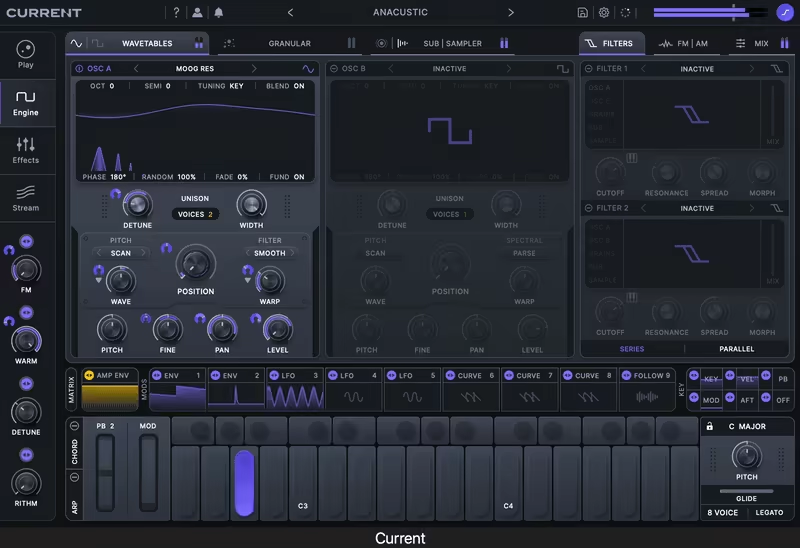
At the heart of Current 2.0 are five parallel sound engines that work seamlessly together or individually.
The spectral wavetable oscillators stand out with over 40 warp effects, allowing for deep sound manipulation. Whether you want smooth pads or aggressive leads, the spectral and time controls make it easy to craft complex, evolving sounds from even the simplest waveforms.
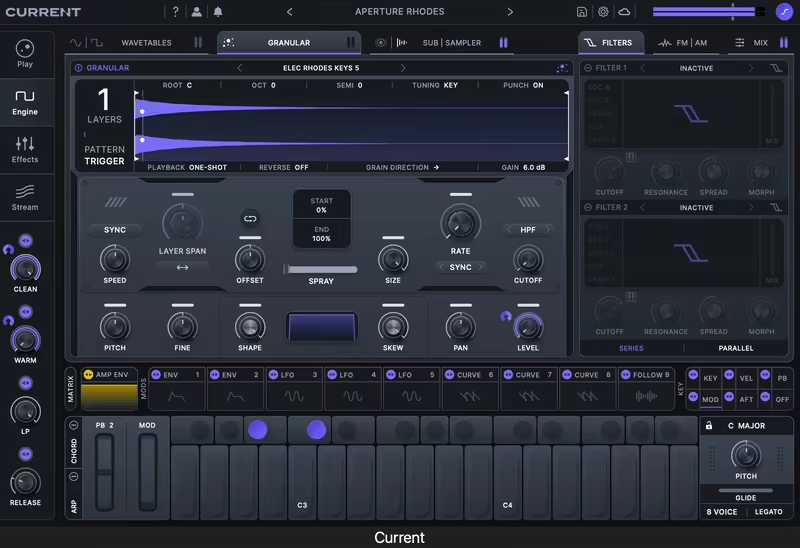
The granular synthesizer is another highlight, offering precise control over grain shape and size. Drag-and-drop functionality allows you to import samples and transform them into shimmering textures or gritty soundscapes with ease. It’s a playground for experimentation.
For low-end lovers, the sub-oscillator is a robust engine designed to solidify your bass. It adds harmonic enhancement for deep, powerful bass layers, perfect for anchoring your tracks.
Meanwhile, the time-stretching sampler introduces unique textures and seamlessly integrates with your project, automatically detecting key and tempo for a smooth workflow.
- Advanced Modulation System
Current 2.0’s modulation capabilities are vast and easy to navigate. With nine modulation slots featuring tools like envelopes, LFOs, and curve sequencers, the system encourages creativity. Assigning modulation is effortless, thanks to the intuitive drag-and-drop functionality.
The new dynamic modulation matrix makes complex routings easy to manage. This popup view provides a clear overview of your modulation paths, ensuring even intricate sound designs remain accessible.
Plus, with the removal of CPU limitations on modulation chains, you can stack modulators endlessly to achieve rich, evolving soundscapes.
- Effects Rack
The effects in Current 2.0 are more than just add-ons; they’re integral to the sound design process. The rack includes 9 premium effects inspired by Minimal Audio’s celebrated plugins.
The Wave Shifter, a standout addition, combines frequency shifting with FM, AM, and Ring Modulation to create dynamic, distorted tones.
What sets the effects apart is their seamless integration with the modulation system. Every parameter is modulation-ready, allowing for evolving, interactive effects chains that enhance the overall sound.
- Play View and Macros
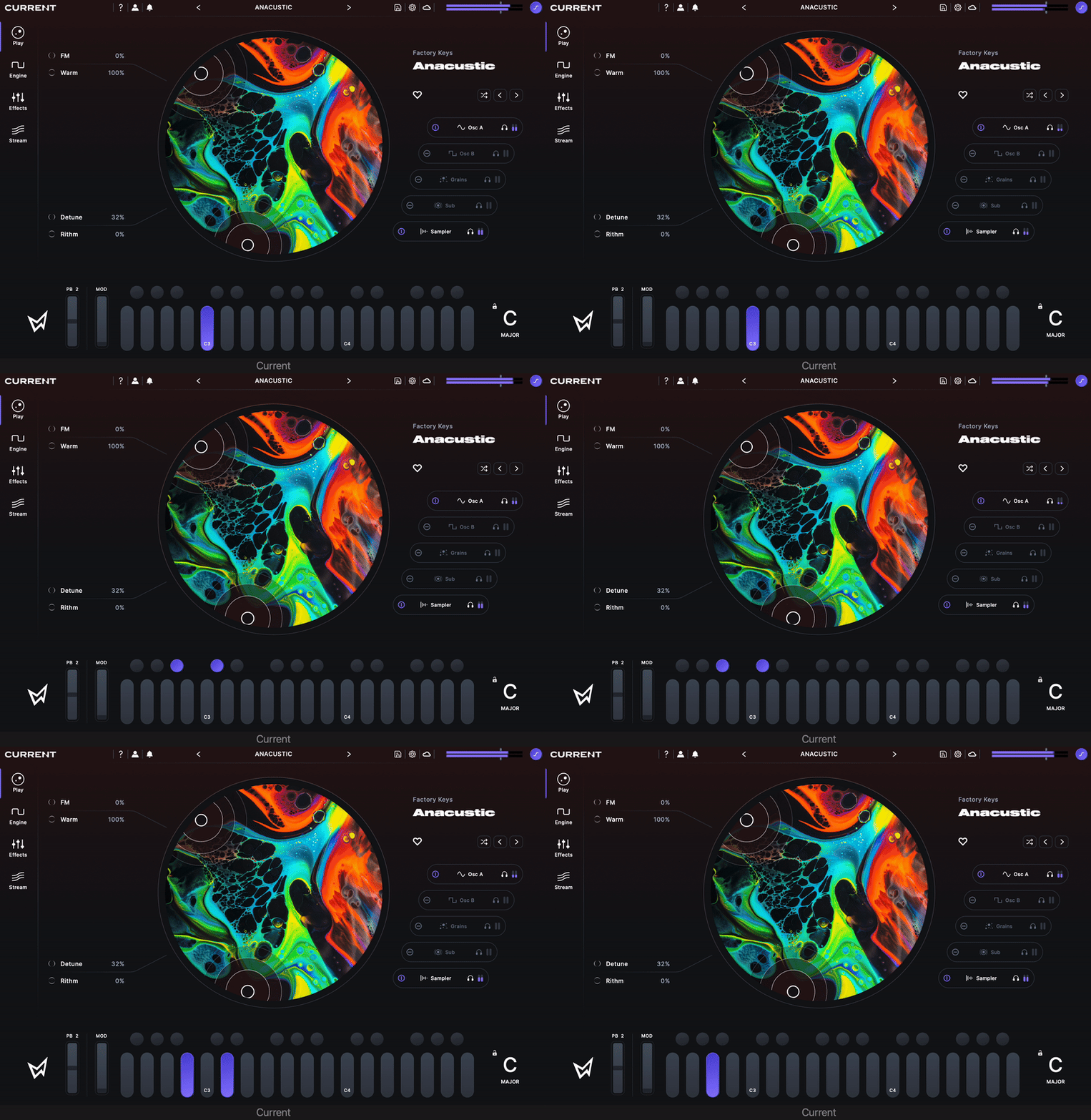
Designed for immediate creativity, the Play View features a dual XY pad that lets you control four macro parameters simultaneously.
Whether you’re fine-tuning presets or performing live, this interactive feature keeps things hands-on and intuitive. Each macro is pre-mapped to key parameters, streamlining the workflow and making it accessible for beginners while still offering depth for advanced users.

- Cloud-Connected Presets and Content
The Stream system links directly to a rich library of 400+ presets, 170 wavetables, and 800+ samples.
With visual filtering tools, you can quickly find patches that match your desired sound profile. Drag-and-drop functionality lets you seamlessly load wavetables or samples into the engines, while regular updates and expansion packs ensure the library stays fresh and relevant.
Interface and Workflow
The interface of Current 2.0 feels like a toolbox: clean, snazzy, and ready to make killer sounds. Everything feels just right, with just enough flair to keep things interesting without overwhelming your brain. Beginners will feel at home, but sound design geeks like me can spend hours buried in it.
Interface
How does this synth look? Sleek. And the GUI is more than eye candy; it’s ridiculously functional. Each section is devoted to sound engines, modulation, and effects. Nothing cluttered, nothing confusing. When I wanted to get into the granular engine, it was right there. Need to set up modulation? Just drag and drop. It’s like building with LEGO, but with sound instead of bricks, and just as satisfying.
I love the visual feedback! You tweak a parameter, and the waveform reacts immediately. It’s like the synth says, “I got you.” For example, adjusting the grain size makes the waveform stretch or compress; you get instant feedback. It’s not just pretty; it’s practical, making sound design easier to follow.
A personal favorite is the drag-and-drop modulation system. Drag an LFO over to the pitch or filter, and glowing highlights appear when you connect something. It’s so intuitive and honestly addictive. You feel like a sound design wizard when you hear the results.

Workflow
Using Current 2.0 is fun. I’ve used synths where it felt like I needed a manual just to make a sound, but here? You get results fast. The Play View is a game-changer.
The dual XY pad lets you move macros and adjust multiple parameters at once. Perfect for moments when I want to just play and see what happens.
The mixer panel is a standout. It’s like having a mini mixing desk built into the synth. You can solo or mute engines, adjust levels, and layer sounds while keeping control. When working on big patches, this feature keeps things tidy. I wish more synths had something like this: simple and effective.

When things get messy (and they will, especially with lots of modulation), the modulation matrix is your best friend. It gives a clear overview of all your modulation paths.
If you’re wondering, “Why does my filter sound alive?” the matrix helps you figure it out in seconds. It’s a roadmap for your sound design.
The effects rack is where things get wild. It feels like having a professional effects suite inside the synth. You can stack effects, modulate them, or copy-paste settings between slots.
I layered distortion effects just for fun. My CPU wasn’t thrilled, but what were the results? Totally worth it. With this rack, you’re working with more than just a synth; it’s a sound design playground.
First Impressions and Sound
The current interface invites you to dive in, and the sound is great. It invites you to get started directly with its polished, versatile design, capable of delivering everything from atmospheric textures to heavy club leads.
Sonic Versatility
What’s most striking is how Current 2.0 combines 5 sound engines. The spectral wavetable oscillators are incredibly fun to tweak. With over 40 warp effects, you can turn simple waveforms into complex, evolving soundscapes or sharp, aggressive tones.
The granular engine is where it gets wild. Drag in a random sample, and you can create shimmery deconstructed textures or gritty soundscapes with ease. The visual feedback helps a lot, making the process intuitive.
For low-end lovers, the sub-oscillator adds a deep, harmonic low end that anchors your mix. It’s simple but effective. The time-stretching sampler is another gem, perfect for combining textures or creating rhythms. Together, these engines work as a team, letting you create cinematic ambiances, big EDM tracks, or experimental soundscapes.

Ease of Use
What struck me was how approachable Current 2.0 feels. The clean layout and dual XY pad in the Play View make it the perfect starting point. Whether you’re tweaking presets or building patches from scratch, it’s fun.
The drag-and-drop modulation system makes linking modulators to parameters second nature. Meanwhile, the updated modulation matrix ensures you don’t get lost in complex routings. You always have a bird’s-eye view of your sound design.
Use Cases
The real fun with Current 2.0 is its flexibility. It’s one of those synthesizers that fits into almost any genre. Need deep, evolving landscapes for film scoring, modern leads for EDM or aggressive basslines for hip-hop? Easy.
I was creating airy ambient textures one day and gritty, distorted leads the next. The Wave Shifter effect alone opens up endless creative opportunities. With its cohesive workflow and flexibility, the unit is equally great for tweaking presets or building sounds from scratch.
Compatibility
Current 2.0 is available for both macOS (10.9 and higher, including Apple Silicon) and Windows (10 and higher), supporting VST2, VST3, AU, and AAX formats.
While it’s optimized for modern systems, CPU usage can spike with complex patches, especially when using multiple engines or heavy effects. On average, it runs smoothly, but larger patches might demand a more powerful setup, particularly if you’re stacking layers or pushing modulation to the max.
Last Words
For me, Current 2.0 isn’t just a synth; it’s a creativity tool that bridges simplicity and depth. Whether you’re a beginner looking for inspiration or a seasoned sound designer pushing boundaries, it offers tools that spark creativity without overwhelming you. It’s intuitive, versatile, and powerful, a must-try for anyone serious about sound design.
