Looking for the best FREE Synth VST Plugins to level up your sound design without spending a dime? You’re in the right place!
Finding a great free synth plugin can feel like hunting for a needle in a haystack. With so many options out there, it’s tough to know which ones actually sound good, offer real creative flexibility, and won’t crash your DAW. But don’t worry, I’ve done the digging for you!
Whether you need fat analog basses, lush pads, cutting leads, or experimental textures, this list of 11 incredible free synth VSTs will have something for you. Some of these plugins rival even paid synths in terms of sound quality, features, and usability, proving that you don’t always need to spend big to get professional results.
Let’s dive in and check out some of the best free synth VST plugins available in 2026!
1. Audible Genius Primer 2
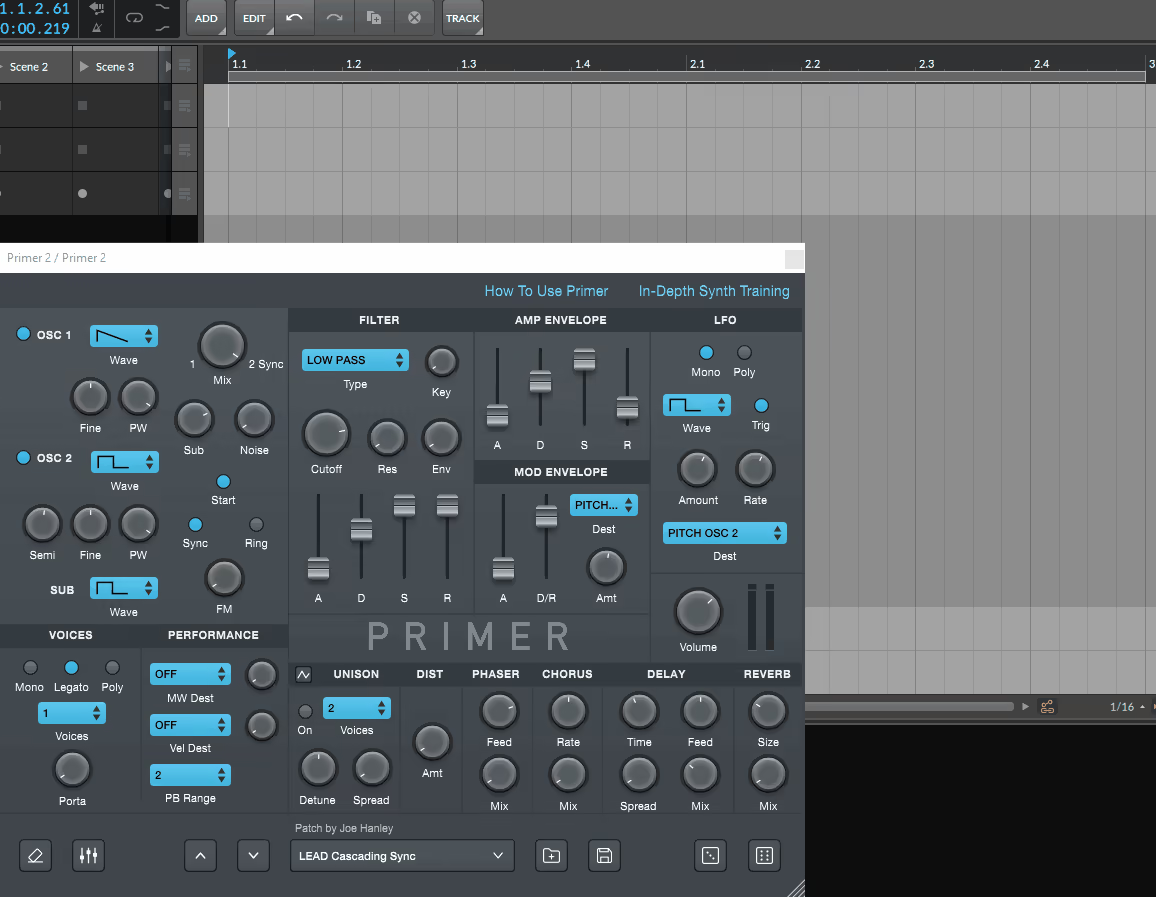
What I really love about Primer is how it manages to make learning subtractive synthesis genuinely fun without dumping you into a sea of confusing knobs.
It’s like having a synth buddy that walks you through the basics but also lets you get creative once you’re ready to flex your sound design muscles. I’ve found myself reaching for Primer whenever I want to quickly sketch out ideas or just experiment without the usual overwhelming options.
The interface is refreshingly clean and straightforward, which I really appreciate. Everything is laid out in a way that feels intuitive, no guessing where the modulation lives or what that mysterious knob does.
That visualizer showing envelopes and LFOs in action is a neat touch, too; it’s like watching your sound come alive in real-time, making it super satisfying to tweak. This clarity in the workflow means you can jump right in, even if you’re pretty new to synths, without feeling lost or frustrated.
- Two Oscillators and a Sub-oscillator With Classic Waveforms
Primer gives you saw, pulse, triangle, and sine waves to play with, plus a noise oscillator, FM, and oscillator sync. What I enjoy is how these basics can be combined to create everything from warm basses to cutting leads.
The sub-oscillator adds that extra thickness when I want it, perfect for filling out the low end without any fuss.
- Multimode Filter With Resonance and Key Tracking
The filter is surprisingly powerful for a free synth. I use the low band, and high-pass modes extensively, especially the resonance control that can bring out those classic analog warmth vibes.
The key tracking helps keep your filter behavior musical across different notes, which is a nice touch that makes playing melodies more engaging.
- Comprehensive Modulation and Voice Modes
The LFO with 4 waveforms can be routed to seven destinations, giving you plenty of ways to add movement. Plus, having ADSR envelopes for amp, filter, and modulation means you can craft detailed dynamic sounds.
The voice modes (mono, legato, poly), portamento, plus unison with detune and spread, make it flexible for a range of styles, from smooth leads to fat pads.
I’ve especially enjoyed using the unison to make sounds really lush without needing extra layering.
Truth be told, if you’re a total beginner, some terms might feel a little intimidating at first, but Primer’s clean layout makes discovering what everything does a breeze. Also, while it’s packed with features, it keeps things manageable, no feature overload here.
One tiny caveat: if you want more advanced routing or crazy modulation flexibility, this synth isn’t aiming there, but honestly, for most casual and learning uses, it’s perfect.
I keep Primer in my plugin arsenal because it’s great when I want to dive into subtractive synthesis without wasting time or feeling overwhelmed. Whether I’m laying down a quick bassline or tinkering with textures, it’s got my back.
Primer comes in VST, AU, and VST3 formats for macOS and Windows users.
2. Nakst ExtraBold

Some synths try to do everything, but ExtraBold stays focused on delivering classic subtractive synthesis with a modern edge.
I love how streamlined ExtraBold feels, making it one of those rare synths that are both beginner-friendly and powerful enough for experienced producers.
- 3 Oscillators with a Classic Touch
Right out of the gate, ExtraBold gives you 3 robust oscillators with hard sync and filter FM options, allowing for everything from warm, analog-style leads to aggressive bass tones.
Unlike some overly complex synths, this one keeps the workflow clean and intuitive, so you spend less time menu-diving and more time creating. I’ve found it particularly great for punchy basslines and thick, vintage-style pads.
- 4 LFOs for Evolving Motion
A standout feature for me here is the 4 LFOs, which make adding movement and texture to your sounds easy.
They come with 3 variable shapes and can work together to modulate pitch, filter cutoff, and even timbre.
While you can’t freely assign destinations like in some modular synths, ExtraBold keeps things straightforward, ensuring that you can dial in evolving textures without getting lost in a sea of options.
- Effects That Go Beyond the Basics
With 3 effect slots and multiple categories like delay, reverb, chorus, and distortion, ExtraBold goes beyond simple subtractive synthesis and lets you shape your sounds dynamically.
One cool trick I found: you can map the mix of each effect to your mod wheel, which makes live performances feel fluid and expressive.
While ExtraBold nails the essentials, it’s not for those looking for ultra-experimental modulation routing. But if you want a tight, efficient synth for rich, subtractive tones, it’s a great freebie.
ExtraBold comes in CLAP and AU formats for macOS, Windows, and Linux users.
3. Venus Theory Synthbox

Not every day do you get a synth plugin built from $50,000 worth of modular and hardware synths, but today you do with Synthbox.
Venus Theory, known for his insightful content in the synth world, took on the challenge of sampling every booth at Knobcon and turned it into a free instrument.
What you get is a diverse collection of 20 patches, each oozing with analog characters, experimental textures, and modular unpredictability.
- A Blend of Modular & Hardware Goodness
The beauty of Synthbox is that it’s not tied to a single synth or sound source. Instead, it’s a curated selection of sampled patches from brands like Melbourne Instruments, Future Retro, Soma, Roland, Modbap, and even a broken Fairlight CMI Series III. This variety of choices makes it one of the best free synths for me!
This means you can easily add depth, grit, or warm analog tones to any track without needing racks of expensive hardware.
- Essential Sound-Shaping Tools
Though the samples are the star, Synthbox comes with built-in filters, an amp envelope, and a filter envelope for shaping your sounds.
The reverb and delay add spatial depth, making it easy to create dreamy pads, punchy leads, or haunting textures straight from the plugin. It’s all about keeping the workflow simple yet effective, so you can focus on making music rather than tweaking endless parameters. I love this approach as it makes the unit suitable for beginners, too!
For me, this free synth VST is a passion project that captures the spirit of a synth convention and delivers it to producers everywhere. While it might not replace a full-on synthesizer, the raw, character-filled samples make it an excellent tool for layering unique textures into a mix.
Synthbox is available as a DecentSampler instrument for macOS and Windows users.
4.Klevgrand Syndtsphere

Sometimes, picking the right sound feels like a chore, but SyndtSphere makes it fun.
Instead of tweaking endless parameters, you rotate a sphere filled with over 70 professionally designed presets, seamlessly morphing between them.
Syndthsphere brings an interactive and intuitive approach to sound design, which I think, is perfect for those who want to explore textures and timbres in a fresh, playful way.
- A Spherical Approach to Sound Design
I think the standout feature here is the unique spherical interface. You don’t need to know much about synthesis, so just click, drag, and glide through an evolving sonic landscape.
As you move, the synth blends between different sounds, giving you an organic and smooth transition between presets. It’s a fantastic tool for quick inspiration, whether you’re crafting ambient textures or layering synth pads.
- Simple Yet Effective Modulation & Effects
While the interface is minimal, SyndtSphere doesn’t skimp on essential features. I like that you get a modulation section with Pitch Bend Range, Glide, and Legato, allowing for expressive control.
The built-in ping-pong delay lets you add spaciousness with adjustable Time, Feedback, Mix, and L+R Swap settings. These controls enhance the experience without overcomplicating things, keeping everything fun and fluid.
Well, this free synth VST is free on desktop, with the iOS version priced at just $1.99. I mean, it’s almost free for mobile, too.
If you love experimenting with sound and want a unique, hands-on way to explore synth tones, SyndtSphere is a must-try.
SyndtSphere comes in VST, AU, and AAX formats for macOS and Windows users.
5.Surge XT
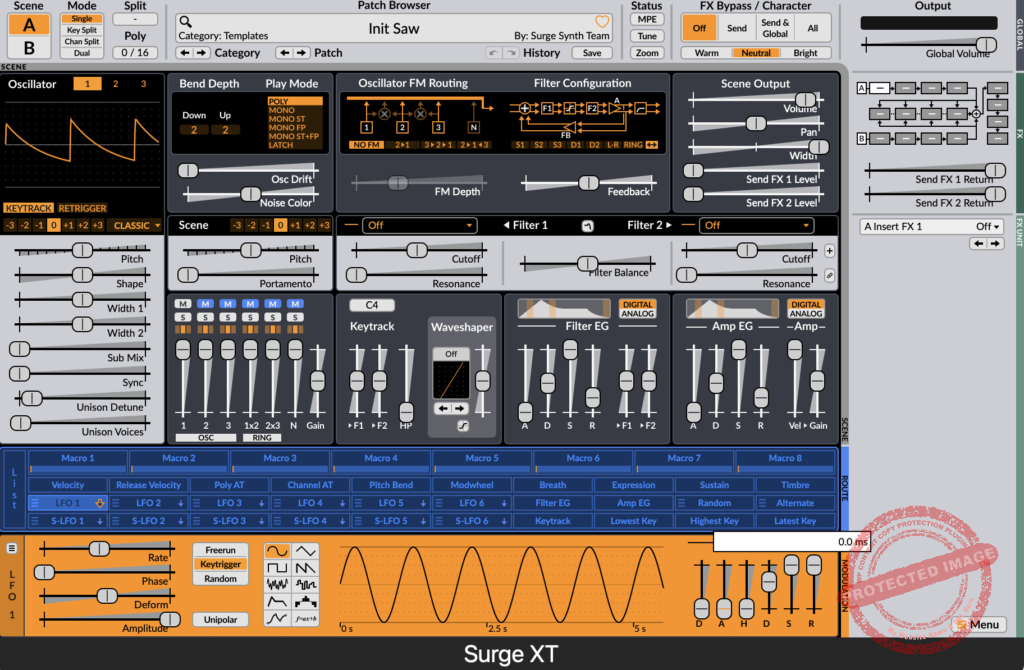
Some synths are simple; some are powerful, and Surge XT is both. It’s an open-source monster packed with features that rival premium synths.
Whether you want classic subtractive synthesis, FM, wavetable, or even audio input processing, Surge XT can help you. Also, I gotta say, it’s great that it’s got an active community, constant updates, and one of the deepest modulation engines you’ll find in a free synth unit.
- Versatile Oscillators and Wavetables
With 3 oscillators per scene and 12 synthesis algorithms, Surge XT is a true hybrid. You can mix classic analog-style waves, complex FM tones, huge unison stacks, and even load custom wavetables.
- Powerful Modulation
Modulation is where Surge XT goes from great to insane, in my opinion. It packs 12 LFOs, flexible envelopes, and an intuitive routing system that lets you connect almost anything to anything.
- Next-Level Effects and Filters
Surge XT doesn’t just generate great sounds, it sculpts them beautifully. It’s a sound design powerhouse with 2 filters per scene, multiple routing options, and over 27 built-in effects (including ChowTape, vocoder, and granular delay).
If I had to nitpick, the interface can feel overwhelming at first, and it’s a bit CPU-heavy when you stack effects. But with over 2800 presets, a massive community, and constant updates, this is hands down one of the best free synth plugin ever released.
Surge XT comes in VST3, AU, CLAP, and LV2 formats for macOS, Windows, and Linux users.
6.Morphoice Unstable

When a synth dares to channel the legendary Yamaha CS-80, it’s bound to turn heads. Unstable by Morphoice follows a fresh take on the classic, bringing in modern flexibility while staying true to the spirit of the original.
From lush analog textures to cinematic ring modulation, Unstable is all about vintage characters with a contemporary edge. I love the authenticity and the realism of the plugin, which I think is as good as it gets for a cost-free option.
- Flexible Dual-Layer Oscillators
Unstable layers two independent synthesis engines, each featuring saw, pulse, and noise oscillators with pulse width modulation.
Unlike the CS-80, it allows custom blending of each oscillator for a more refined and controlled sound design experience.
- Classic Meets Moog: The Filter Section
Instead of a strict CS-80 filter emulation, Unstable blends the old with the new. Well, you already know these kinds of plugins are my favorites when done right.
The high-pass filter remains faithful to the CS-80, while the low-pass filter borrows a Moog-style ladder design with self-oscillation capabilities.
- Authentic Ring Modulation & Ribbon Control
I think the CS-80’s legendary ring modulator played a key role in shaping classic sci-fi and electronic scores.
Unstable meticulously recreates that character with a dedicated attack and decay envelope to modulate speed dynamically. To top it off, the synth even includes a virtual ribbon controller, letting you bend pitch up to an octave, just like the real thing.
Unstable comes in VST3 and AU formats for macOS (13.6+) and Windows (10/11) users.
7.Matt Tytel Vital Basic
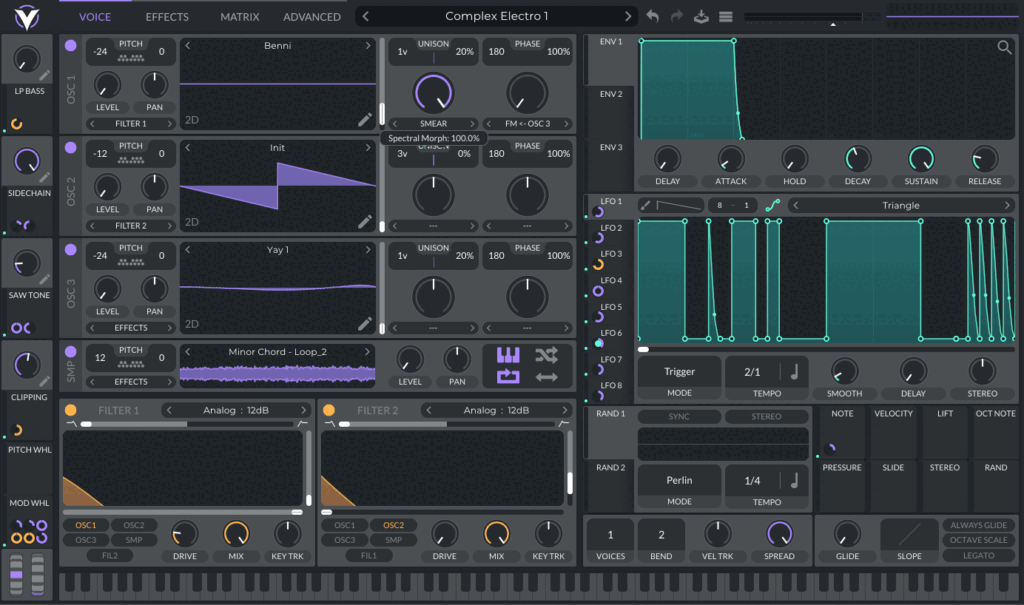
Every now and then, a synth comes along that disrupts the scene, offering features that rival high-end plugins without costing a dime. Vital by Matt Tytel is the first to come to mind in that range.
Vital is a spectral warping wavetable synth that’s not just free as it’s insanely powerful, beautifully designed, and loaded with features that make it a serious contender against premium synths. Sometimes, I really wonder how a highly versatile VST synth like thia can be free.
- A Visual Powerhouse for Sound Design
Vital isn’t just about great sound; it’s about seeing your sound come to life. Everything is animated in real-time, from waveforms to modulation, giving you instant feedback on how your tweaks are shaping the sound.
The interface runs at 60 FPS and is GPU-accelerated, ensuring smooth performance without overloading your CPU.
- Advanced Wavetable Synthesis
With 3 high-quality oscillators, Vital gives you a deep toolkit for crafting unique sounds. Its spectral warping mode lets you reshape harmonics in ways most synths can’t, while the text-to-wavetable feature (even in multiple languages!) turns words into playable sound sources.
- Deep Modulation & Intuitive Controls
I love that Vital keeps things fluid with drag-and-drop modulation, just click and drag an envelope or LFO onto a parameter, and it’s instantly assigned.
You can even modulate a modulator, stacking LFOs for hyper-dynamic movement.
Add MPE support and stereo modulation, and you’ve got a playground for expressive, evolving soundscapes.
- Filters & Effects That Shine
Vital’s 3 filters include key tracking for pitch-aware shaping and customizable resonance and drive settings.
The FX section is another favorite feature of mine, as it’s stacked with Chorus, Delay, Reverb, Distortion, Phaser, Flanger, Compression, and EQ, with stunning visual feedback that makes tweaking effects just as fun as using them.
The free version gives you full access to the synth with 75 presets and 25 wavetables, but text-to-wavetable is limited.
If you want more presets, skins, and unlimited features, there are paid tiers ($25, $80, or a $5/month sub). But honestly? The free version alone is enough to make it one of the best synths out there. At least, for me!
Vital comes in VST3, AU, and LV2 formats for macOS, Windows, and Linux users.
8.SonicBits Exakt Lite

FM synthesis can be intimidating, but Sonicbits’ Exakt Lite 2.0 makes it feel straightforward and fun.
I really liked the flexibility as well as the straight-to-the-face approach of this unit. With 4 operators, classic TX81Z waveforms, and a multi-mode filter, this free synth plugin packs serious sound design potential while keeping things accessible.
- FM Synthesis
Unlike old-school FM synths with headache-inducing interfaces, Exakt Lite keeps things clean and intuitive.
The color-coded operators make it easy to see what’s happening, and the modulation matrix lets you shape sounds without endless menu-diving. This is a breath of fresh air if you’ve ever struggled with the DX7’s labyrinth of menus.
- Classic TX81Z Sound
Exakt Lite includes 8 classic TX81Z waveforms plus four enhanced ones, letting you recreate iconic basses and keys or push FM synthesis into new territory.
The 5-point amp envelopes per operator add authentic TX-style dynamics, making it easy to dial in expressive patches, which I think is the most unique feature here.
While the full Exakt version ($29) expands the capabilities, Exakt Lite still delivers with 12-voice polyphony, a single, non-loopable modulation envelope, a multi-mode filter (minus the formant mode), 4 modulation matrix slots (instead of eight), and 60 presets to get you started
It even keeps the built-in chorus effect, adding richness and depth without needing extra plugins.
Exakt Lite 2.0 comes in 64-bit AU, VST2, and VST3 formats for macOS and Windows users.
9.Newfangled Audio Pendulate

Developed by Newfangled Audio and released for free by Eventide, Pendulate is all about controlled chaos, and this mono synth thrives on glitchy pulses, distorted basses, and evolving soundscapes.
If you’re looking for something unconventional that pushes synthesis in wild new directions, this one’s for you. When I want to push the limits, I trust this plugin eyes closed, as wherever it takes me it’s always pretty interesting.
- Unique Oscillators
Instead of your standard saw, square, or sine waves, Pendulate’s oscillator is based on the physics of a double pendulum.
This means your waveforms aren’t just moving; they’re swinging, colliding, and morphing unpredictably. The Chaos and Animate controls let you shape this instability, going from subtle movement to total sonic destruction.
- Experimental Sound Design
Pendulate follows a Buchla-style synthesis approach, using a wavefolder and a low-pass gate rather than traditional filters.
The wave folder is based on the Buchla 259, giving you rich harmonic saturation, while the low-pass gate (inspired by the Buchla 292) makes for organic, percussive envelopes. It’s a setup that’s perfect for dark, punchy tones and aggressive textures, which I use when I really wanna go to experimental realms.
- MPE Support & Deep Modulation
With up to 169 modulation routings, MPE support, and virtual patch cables, Pendulate is as much a playable instrument as it is a sound design playground for me.
You can even randomize every parameter with one click, which means it’s nearly impossible to create the same sound twice.
Pendulate isn’t meant for traditional leads or lush pads but it’s built for abrasive, unpredictable, and evolving sounds.
If you love West Coast synthesis, generative music, or just experimenting with weird noises, this is an absolute must-have, in my opinion.
Pendulate comes in VST, VST3, AU, and AAX formats for macOS and Windows users.
10.Nakst Apricot

Apricot by Nakst takes a different approach with its hybrid synthesizer that blends subtractive synthesis, sampling, and modern modulation capabilities into a powerful, free CLAP plugin.
- Dual Oscillators + Supersaw Unison
Apricot’s two main oscillators deliver 6 subtractive waveforms, but what makes them stand out for me is the JP-8000-inspired Supersaw unison mode.
I think it’s great for massive Trance leads, lush pads, and thick basses. I also liked that a third sub-oscillator adds extra low-end depth, helping to ground the sound.
- Sample Layer for Extra Texture
What sets Apricot apart for my workflow is its sample layer, allowing me to blend waveforms with custom or factory samples.
Whether I want to add a layer of noise, organic textures, or classic digital tones, this feature makes sound design even more flexible.
- Deep Modulation & Classic Trance Arps
With two mod envelopes, two LFOs, and 16 modulation slots, Apricot gives me plenty of options for evolving movement.
The built-in arpeggiator is ideal for pulsing trance plucks, chiptune leads, and rhythmic textures, letting you shape sequences with ease.
- Modeled Effects & Filter Drive
Apricot’s multi-mode filter (low-pass, band-pass, and high-pass) offers warm drive, bringing saturation to the table.
5 built-in effects with reverb, delay, EQ, distortion, and phaser, enhance the final sound, with inspiration from legendary synths like the Roland JP-8000 and Access Virus.
Apricot is one of the first free synth plugin in the CLAP plugin format, benefiting from polyphonic modulation and improved CPU efficiency. If you’re on Windows with a CLAP-compatible DAW, this is a must-try.
Apricot comes in CLAP format for 64-bit Windows users.
Extra: Matt Tytel Helm
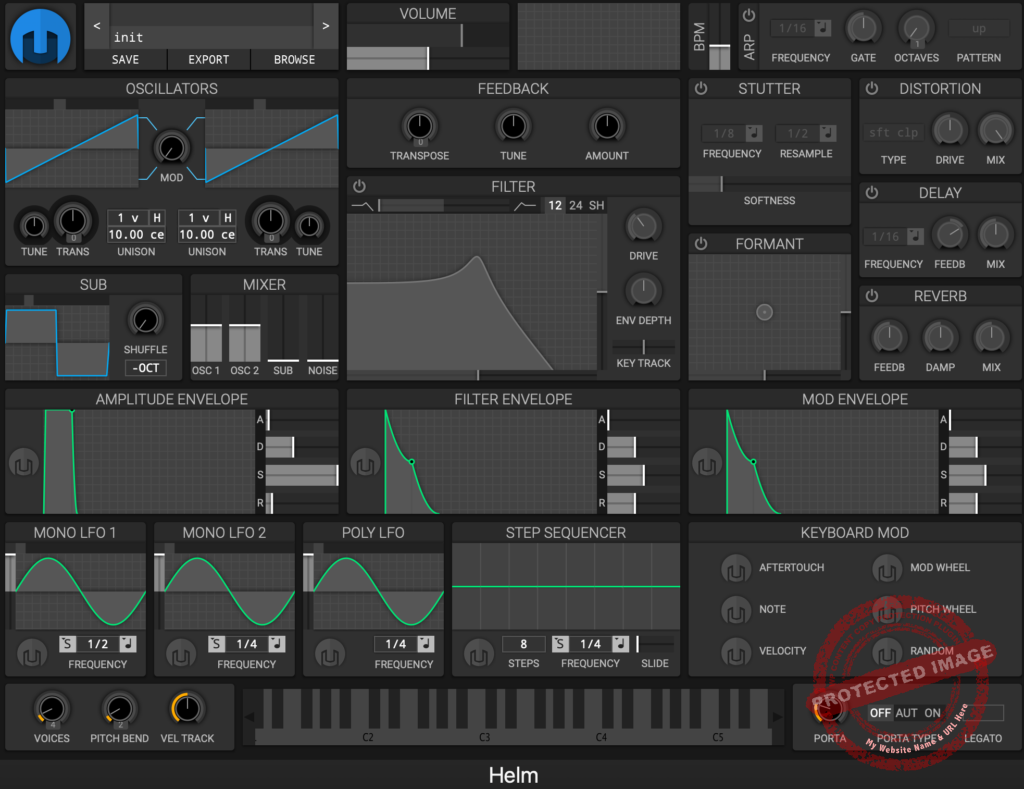
Helm by Matt Tytel is a cross-platform polyphonic synth that’s as fun to use as it is powerful.
With 32 voices, dual oscillators (up to 15 voices each), and cross-modulation, Helm offers a broad sonic palette, from fat unison leads to chaotic experimental textures. I mean it’s Mat Tytel, so you can trust this plugin will surprise you in a good way!
- Powerful Modulation & Sound Shaping
I will start with the modulation system, as it’s a highlight, featuring LFOs, a step sequencer, and polyphonic aftertouch, all with real-time visual feedback.
The oscillator feedback and saturation lets me sculpt harmonics dynamically, while the Unison and Harmony modes create massive stereo depth.
- Creative Effects & Filters
What I liked the most were the versatile filter section (7 types with key tracking) and built-in effects like formant filtering, stutter, and delay which opened up unique sound design possibilities. Whether shaping warm analog-style tones or experimenting with glitchy textures, Helm delivers.
Best of all? Well, I’ll say it again, it’s completely free and open-source, making it a perfect tool for both beginners and advanced sound designers alike.
Helm is available as a standalone app and in VST/AU format for Windows, macOS, and Linux.
