
If you’ve been producing or mixing for any length of time, you’ve probably asked yourself: Which plugin brand actually sounds best: Waves vs UAD Plugins vs Plugin Alliance!
For years, the big three, Waves, UAD (Universal Audio), and Plugin Alliance, have quietly defined what “professional” means in digital mixing. Each brand has its own identity, philosophy, and loyal tribe of engineers ready to defend it to the death.
I’ve spent years switching between all three. Some sessions feel like a Waves day, fast, light, and efficient. Others demand that UAD analog weight, that slow, syrupy tone that instantly adds credibility to any mix.
And then there are the moments when Plugin Alliance just clicks, modern, flexible, and unapologetically digital, while still keeping one foot in analog warmth.
Let’s break it down:
| Brand | Plugin | Description |
| Waves | CLA MixHub | Modeled with Chris Lord-Alge, MixHub lets you mix up to 64 channels in “buckets” for a true console workflow. Fast, efficient, and ideal for large sessions. |
| Waves | Renaissance EQ | A classic parametric EQ known for its smooth curves, musical response, and minimal CPU use, great for everyday shaping and quick fixes. |
| Waves | L2 Ultramaximizer | One of the most iconic limiters ever made. Clean, loud, and reliable; perfect for mastering or print-ready bounce levels without distortion. |
| UAD | 1176 Classic Limiter Collection | Faithful emulations of the classic FET compressor (Rev A, Rev E, AE) with analog punch, ultra-fast attack, and distinct harmonic warmth. |
| UAD | Neve 1073 Preamp & EQ Collection | Recreates the legendary Neve channel strip sound with transformer saturation, smooth midrange, and unmistakable studio richness. |
| UAD | Capitol Chambers | Stunningly realistic reverb modeled from Capitol Studios’ echo chambers, massive, dimensional, and pure Hollywood warmth. |
| Plugin Alliance | bx_digital V3 | A mastering-grade EQ offering M/S processing, stereo width control, andBrainworx’s TMT analog modeling, clean yet musical. |
| Plugin Alliance | Shadow Hills Mastering Compressor | Faithful recreation of the boutique mastering compressor with optical + discrete sections for tone and precision. |
| Plugin Alliance | AMEK EQ 200 | Modeled after legendary mastering EQs, offering ultra-transparent top-end, precise frequency curves, and pristine phase response. |
I’ve been mixing long enough to remember when Waves L1 felt like wizardry. Back then, everyone was just thrilled to have plugins that didn’t crash the session. Now we’ve got entire sonic empires, Waves, UAD, and Plugin Alliance, each claiming to deliver the ultimate blend of tone, realism, and workflow.
I’ve owned and used them all. I’ve spent nights bouncing between Waves CLA MixHub, UAD’s Neve 1073, and Plugin Alliance’s AMEK EQ 200, trying to decide which one actually makes me sound like I know what I’m doing. The truth? Each brand brings its own flavor, and what feels like “the best” depends entirely on the moment and the mood.

- Waves: The Everyday Workhorse
Waves, to me, are like that reliable old friend who never complains. It’s efficient, lightweight, and always there. You load a Vocal Rider or SSL G-Master Bus Comp, and it just works, no latency issues, no drama, no crashes halfway through a client call.
It’s not always the most glamorous, but it’s practical. Waves plugins open in a blink, barely touch your CPU, and somehow fit into every kind of workflow, from film mixing to quick vocal edits on a laptop. That dependability is why I still keep their bundle installed on every machine I own.

- UAD: The Analog Dream
UAD feels like stepping into a high-end studio full of gear you could never afford in real life. Everything they make has this sense of weight, the kind of sonic gravity that makes you slow down and really listen. Their compressors breathe, their EQs sing, and their reverbs feel like they were captured from the walls of legendary rooms.
There’s something deeply satisfying about working with UAD’s plugins. When I dial in an LA-2A or a 1176, it’s not just sound, it’s feel. You’re not scrolling presets; you’re sculpting electricity. It’s the closest thing I’ve found to that emotional feedback loop of touching real analog hardware.

- Plugin Alliance: The Modern Hybrid
Then there’s Plugin Alliance, which honestly feels like the future. It blends the warmth of analog models with the precision of digital flexibility, giving you the best of both worlds. Brands like Brainworx, Lindell, and Knif Audio all live under one roof, and the result is an ecosystem that feels both refined and adventurous.
I love how Plugin Alliance plugins run natively, no external DSP, no licensing gymnastics. You get TMT (Tolerance Modeling Technology) for analog realism, but you also get mix knobs, stereo width control, and resizable GUIs that make mixing genuinely enjoyable. It’s professional, but not pretentious.
Workflow, Design, and Performance
I care about how fast a plugin opens and whether its UI helps me move, not fight me. Waves V14 felt like a quality-of-life jump: faster load times, new Mix/Trim on marquee compressors, and smoother preset workflows that shave real minutes off a session. That “open-tweak-commit” rhythm matters when a client’s on the line.
UAD’s vibe is different; it’s the tactile, hardware-styled experience that makes me slow down and listen. With an Apollo, I can track through UAD plug-ins with Accelerated Realtime Monitoring and get near-zero latency on input, which genuinely changes how singers perform. If I try to monitor UAD plug-ins inside the DAW without Apollo, I’ll feel buffer-related delay, totally fine for mixing, not fun for tracking.
Plugin Alliance feels modular and contemporary; most days it’s the path of least resistance from “idea” to “print.” The Installation Manager is dead simple, you just log in, grab what you need, and go, which is exactly what I want at 2 a.m. before a deadline. That frictionless install/activate flow is part of why I throw PA across big sessions without a second thought.
On CPU behavior, here’s my lived reality. I can stack Waves across 50+ tracks on a travel laptop and keep playback smooth, then sprinkle in select Plugin Alliance processors on groups and the mix bus without drama. When I want heavyweight color, think UAD tape, transformers, and plates, I use them while mixing or track through Apollo so the DSP shoulders the load.
Anecdotally, I swap mid-mix a lot. If a snare comp feels too heavy, I’ll flip UAD 1176 to a Waves FET for snappier CPU, or try Plugin Alliance for a mid/side trick instead of piling on utility plugs. Latency stays tame if I keep the heavy UAD instances post-record and lean on Waves/PA for the “lots-of-instances” parts of the session.
Hardware dependence is the dividing line. UAD’s Apollo system is the ticket to that near-zero-latency tracking with UAD plug-ins; without it, UAD inside the DAW behaves like any native plugin and obeys the buffer. Waves and Plugin Alliance are fully native, so they fit any rig, from a tour laptop to a studio tower, no extra hardware required.

Sound Signatures
Every brand has its own sonic fingerprint. I can usually tell which one I’m using within seconds, not just by tone but by how it makes me mix. The way the harmonics, transients, and saturation behave says everything about the company’s design philosophy.
- Waves: Polished and Practical
Waves plugins sound clean, a bit glossy, and slightly “forward.” They don’t always chase vintage imperfections; instead, they focus on clarity and consistency. The SSL E-Channel, Renaissance EQ, and L2 Ultramaximizer all share that Waves DNA, which is tight, efficient, and somewhat “digital-modern.”
There’s a subtle brightness baked into a lot of Waves processing. It’s that high-mid presence that makes vocals and guitars jump out even before you start EQing. I wouldn’t call it sterile, but it’s definitely polished, which is why I reach for Waves when I want definition and speed without coloring the whole mix.
- UAD: Saturation, Weight, and Realism
When I open a UAD plugin, it’s like stepping into analog air. Their sound has this harmonic density, low-mid warmth, gentle compression glue, and a dynamic “bloom” when you push the input. The Neve 1073, Manley Massive Passive, and Capitol Chambers are proof that UAD doesn’t just emulate tone; it emulates behavior.
You hear the subtle rounding of transients, the transformer hiss, and the way harmonics stack up in layers instead of flat planes. It’s musical in a way that makes you back off the mix bus limiter and just listen. UAD excels at that illusion of hardware, the kind of sound you feel more than analyze.
- Plugin Alliance: Modern Depth and Surgical Flexibility
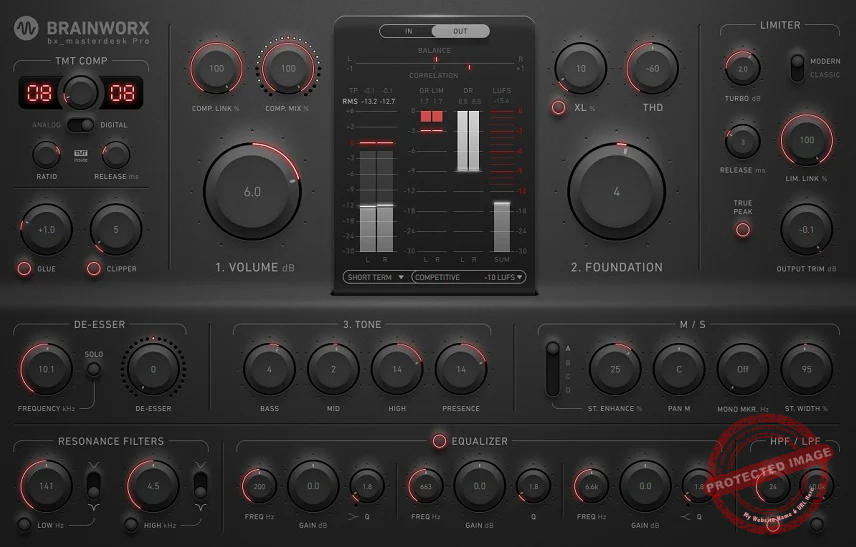
Plugin Alliance sits between clarity and color. Their plugins can sound analog-authentic (thanks to TMT (Tolerance Modeling Technology) yet still retain digital precision when you need control. The AMEK EQ 200, bx_masterdesk, and elysia alpha compressor are pristine, transparent, and wide tools that preserve depth without smearing.
What I love is how PA plugins maintain transient definition even under heavy compression or stereo widening. You can make a mix huge and open without collapsing it. They feel like mastering-grade tools disguised as everyday workhorses, clean when you want them to be, colorful when you push them.
If I had to summarize their sonic personalities: Waves sounds like a sharp digital console, UAD like a warm analog desk, and Plugin Alliance like a hybrid mastering chain. I’ll use Waves to carve and balance, UAD to warm and glue, and PA to refine and finalize. Together, they form the sonic triangle I rely on daily.

Price
Let’s talk money, licensing, and trust, because those shape your workflow as much as sound. Waves famously tried subscription-only in 2023, then restored perpetual licenses alongside Waves Creative Access after the backlash, and I took that as a positive course-correction.
Activations happen via Waves Central to your machine or a USB stick, with the Waves Update Plan covering updates and now 2nd licenses for subscribers, a practical perk for multi-machine setups.
UAD Spark is the native subscription lane, and it requires iLok (Cloud or USB) for authorization; that’s simple when the internet’s solid, and USB covers travel/offline days.
If I buy perpetual UAD Native (UADx) licenses, I can now activate locally to the machine or to an iLok USB, meaning I’m not forced into Cloud for owned titles. It’s a cleaner split: Spark = iLok Cloud/USB, Perpetual UADx = machine or iLok.
Plugin Alliance keeps it refreshingly straightforward. The Mega Bundle subscription gives access to 200+ plugins, with 3 activations per license and clear monthly/yearly pricing tiers (CORE and PRO), plus a 30-day subscription trial; crucially, no iLok, PA dropped it years ago in favor of their own software licensing. For my workflow, that “install three rigs and go” policy is real value per dollar.
So what do you actually get per dollar long-term? Waves remains the cheapest path to a huge toolbox, especially if you grab sales and keep the Update Plan sensible; the time you save with those lightweight staples is part of the ROI. UAD is premium, but the Apollo tracking experience and the feel of their flagship emulations can be worth it if performers deliver better takes and you print sounds faster.
Plugin Alliance sits in the middle: modern features, generous activations, and frequent sales mean I can build a mastering-grade chain without locking myself into dongles or hardware.
Last Words
At this point, I’ve mixed with Waves, UAD, and Plugin Alliance long enough to stop treating them like rivals. They’re not competing, they’re complementing each other. Waves gets me there fast, UAD makes it sound expensive, and Plugin Alliance helps me polish it until it feels cinematic.
If I’m mixing on a flight or a laptop, Waves is my safety net. When I’m in the studio with time to breathe and an Apollo on the desk, UAD plugins still feel like a private club for tone lovers. And when I’m mastering a project or need surgical control without losing musicality, Plugin Alliance feels like home.
Each brand carries its own philosophy: Waves is about access, UAD is about authenticity, and Plugin Alliance is about evolution. That’s why I’ll never uninstall any of them, they each feed a different side of my workflow and taste.
In the end, the right plugin brand isn’t about hype or loyalty; it’s about momentum. The one that helps you make decisions faster, with confidence, is the one worth keeping in your chain. And honestly? If you can combine the speed of Waves, the soul of UAD, and the clarity of Plugin Alliance, you’re already halfway to a mix that sounds like you.
