Sound Design in 2026 goes deeper than just setting up oscillators, filters, and modulators to produce sound. We have evolved so much as an industry, with the technology growing at a crazy rate. We have AI-based tools like Synplant that can recreate the texture and timbre of literally any sound you throw into it.
I also sometimes find it difficult to adapt myself to all the new changes, which is why I wanted to craft this article, which is for all updated and new plugins for sound design. Gone are the days when slapping a sine wave into a filter was enough; now, my synths are practically thinking for me (sometimes too much, I swear!).
New producers and sound designers have many questions amidst this, such as which should be their primary sound design plugin. 5 years back, the answers were way simpler, with fewer options. Serum, Nexus, and Omnisphere were the go-to’s for producers across all genres, but today, we have so many options to choose from that it could get confusing.
With so many new tools dropping left and right, I put together this list to help fellow producers stay ahead of the curve. Whether you’re crafting ethereal pads, gut-punching basslines, or glitchy experimental textures, these plugins are tailored for you:
1. Dawesome NOVUM

If there’s one plugin that completely changed how I approach sampling, it’s Dawesome NOVUM.
Let’s say you take a sound, a rain droplet, for example, and throw it into this plugin, and then turn it into a lush pad, a deep, resonant bass, or even a shimmering, glassy texture. That’s exactly what NOVUM does. It decomposes it into six independent layers, giving you complete control over its timbre and movement.
At first, I thought, “Cool, another granular synth.” But NOVUM isn’t just granular but a cross-synthesis plugin. You can take the envelope of a flute and blend it with the timbre of a piano or morph a vocal sample into an evolving synth pad.
- Timbre Flower
This feature lets you reshape sounds in ways that feel almost unnatural (in the best way possible). I once took a field recording of birds, ran it through the Syntify mode, and ended up with an eerie, cybernetic pad straight out of a sci-fi movie. It’s also MPE-compatible, so expressive playing is a breeze.
- HOMOGENIZE Mode
Ever struggled with the overly chaotic nature of granular synthesis? NOVUM’s HOMOGENIZE feature smooths out grainy textures, turning them into velvety, cohesive sounds. You can use this to craft lush ambient pads or cinematic soundscapes.
- Syntify: The Anti-Filter
Traditional subtractive synthesis removes harmonics, but Syntify does the opposite by adding overtones, making simple sounds richer and more complex. It feels like taking a dull sample and injecting it with a dose of harmonic steroids.
Dawesome NOVUM is available in AU and VST plugin formats and is compatible with macOS 10.13 or later and Windows 10 or newer operating systems.
2. Knif Audio Knifonium
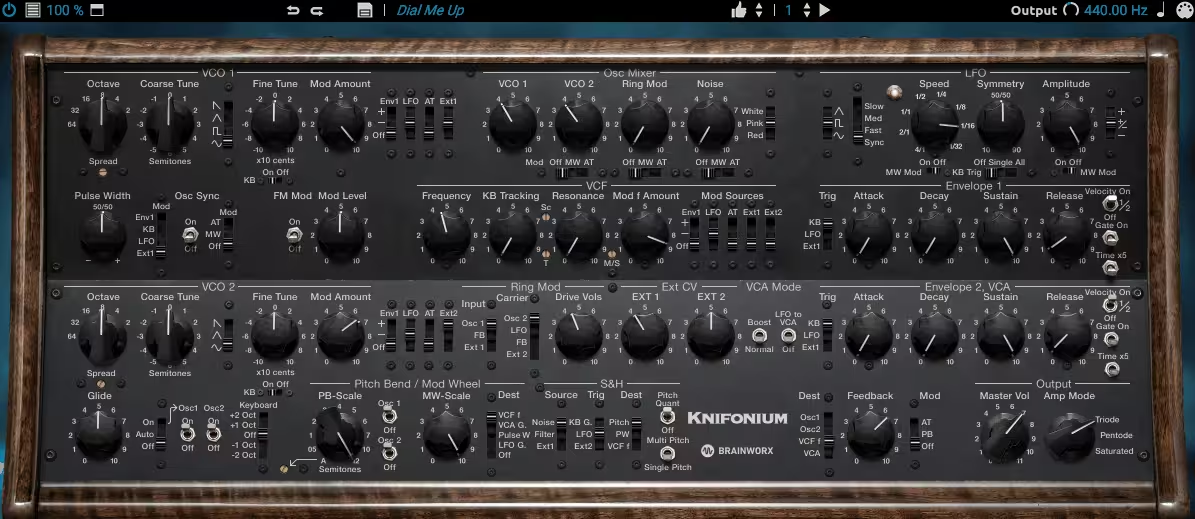
Knifonium feels like a boutique analog synth and is modeled after a real 26-vacuum-tube-based hardware.
Knifonium features two tube-driven oscillators, a 4th-order ladder filter, and a ring modulator, a combination suitable for crafting everything from warm, vintage leads to futuristic, distorted textures.
However, I think the plugin version takes it to another level, expanding it to 8-voice polyphony, which means a total of 208 tubes in action.
- Stereo Spread & Mid/Side Processing
My favorite side here is that the plugin adds unique stereo widening capabilities that aren’t possible in the original hardware. Dialing up the spread makes leads cut through the mix like a laser, while pads feel massive and immersive.
- Built-in Studio-Grade FX
Knifonium’s BX effects section includes everything from a vintage-style phaser to a lush reverb, ensuring your sounds soar. Plus, the TMT (Tolerance Modeling Technology) emulates the natural imperfections of real analog circuits, making every note feel alive.
- Classic Analog Character with Modern Controls
I also like that the plugin features a powerful filter section, customizable envelope controls, and full unison mode, letting you stack multiple voices for an even richer, more powerful sound. Whether I want punchy, monophonic basses or massive, evolving pads, this synth delivers well.
Knif Audio Knifonium is available in AAX, AU, and VST plugin formats and is compatible with macOS 15 down to macOS 12 and Windows 10 or newer operating systems.
3. Minimal Audio Current 2
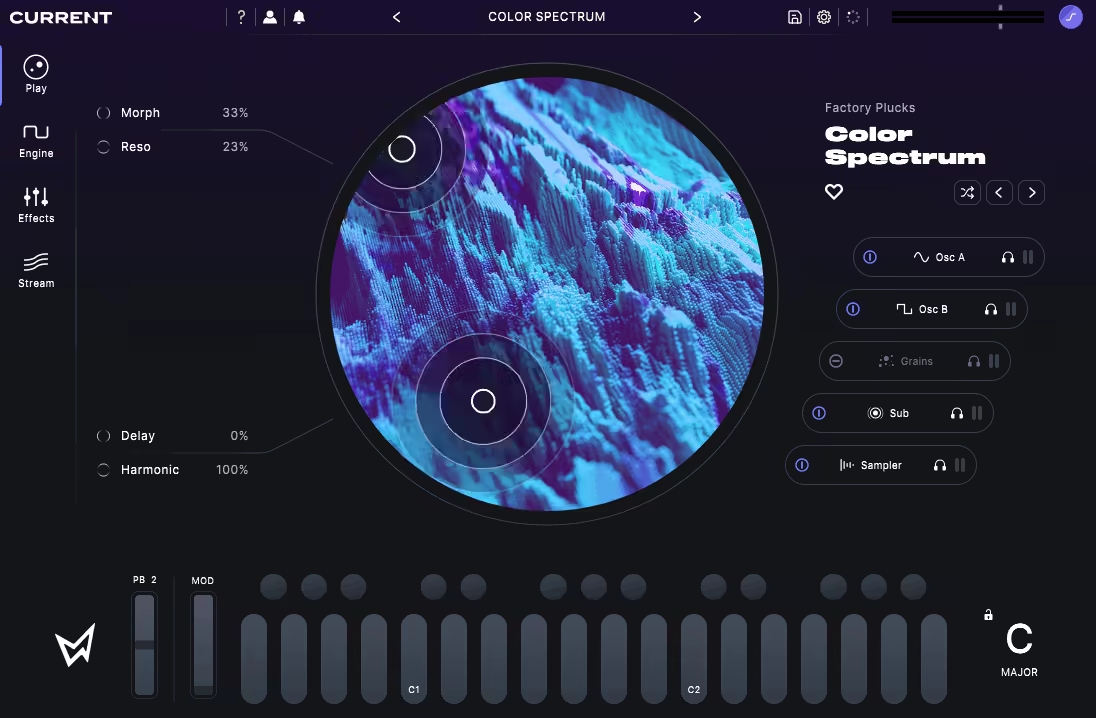
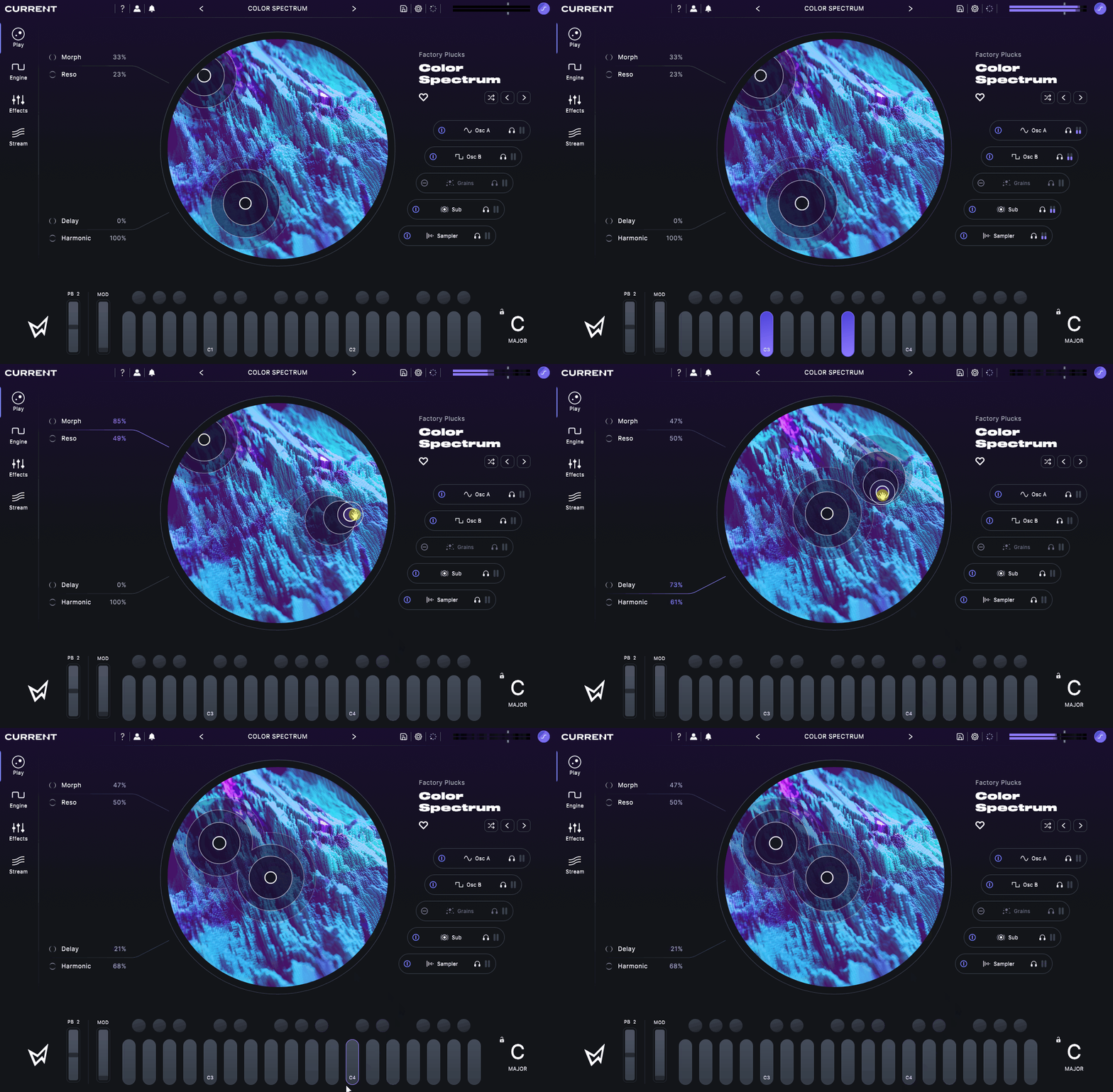
When I first got my hands on Current 2, I expected a solid wavetable synth. What I didn’t expect was a sound design VST machine that combines wavetable, FM, granular, and sample-based synthesis in one beautifully designed package.
Current 2 is centered around two spectral wavetable oscillators, a dedicated sub-engine, and a sample-based engine for layering unique textures along with 40+ warping effects.
I noticed that the granular synthesis mode is also really cool, as it lets you transform simple sounds into evolving cinematic atmospheres and is capable of handling more than 250 grains.
- Next-Level Modulation System
With drag-and-drop LFOs, envelopes, and step sequencers, shaping sound is effortless.
I also love how its modulation matrix keeps everything neatly organized, so even complex patches remain intuitive.
- Massive Sound Library & Cloud-Based Expansion
The updated Stream Browser makes it super easy to browse hundreds of high-quality presets, wavetables, and samples, with new content available directly from the cloud.
- Pro-Grade FX & Filters
From morphing filters to multiband compression and distortion, Current 2’s nine FX slots make post-processing seamless.
The new Wave Shifter effect is really great for adding frequency shifting, ring modulation, or AM synthesis.
Minimal Audio Current 2 is available in AAX, AU, and VST2/VST3 plugin formats and is compatible with macOS 10.9 or later and Windows 10 or newer operating systems.
4. Baby Audio Atoms
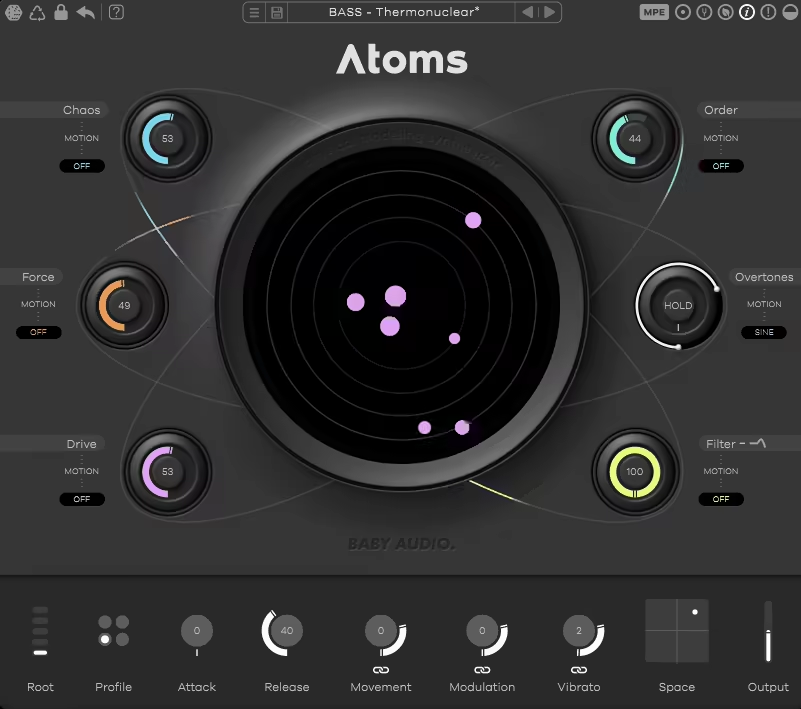
Instead of emulating plucked strings or bowed instruments in a traditional sense, Atoms uses physical modeling by creating a mass-spring network, which is a system where virtual masses are connected by springs, reacting to forces in an organic yet unpredictable way. That results in a truly unique sound.
The first thing I noticed when firing up Atoms was how alive it felt. Unlike standard FM or wavetable synths, its core engine generates complex harmonics based on how masses interact with the simulated springs.
You can control the intensity of the bowing and the stiffness of the springs and even introduce chaos, making the vibrations less predictable. The result is this weird yet beautiful combination of metallic, bowed, and percussive tones with a natural, evolving character.
- Ease of use
I found myself lost in the presets, ranging from haunting, ethereal pads to gritty, distorted plucks that sound like they belong in a futuristic horror score.
The interface makes it easy to visualize how sound waves interact within the mass-spring network, and tweaking it can lead to some truly unexpected (but amazing) results.
- Organic Textures with a Sci-Fi Edge
Atoms have a built-in filter and drive section that lets you sculpt the harmonic content, but what got me excited was its chaos modulation. Increase it, and the springs become more erratic, creating eerie, unstable textures. Lower it, and you get smoother, more controlled tones.
The built-in reverb and modulation options add even more depth, making it a powerful tool for cinematic and ambient music. But, I have to warn you not to expect typical analog warmth or digital precision.
Baby Audio Atoms is available in AU, AAX, and VST/VST3 plugin formats and is compatible with macOS 10.11 or later and Windows 10 or newer operating systems.
5. Arturia Modular V

Modular V is a full-blown modular system, faithfully recreating the legendary Moog Modular that shaped electronic music as we know it and could be considered as a sound design VST plugin.
I gotta say, Arturia painstakingly modeled every nuance of the original hardware, from the warmth of its nine oscillators to the grit of its 24dB ladder filter.
Unlike a real hardware modular, everything is patchable in seconds, so you can just drag virtual cables from module to module and make valid connections that are even highlighted. This means, no more guessing, no more blown speakers.
- Polyphonic & MIDI-Compatible
Unlike the original monophonic beast, Modular V lets you play chords, stack oscillators with unison mode, and even automate controls with MIDI, something I often see that hardware modular synths still struggle with today.
- Deep Customization & Rare Modules
I think this is the highlight of the unit as it allows you to swap in multimode filters, custom envelope shapes, and even the legendary Bode Frequency Shifter, which is a rare gem in the modular world, perfect for alien soundscapes and metallic textures.
- Modern Workflow Enhancements
You get features like undo/redo, X/Y controllers, and built-in volume envelopes that make sound design intuitive and efficient, bridging the gap between vintage character and modern convenience.
For those who love the raw, organic sound of vintage modular synths but don’t have $50,000 and a spare room, you can consider Modular V.
Arturia Modular V is available in AAX, AU, NKS, and VST plugin formats and is compatible with macOS 11 or later and Windows 10 or newer operating systems.
6. UAD Opal
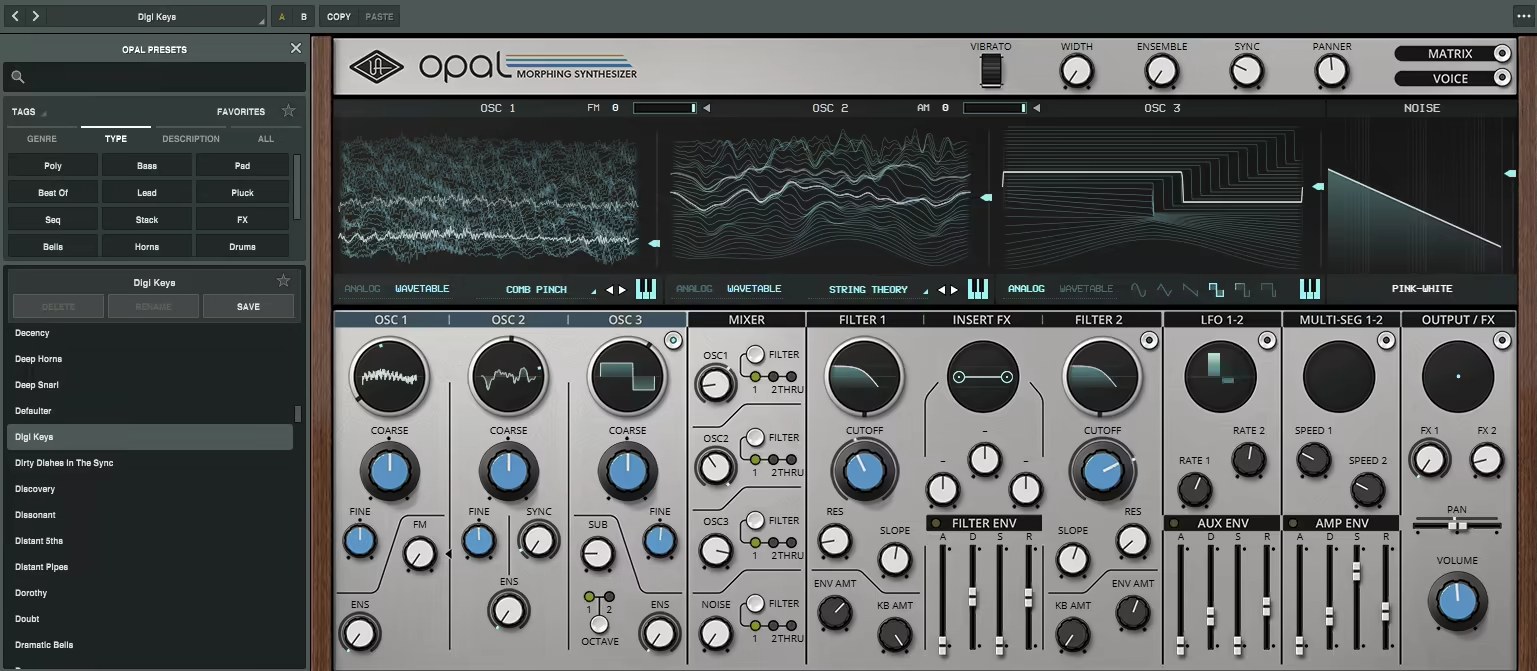
Opal combines the best of wavetable and analog synthesis, giving you lush, evolving textures while keeping everything mix-ready right out of the box.
You get smoothly morph waveforms from sine to square to saw, and beyond that, you can pair with its dual morphing filters, and you get super-fluid transitions and expressive sound movement.
UAD Opal features 3 oscillators, blending analog-modeled waveforms with wavetables for a rich, hybrid sound palette.
Each oscillator can morph seamlessly between wave shapes, giving you everything from smooth, classic tones to aggressive, modern textures. The dual morphing filters (Filter 1 & 2) take things even further, allowing you to carve out and shape your sound dynamically.
- Deep Yet Intuitive Modulation
For modulation, Opal gives you two multi-segment envelopes (Multiseg 1 & 2) and two LFOs, all of which can be routed to various parameters for complex movement and evolving textures.
The envelopes allow for precise shaping, while I think the LFOs are perfect for adding subtle wobbles, rhythmic pulses, or dramatic filter sweeps. The visual feedback for modulation makes it easy to see exactly what’s happening, ensuring that even intricate sound design remains effortless.
- Built-in UAD Effects
Opal includes a flexible insert effects section featuring vintage-style reverbs, tape delay, modulation effects, and UAD’s legendary 1176 compression.
For me, these aren’t just add-ons but studio-quality tools that instantly make your patches mix-ready.
- Instant Inspiration with Mix-Ready Presets
Sometimes, I just need a killer starting point, and Opal delivers with a huge preset library crafted by UA’s synth gurus. Whether I’m after thunderous basses, ethereal pads, or biting leads, I always find something that sparks an idea.
UAD Opal is available in AAX, AU, NKS, and VST plugin formats and is compatible with macOS 11 or later and Windows 10 or newer operating systems.
7. AAS Chromaphone 3
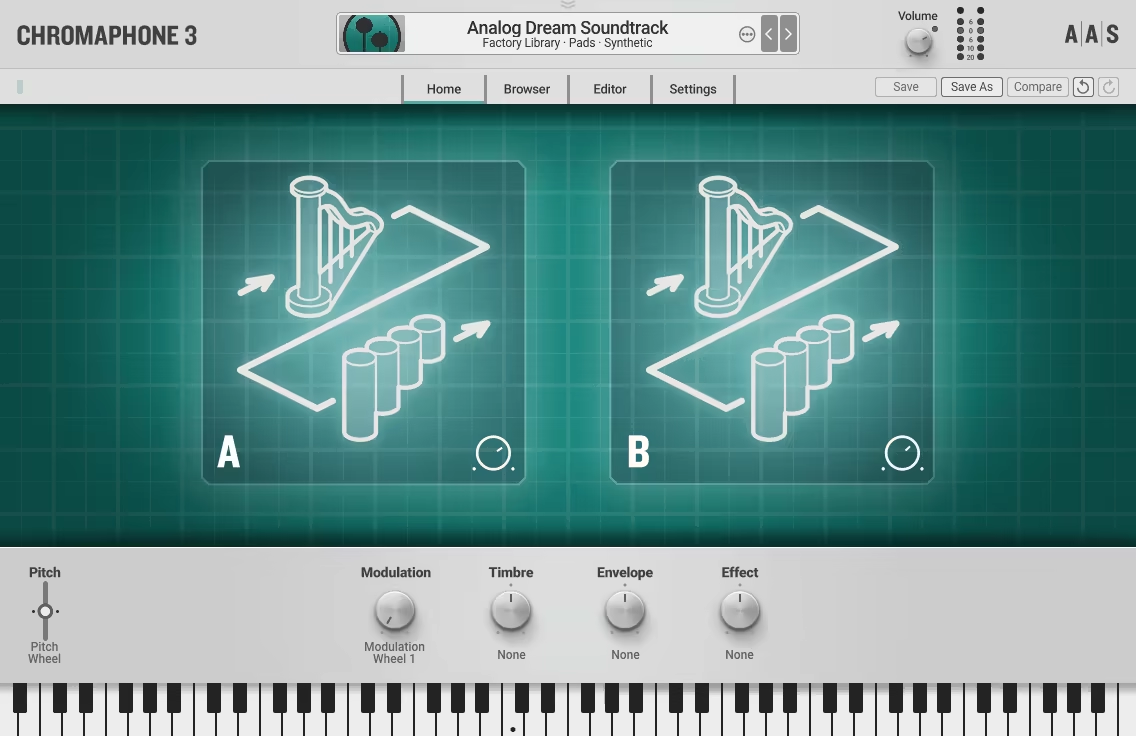
AAS Chromaphone 3 is a physical modeling synth, which means it doesn’t rely on traditional oscillators but instead simulates real-world acoustic resonators.
That alone set it apart from most synths in my collection. That lets this synth excel at creating organic, expressive percussive sounds, like plucky mallets, deep cinematic booms, or metallic bell-like textures, which are full of natural overtones and dynamic movement.
One of the coolest aspects of Chromaphone 3 is its ability to blend two independent layers and being able to combine different resonators, like, let’s say, wood, metal, or string, to create entirely new timbres. I once layered a marimba-like sound with a metallic plate resonance and ended up with a percussive hit that had both warmth and a shimmering high-end presence.
- Macro Controls & Real-Time Playability
What really impressed me was how easy it was to tweak sounds in real time. The plugin has 4 macro controls that let you adjust key elements like modulation, timbre, and effects with a single twist. Even though the manual is 75 pages long, I barely needed to reference it. Everything is designed to be intuitive.
- Resonator Magic
The real heart of Chromaphone 3 is the resonator system. Instead of relying on static waveforms, it models the way real-world objects vibrate and interact. This means I can create everything from tight, snappy drum hits to evolving, ambient textures that feel almost three-dimensional.
AAS Chromaphone 3 is available in AAX, AU, NKS, and VST plugin formats and is compatible with macOS 10.13 or later and Windows 10 or newer operating systems.
9. Sugar Bytes Aparillo
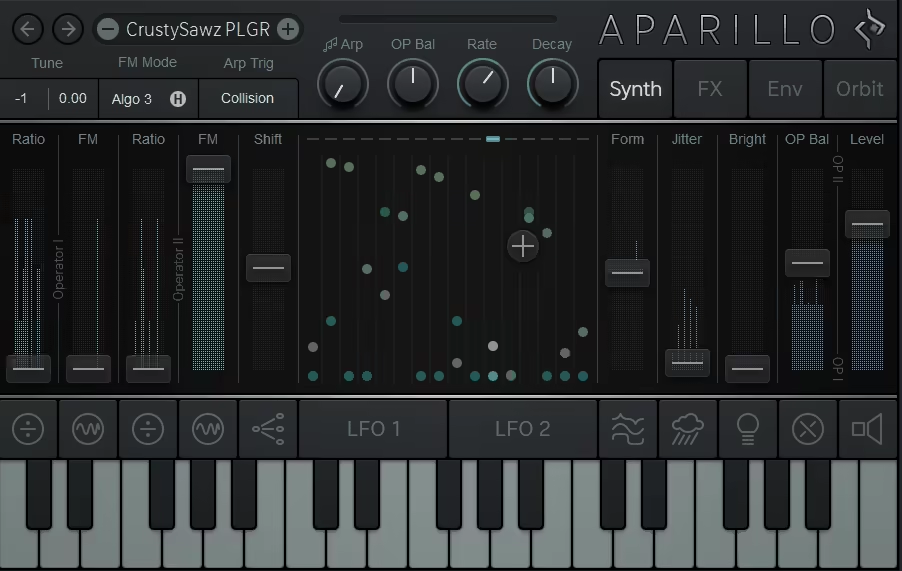
Aparillo is one of those synths that completely shifts the way you think about FM synthesis.
Let me tell you, it’s not just another 2-operator FM synth but a full-fledged 16-voice monster built for massive, evolving soundscapes. The moment I fired it up, I knew this wasn’t just another plugin but an entire Sonic universe waiting to be explored.
The FM engine in Aparillo is packed with features like formant shifting, wave folding, and complex modulation options that make it feel more like a living instrument than a static synth. The way these elements interact creates sounds that feel constantly in motion, perfect for cinematic scores or futuristic sound design.
- Orbiter: The Secret Weapon
Aparillo’s most exciting feature has to be the Orbiter, a massive XY control that lets you morph between sound parameters effortlessly.
Whether I use a mouse to animate it or let each note trigger a different position, it turns even the simplest patch into an evolving, dynamic performance. I’ve never seen FM synthesis feel so hands-on and intuitive.
- Mind-Blowing Modulation & FX
The dual complex LFOs offer incredible modulation possibilities, including gravity-based motion, sample & hold, and even a chaotic collision mode that adds organic unpredictability to your sound.
Combine that with a unique multi-mode filter, spatializing reverb, and synced delay, and you’ve got a synth that practically composes soundtracks by itself.
Sugar Bytes Aparillo is available in AAX, AU, and VST2/3 plugin formats and is compatible with macOS 10.13 or later and Windows 7 or newer operating systems.
10. Karanyi Sounds Vapor Keys
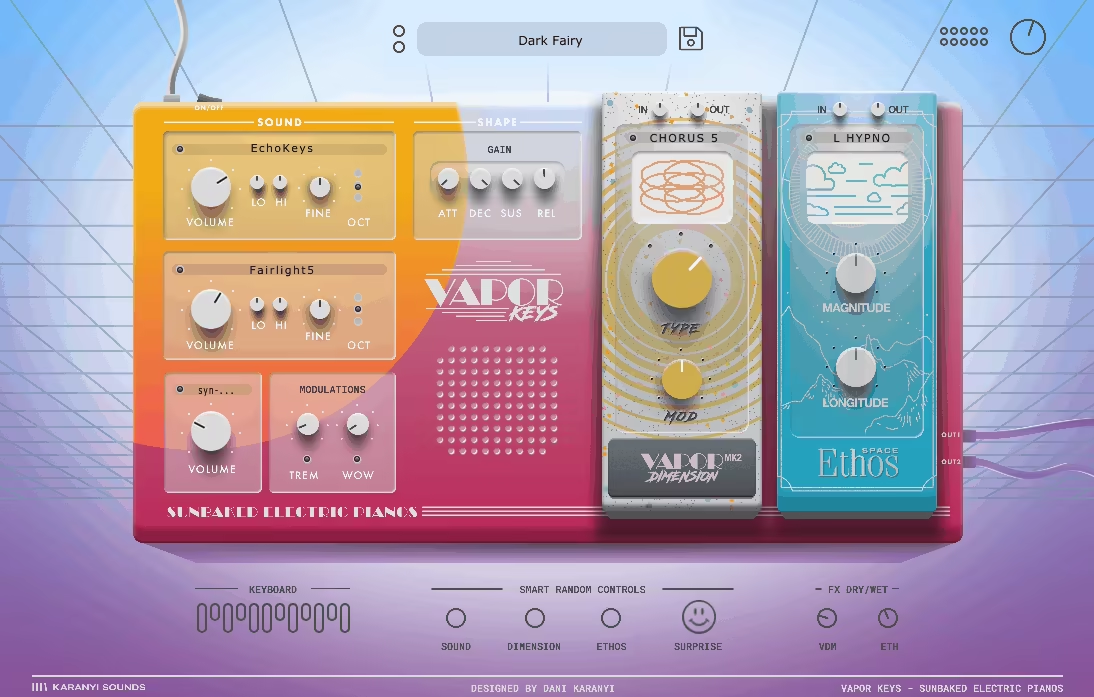
If you’re looking to bottle up the nostalgic and dreamlike essence of 90s synths and electric pianos, Vapor Keys is the perfect solution.
The core of Vapor Keys is its 2+1 layer synth engine, letting you mix traditional electric keys with lush synth sublayers to create deep, textured sounds.
I love how easy it is to blend warm, like, let’s say, vintage tones with atmospheric pads.
- Next-Level Effects & Sound Shaping
One of my favorite additions is the Dimension MK2 effects module. Inspired by classic hardware like the Roland Dimension D and Eventide Blackhole, it offers everything from dreamy choruses to deep, resonant echoes. Paired with the Ethos reverb, boasting 24 lush algorithms, you can turn any preset into a vast, ambient masterpiece with just a few tweaks.
- Smart Randomization: Effortless Inspiration
Sometimes, the best ideas come from unexpected places, and Vapor Keys nails this with its Smart Random Controls. With a single click, you can randomize instrument sources, tweak modulation, or apply wild effect combinations.
I’ve stumbled upon so many unique sounds this way, and it is like having a built-in sound designer.
- Authentic Vintage Vibes
The 29 hand-crafted patches include sounds from legendary synths like the Yamaha DX7 and Arturia MicroFreak, recorded through premium gear like the Neve 1073 preamp and Studer A800 tape machine. The result? A library of sounds dripping with warmth, depth, and retro authenticity.
So whether you’re into dreamy, VHS-tinged keys or want a modern twist on FM synthesis, Vapor Keys has the potential to deliver.
Karyani Sounds Vapor Keys is available in AU and VST3 plugin formats and is compatible with macOS 10.11 or later and Windows 7 or newer operating systems.
11. Expressive E Noisy 2
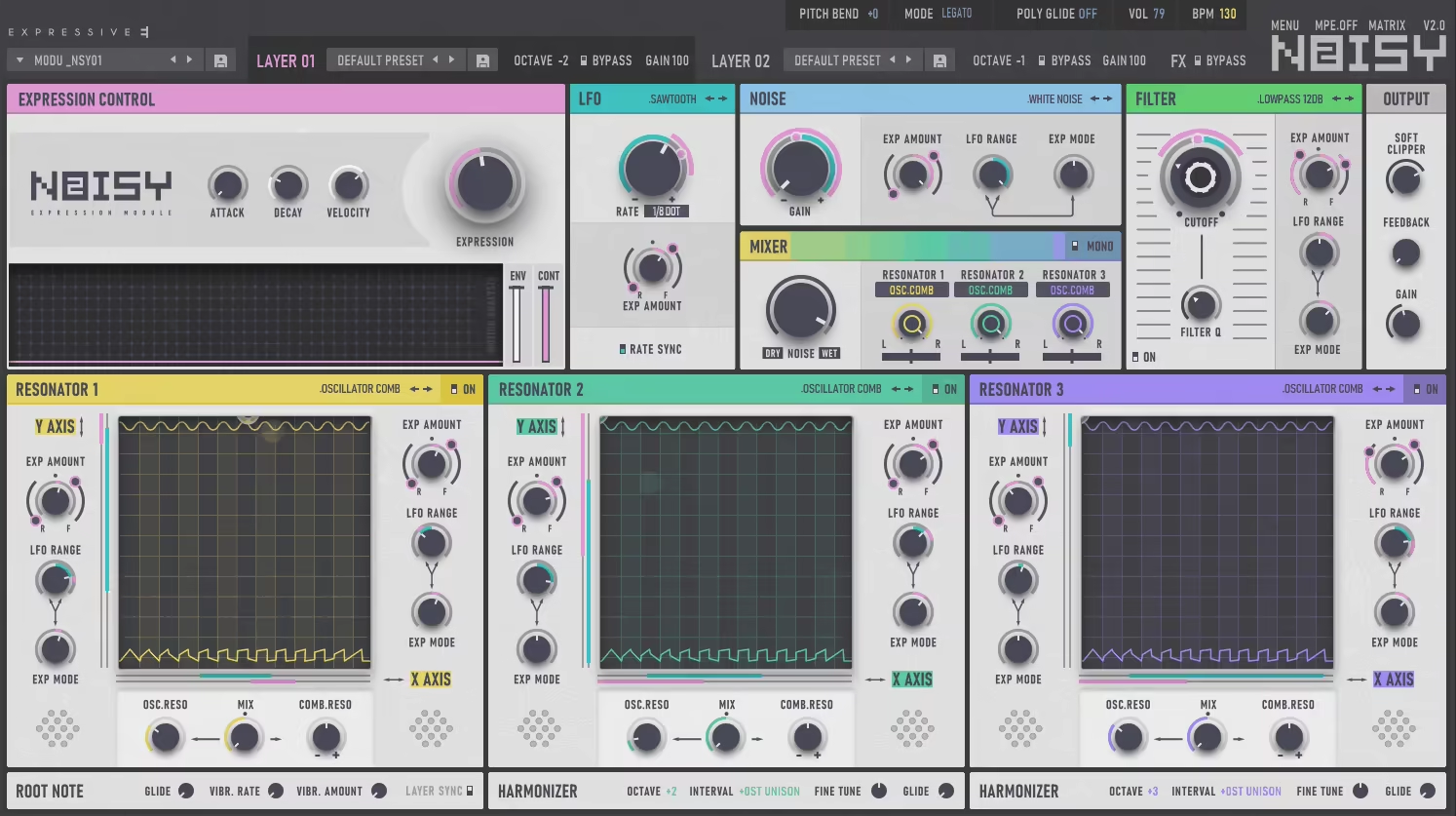
Noisy 2 is an MPE powerhouse that brings physicality to sound design like never before. Built around modal and analog resonators, Noisy 2 reacts to your touch, pressure, and movement, making every note feel alive.
If you’ve ever played an MPE controller like the Osmose, ROLI Seaboard, or Push 3, this synth takes full advantage of the deep expression they offer. But even if you don’t own an MPE device, Noisy 2 sound design VST still delivers an incredible experience with its 1200 presets and a playful, intuitive workflow.
- A Synth That Breathes and Moves
Noisy 2‘s synthesis engine blends acoustic-style resonators with analog-inspired filters and pulse-width modulation (PWM). Unlike traditional subtractive synthesis, which starts with a complex waveform and filters it down, Noisy 2 builds sound from the ground up using carefully tuned noise sources and resonators.
In my experience, the 4 new modal-acoustic resonators bring a natural richness, while the upgraded Noise Block introduces new, finely crafted textures that make everything feel more alive.
On the analog side, Noisy 2 now includes PWM-style timbres, extra filter emulations, and an enhanced soft clipper with feedback, allowing for both delicate and aggressive tones.
- MPE Integration Taken to the Next Level
The plugin’s next-gen MPE mode goes beyond basic MIDI Polyphonic Expression (MPE) support and fully embraces the new MIDI standard.
Each note can have its own independent pitch bends, pressure sensitivity, and modulation, allowing for hyper-expressive performances. If you’re using an MPE controller, you’ll instantly notice how naturally Noisy 2 responds to your playing.
Even if you don’t have an MPE device, I think Noisy 2 still delivers expressive capabilities through polyphonic aftertouch and other modulation options. You can assign different controllers, like the Touche, to access the same level of control, making it a fantastic synth regardless of your setup.
- Designed for Playful Sound Design
Despite its deep synthesis engine, I found Noisy 2 to be pretty fun and intuitive. You’re not drowning in menus or complex routing and everything is accessible, visual, and immediate.
The trigger modes give you multiple ways to shape notes dynamically, while the visualizer provides instant feedback on your gestures. Whether you’re crafting cinematic soundscapes, evolving pads, or expressive leads, Noisy 2 feels like an instrument, not just a plugin.
Expressive E Noisy 2 is available in AU and VST2/3 plugin formats and is compatible with macOS 11 or later and Windows 10 or newer operating systems.
12. Arturia DX7 V

Arturia DX7, being a faithful emulation of the original Yamaha 80s synthesizer, gives you classic FM sound, crystal-clear and glassy tones, bell sounds, plucky and bouncy basslines, and other 80s signature and FM-based sounds it was known for.
Arturia has packed in 32 classic FM algorithms, letting you shape sounds using six operators that can act as either carriers or modulators. If that sounds complex, don’t worry, as the color-coded visual editing makes it much easier than on the original hardware.
When I researched about the original unit, I found out that the original DX7 allowed for deep sound sculpting, but the workflow was tedious. DX7 V fixes that by introducing a powerful mod matrix, LFO sequencer, and looping envelopes, making sound design faster and more fun.
- The Sound of the ’80s (And Beyond)
If you’re after the legendary DX7 tones, like those punchy electric pianos, glassy bells, plucky basses, and shimmering pads, DX7 V delivers with stunning accuracy.
But it doesn’t stop at nostalgia and expands the DX7’s capabilities by adding filters, analog-style warmth, built-in effects (phaser, reverb, distortion, and more), and tempo-syncable modulation options, which I think elevates the plugin to a great level.
You can modernize those classic FM tones using its onboard arpeggiator, polyphonic portamento, and expanded waveforms, making it easy to craft cinematic textures, experimental leads, and cutting-edge motion synths.
- Seamless Workflow & Presets
One of the best things about DX7 V is that it bridges the gap between old and new and includes hundreds of presets, from authentic DX7 recreations to modern, futuristic patches. You can even import original DX7 patches for an authentic vintage feel or tweak them with DX7 V’s advanced editing tools.
Arturia DX7 is available in AU, AAX, and VST2/3 plugin formats and is compatible with macOS 11 or later and Windows 10 or newer operating systems.
13. Kilohearts Phase Plant
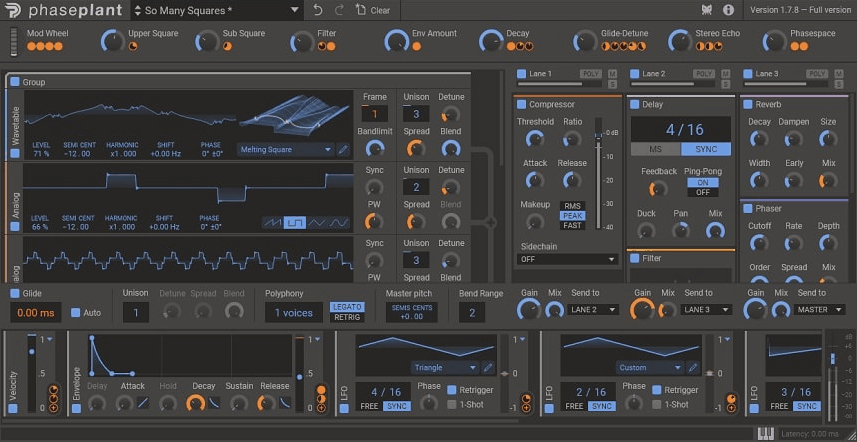
Phase Plant is a modular synth that gives you the potential to have unlimited LFOs, envelopes, and effects chains. Great if you are looking for sound design synth and all-in-one solution.
You start with an empty canvas and add whatever components you need: oscillators, samplers, noise generators, filters, distortion, modulators, and even utility tools for signal routing.
I think what’s cool is that you can add as many analog-modeled, wavetable, or sample-based oscillators as your CPU can handle, create strong parallel effects, and do insane modulations.
You’re not limited to traditional synthesis techniques. It lets you cross-modulate oscillators, apply audio-rate modulation, and even modulate your modulators for truly evolving and organic sounds.
- Multiple Synth Engines
You get Analog-modeled oscillators (Classic waveforms with unison and sync options), Wavetable synthesis, FM synthesis, Sampling, and Granular & noise synthesis synthesis engine, with which I had fun playing with.
- Limitless Modulation
What I love about Phase Plant and what I find lacking in many synths is that you can modulate any parameter in the synth and sack anything from LFOs, envelopes, and random generators, assign MIDI velocity, note pressure, or mod wheel to any control, and do a lot of crazy stuff.
Phase Plant is modular, deep, and doesn’t force you into a specific workflow. If you’ve ever wanted a synth where you’re in complete control, this is it.
Kilohearts Phase Plant is available in AU, AAX, and VST plugin formats and is compatible with macOS and Windows operating systems.
14. Image Line Harmor
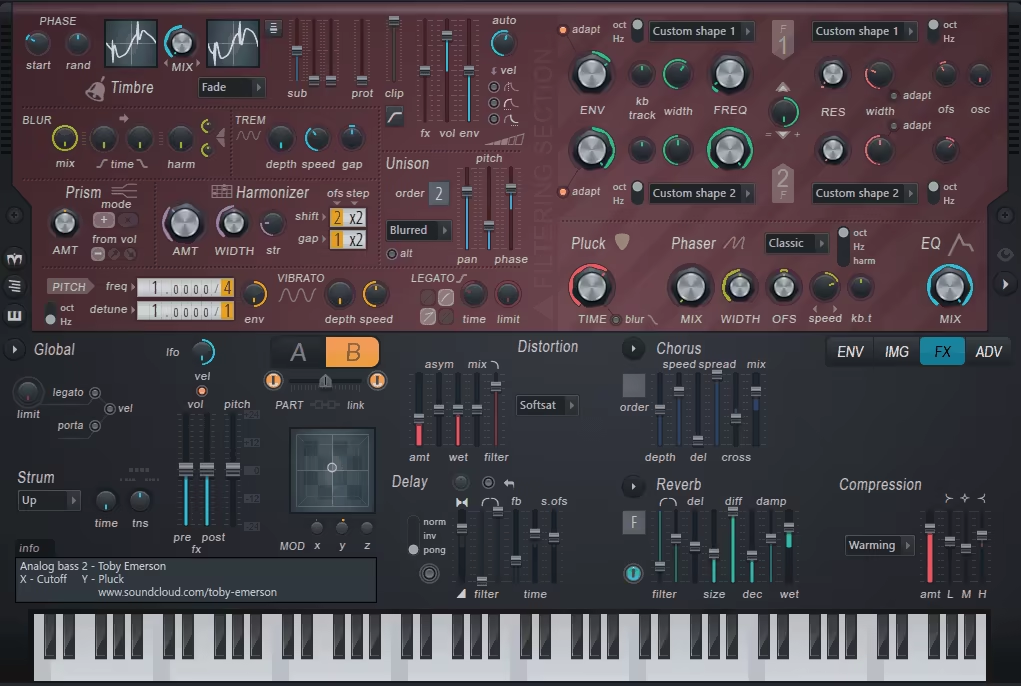
Harmor blends additive synthesis, resynthesis, and powerful modulation tools into one incredibly flexible instrument.
If you’ve ever struggled with FM or subtractive synthesis limitations, I recommend,Harmor, as it breaks those barriers, offering a fully customizable harmonic structure and image-based sound design like no other plugin.
It is essentially an additive synthesizer, meaning it generates sound by stacking hundreds of harmonics instead of traditional waveforms, and offers you a dual-layer engine, full harmonic control, and image synthesis. Meaning, you can load audio samples or even images into Harmor and manipulate them in mind-bending ways.
- Resynthesis: Turn Any Sound Into a Synth Patch
In my opinion, one of Harmor’s most mind-blowing features is its ability to resynthesize audio. Drag a vocal, instrument, or any sound into the image window, and Harmor analyzes and reconstructs it as an additive patch.
-
-
- Extreme sound manipulation: Stretch, filter, modulate, or even play different parts of a sample on different keys.
- Formant shifting: Morph vocals, instruments, or samples in wild, unpredictable ways.
- Time-warping: Control playback position in real-time, turning any sound into a dynamic, playable instrument.
-
- Modulation and Automation Made Easy
Harmor is packed with powerful modulation and automation tools, like the ability to create custom envelopes, multi-stage modulation, and dropping audio onto envelopes to convert rhythms, waveforms, or even entire drum loops into modulation shapes.
Another highlight for me is the real-time spectral display, giving instant visual feedback, making it easier than ever to fine-tune your patches.
Imagine Line Harmor works only with FL Studio and is compatible with both Windows and Mac operating systems.
15. Matt Tytel Vital
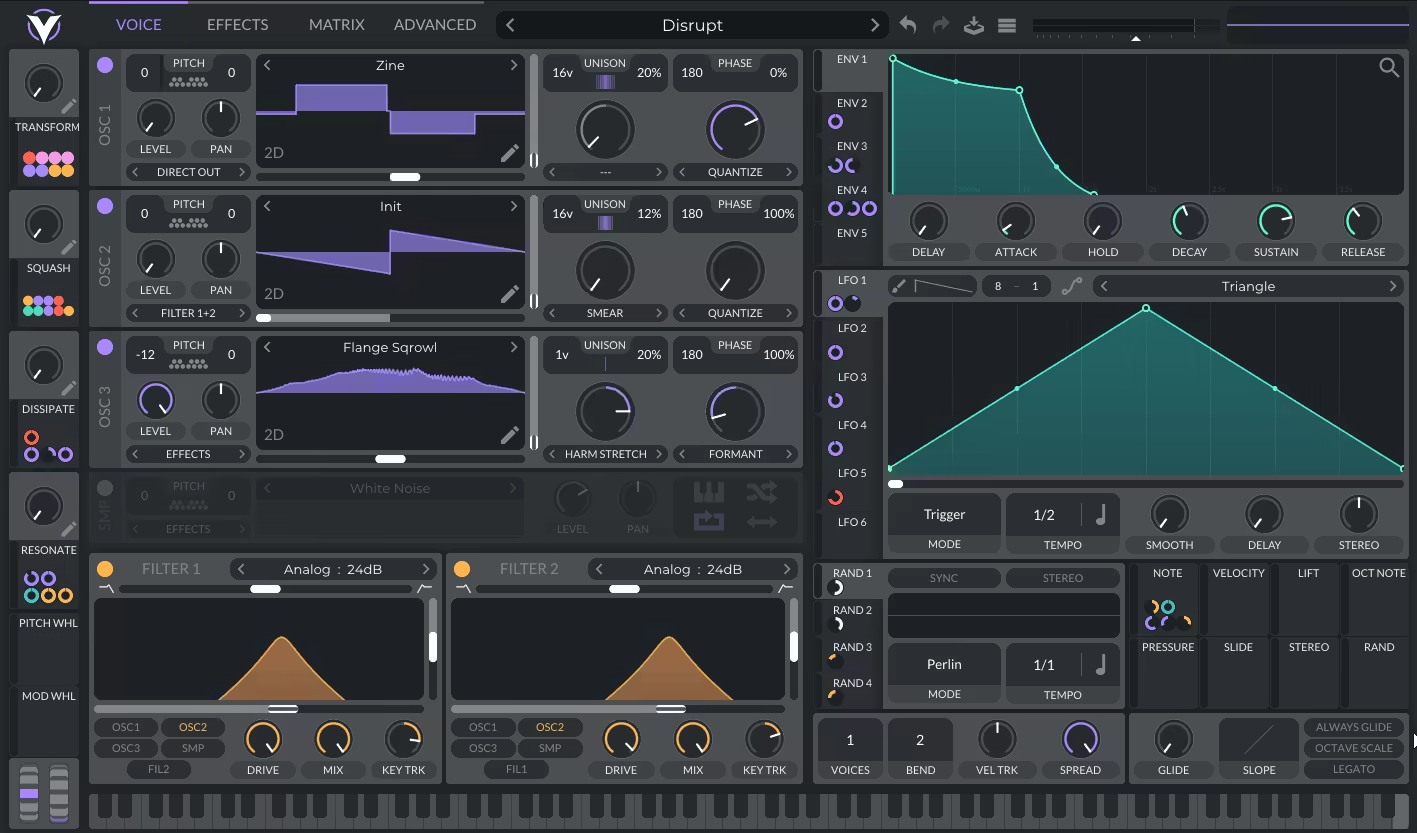
If you’re looking for a powerful, high-quality wavetable synth that’s completely free, Vital by Matt Tytel is a no-brainer.
It’s been called and marketed as the “Serum killer,” and for good reason, as it offers insane visual feedback, deep modulation capabilities, and a smooth workflow, all without the hefty price tag.
- Intuitive Workflow
Dragging and dropping modulation is second nature in Vital, and you don’t have to dig through confusing menus to get things moving. The 3 wavetable oscillators are clean and flexible, and the fact that I can warp, bend, and stretch waveforms in real-time keeps the sound design feeling fresh.
The wavetable editor is at the next level, too. Instead of just tweaking presets, I can draw in my own waveforms or even generate completely new ones, which makes it feel like I’m sculpting sound from scratch.
- Flexible Modulations
The plugin lets you drag LFOs, envelopes, and macros onto almost any parameter, just like in Serum, and the synth instantly shows you exactly what’s changing.
It’s one of those small design choices that makes a massive difference in how quickly I can get the sound I want. I also love that I can modulate modulators, which leads to some seriously evolving, dynamic patches that feel alive.
- Clean Sound
The built-in filters and effects are another highlight, as the formant and phaser filters are perfect for getting those gritty, vocal-like textures, and the distortion and delay effects add a ton of depth without needing extra plugins. Even better, Vital doesn’t introduce unwanted aliasing or noise, meaning the sound is pristine and professional no matter how much I push it.
Matt Tytel Vital is available in AU, AAX, CLAP, and VST plugin formats and is compatible with macOS 10.12 or later, Ubuntu Linux 18.04 and above, and Windows 10+ operating systems.
16. Audio Damage Quanta 2
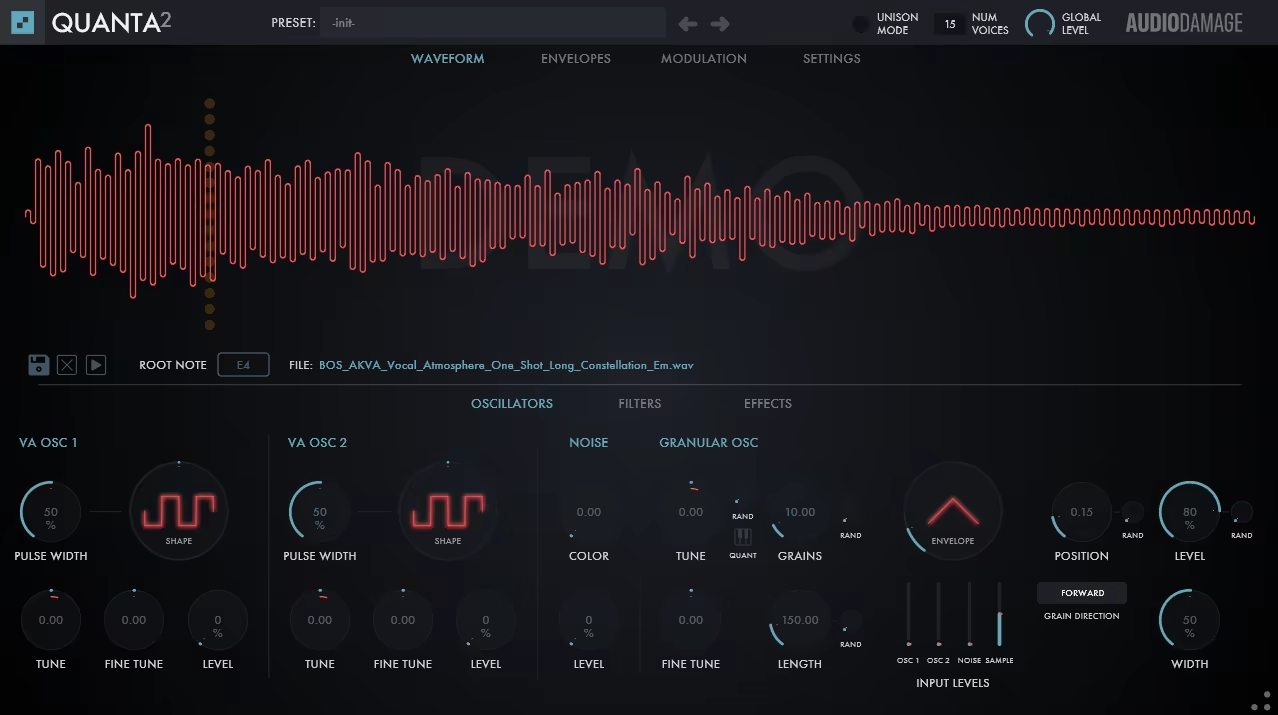
I’ve used a lot of granular synths over the years, but Quanta 2 by Audio Damage immediately stood out as one of the most intuitive and creative sound design plugins I’ve come across.
Granular synthesis can sometimes feel like a black box, but Quanta 2 gives real-time visual feedback and deep modulation options, making it incredibly easy to shape and manipulate samples in ways I didn’t think were possible.
- Keep the grains in tune
For example, one intuitive feature I found is root note detection.
As soon as I drag a sample into Quanta 2, it automatically analyzes and adjusts the pitch, ensuring that it plays in tune with my project. This might sound like a small detail, but if you’ve ever worked with granular synths, you know how helpful this can be, as it takes nothing for the grains to get detuned.
The addition of a second virtual analog oscillator is another major upgrade, allowing me to blend classic synthesis with granular textures for some truly unique hybrid sounds.
The granular engine itself is incredibly flexible. I can control grain density, length, and randomness to go from rhythmic, glitchy stutters to lush, shimmering textures with just a few tweaks.
- Top-notch Modulation System
It includes LFOs, looping envelopes, and function generators, all of which can be synced to tempo and modulated in real time. The visual modulation indicators make it incredibly easy to see what’s happening, and the ability to modulate modulation sources themselves opens up a whole new level of sound design.
It’s like having a built-in motion sequencer for every parameter, and it makes evolving, organic sounds feel effortless.
Audio Damage Quanta 2 is available in AU, AAX, and VST 3 plugin formats and is compatible with macOS 10.12 or later and Windows 8 or newer operating systems.
17. AIR Sub Factory
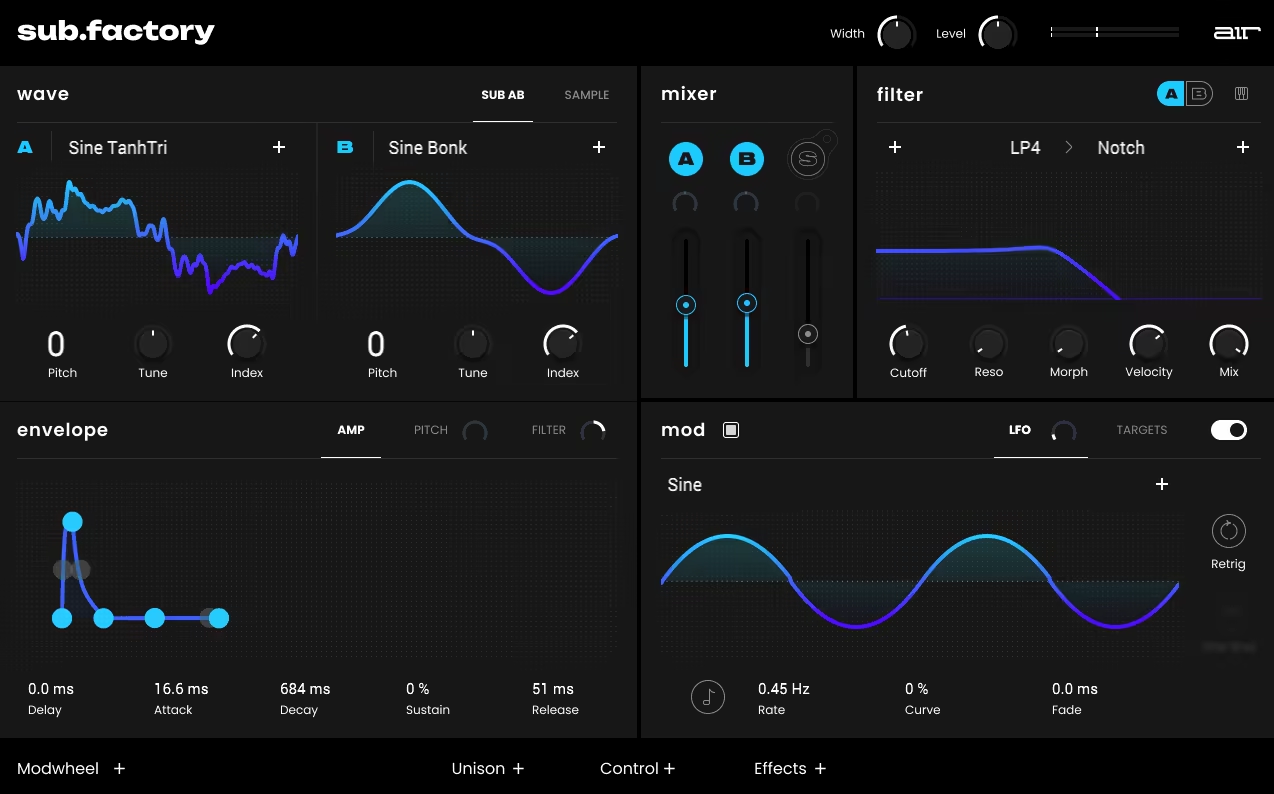
If you’ve been on the hunt for a solid sub-bass synth that delivers deep 808s, punchy low-end, and rich wavetable textures, AIR Sub Factory can be the end of your search.
At first glance, Sub Factory‘s interface is simple and easy to navigate and gives you two wavetable oscillators, a sample layer, and plenty of filtering, modulation, and effects options.
- Credible Sound Sources
The oscillators are packed with high-quality waveforms, including classic analog-style shapes, spectral wavetables, vowel morphs, and FM sounds.
I gotta say, the sample layer is also a great addition, so you can stack percussive transients or textures on top of my basses for extra character. I found myself layering subtle kicks, noise, and clicks to help my subs cut through in a mix.
- Sufficient Processing Options
The filters are surprisingly flexible, offering dual-stage filtering with a morphing option, which allows for some really creative shaping of bass tones. I love how I can blend low-pass, notch, and phaser-style filters to get some truly unique movement in my bass sounds.
Modulation is solid, too, with LFOs, random generators, and multiple envelopes that are quick to set up and easy to tweak.
One of my biggest gripes? It’s monophonic.
While that makes sense for sub-bass duties, I found myself wishing for a polyphonic mode to use these wavetables for pads, leads, or synth stabs. There’s also no option to load custom wavetables, which would have made this an even more powerful tool.
That being said, the included waveforms are fantastic, so I didn’t feel too limited, but it’s something to consider if you’re used to synths like Serum or Massive.
AIR Sub Factory is available in AU, AAX, and VST 3 plugin formats and is compatible with macOS 12 Monterey – macOS 14 Sonoma and Windows 8 or newer operating systems. It’s also compatible with the MPC machine, and you can also run it as a standalone instrument plugin.
18. iZotope VocalSynth 2
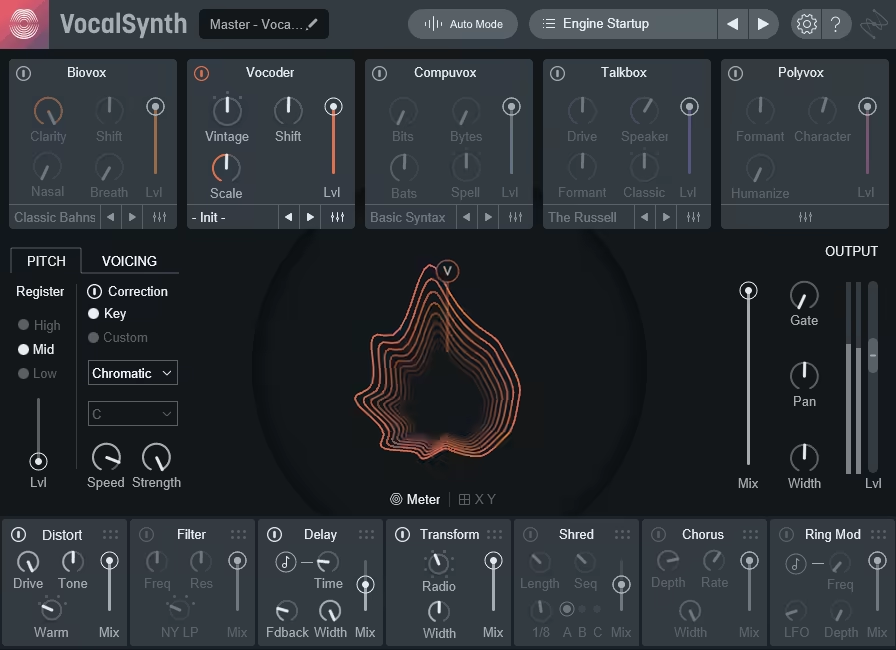
VocalSynth 2 is an unique sound design plugin that enables me to bring many creative ideas to life by using just my vocals and morph, harmonize, and completely transform them into robotic textures, lush harmonies, glitchy stutters, or even synth-like leads.
If you’re into Daft Punk-style talkbox effects, futuristic vocal chops, or gritty industrial vocals, you’d be delighted to use VocalSynth. The plugin is built around 5 main vocal engines: Vocoder, Talkbox, Polyvox, Compuvox, and the new BioVox module.
BioVox uses a model of the human vocal tract to add formant shifting breathy textures and synthetic clarity enhancements that make vocals feel more organic or robotic, depending on how you tweak them.
The formant shifting, nasal control, and breath settings alone can totally reshape a vocal performance without making it sound too artificial.
- Easy Processing Workflow
The plugin also lets you reorder effects just by dragging and dropping. That makes a huge difference because signal chain order completely changes the sound.
For example, I tried running the vocoder before the talkbox and that gave me a totally different texture than the other way around, and I love experimenting with that.
There are also effects like chorus, ring mod, and an overhauled shred effect (which chops up the audio in a rhythmic, glitchy way).
The chorus is great for widening harmonies, and the ring mod adds a metallic, alien-like texture that works really well on experimental electronic vocals.
- Synth Modes
Another standout feature for meis how VocalSynth 2 can be used in 3 different modes: Auto, MIDI, and Sidechain.
I think Auto mode is the easiest. Just drop it onto a vocal track and start tweaking. But the real fun begins when using MIDI mode, which lets you play harmonies and chords on a keyboard to control the vocal processing in real-time.
It’s ideal for creating rich, layered vocal harmonies that follow my MIDI notes. The sidechain mode is also cool as it allows you to feed any instrument into VocalSynth and apply the processing to it.
iZotope VocalSynth 2 is available in AAX, AU, and VST2/3 plugin formats and is compatible with macOS Big Sur (11.7.9), macOS Monterey (12.6.8), macOS Ventura (13.5), macOS Sonoma and Windows 8 or newer operating systems.
19. ROLI Equator 2
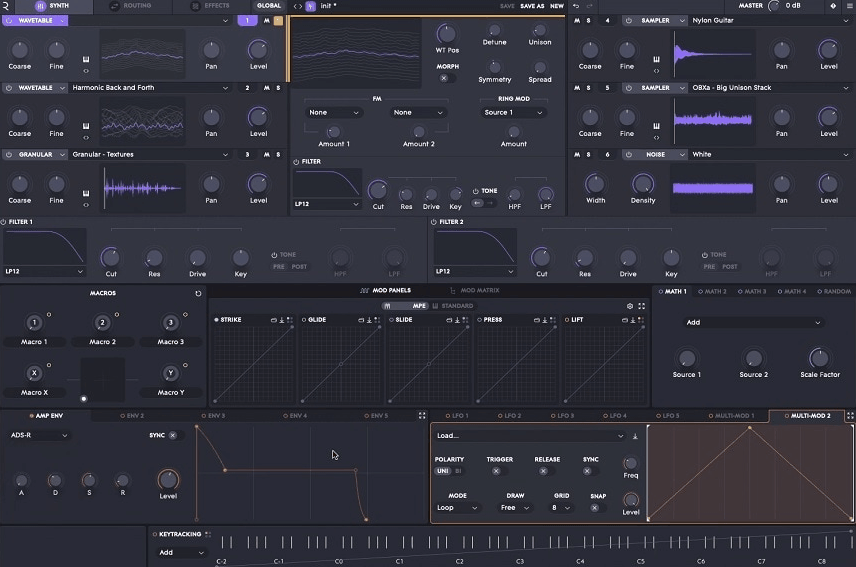
Equator 2 includes over 40 sampled instruments, covering everything from classic analog synths (OB-Xa, Juno-6, Pro-One) to orchestral instruments, world sounds, and even a beautifully recorded grand piano.
I love how it blends sample-based realism with full-on synthesis, giving me the best of both worlds. The synthesis engine itself is insanely flexible. You get six sound sources per patch, including wavetable, granular, and FM synthesis, plus the ability to load your own samples.
- Modulation System
The modulation system is equally deep, letting you assign LFOs, envelopes, and expressive gestures to almost any parameter. And if you’re using an MPE (MIDI Polyphonic Expression) controller like the ROLI Seaboard, this synth truly comes to life, responding to pressure, slides, and subtle finger movements in a way that makes every note feel alive.
Featuring a re-routable effects section with 15 high-quality effects, plus an extensive modulation system with LFOs, envelopes, expression curves, and random generators, Equator 2 offers huge potential for unique sound design.
- Relatively light on CPU
Despite its huge sound engine, Equator 2 runs surprisingly smoothly on my system. I’ve had multiple instances loaded up in a project without any major CPU spikes, which is impressive given the quality and complexity of the sounds.
- Unmatched Expressiveness with MPE Integration
Designed for MIDI Polyphonic Expression (MPE), Equator 2 lets you modulate any parameter with intuitive gestures, making it the perfect match for controllers like the ROLI Seaboard and Piano M. Whether I’m shaping subtle pitch bends or expressive dynamics, it delivers an unparalleled level of control and realism.
ROLI Equator 2 is available in AAX, AU, and VST2/3 plugin formats and is compatible with macOS 11/12 and Windows 10 or newer operating systems.
20. Waldorf Microwave 1
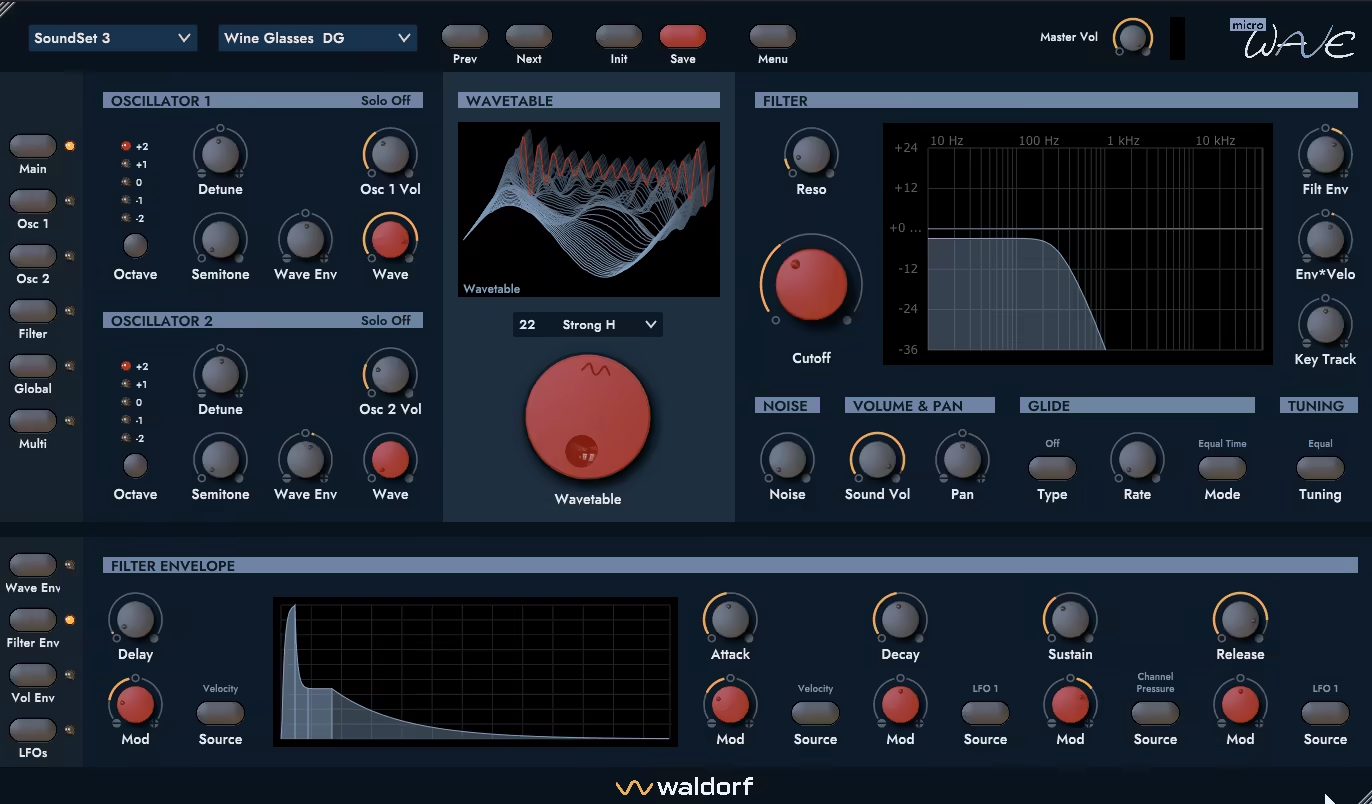
The Waldorf Microwave 1 Plugin is a faithful recreation of the legendary late-’80s Microwave 1 hardware synthesizer, bringing its distinct hybrid wavetable synthesis and analog filtering into the modern DAW environment.
Having spent some time with it, I can confidently say that this plugin captures the gritty, evolving textures and unique character that made the original a sought-after synth. For example, I love that it adds convenient digital workflow changes like Wavetable Editor, which wasn’t available in the hardware version.
That allows for detailed customization of waveforms, including the ability to edit individual waves, create entirely new wavetables, and even use a random wave generator for unexpected results. While the original Microwave was known for its one-wavetable-per-oscillator limitation, it would have been nice to see an option to run multiple wavetables per oscillator, similar to modern wavetable synths.
- Curtis filter emulation
This filter faithfully reproduces the warm, analog-like filtering of the original hardware. The developers even modeled the “ducking” behavior of the Microwave 1’s filter, which contributes to its distinctive, punchy sound. This, combined with its multi-timbral capabilities, makes it easy to layer sounds, split zones across the keyboard, or create velocity-triggered layers.
- Satisfactory Preset Library
While the interface is clean and simple, staying true to the original without unnecessary skeuomorphic elements, I do wish the preset browsing experience was a bit more streamlined. That said, the factory library includes both original Microwave 1 sounds and new modern patches.
ROLI Equator 2 is available in AAX, AU, and VST plugin formats and is compatible with macOS and Windows operating systems.
Where can I learn sound design?
If you’re just starting, YouTube is a goldmine of tutorials covering everything from subtractive synthesis to advanced sound manipulation techniques. Platforms like Skillshare, ADSR Sounds, and Masterclass offer structured courses that dive deeper. Personally, I’ve learned the most by deconstructing presets in synths like Serum or Pigments, tweaking parameters, and figuring out how things work.
Just pick up a synth or tool, learn about it from different sources, take up a project, or start experimenting.
How does sound design differ from music composition?
Sound design focuses on creating and manipulating individual sounds, whether it’s a synth patch, a cinematic effect, or an alien texture. Music composition, on the other hand, is about structuring those sounds into a musical piece with melody, harmony, rhythm, and arrangement. Think of it this way: sound design gives you the palette, while composition is the painting.
In more direct terms, sound design forms the sonic identity, and composition shapes the musicality.
