
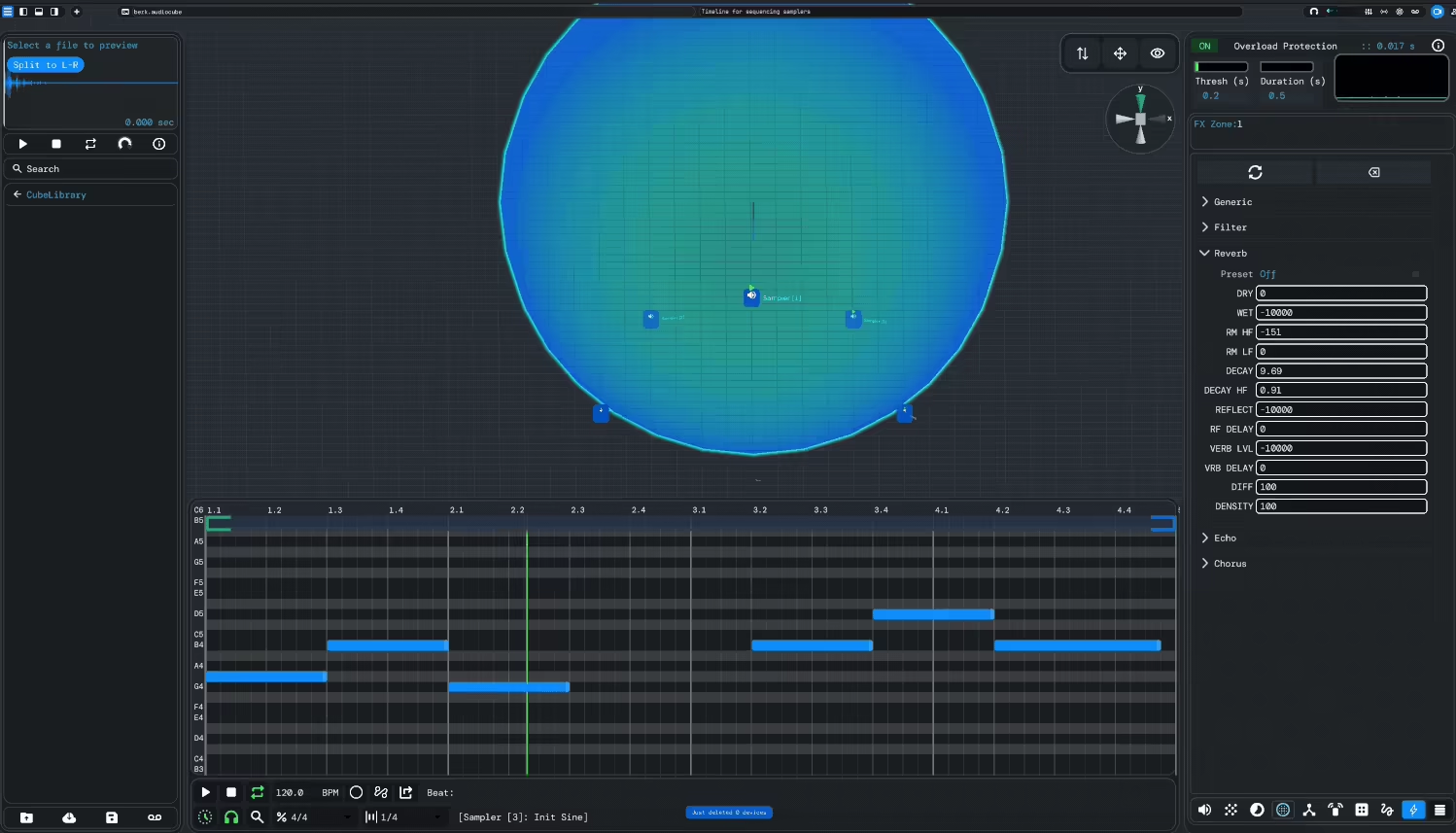
Audiocube is a standalone 3D DAW that transforms music creation with immersive spatial audio, generative devices, and a full MIDI timeline. Perfect for sound designers, composers, and experimental musicians, it offers a complete production suite including mixing, mastering, and a 2GB+ sample library, all within an intuitive 3D environment.
Price
Pros
- True 3D sound design for audio creation
- Generative devices offer endless experimental possibilities
- Ripple spatial engine provides realistic reflections, occlusion, and binauralization
- Integrated MIDI timeline for sequencing Samplers, Emitters, and Logic Boxes
- All-in-one production suite with mixing, mastering, and 2GB+ sample library
Cons
- Steeper learning curve for traditional DAW users
- Complex projects may take time to master fully
- Some advanced features still in development
If you’ve ever wanted your DAW to be more fun and feel more like a physics sandbox than a spreadsheet, Audiocube is exactly that kind of playground.
Instead of being locked into the usual grid of piano rolls and mixer lanes, it throws you into a world of emitters, sound walls, and ripple-like devices that react to one another. The result feels part synth, part experiment, and part game engine.
When I first loaded it up, it wasn’t about choosing presets or tweaking filters; it was about setting things in motion and watching sounds collide, bounce, and transform. Within minutes, I had samplers playing off bouncing particles, reverbs filling an imaginary room, and whole textures that honestly felt like they were building themselves. It was more “physics lab meets studio” than anything I’ve seen before.
What really hooked me was how quickly the demo spiraled into something musical. One minute I was spamming emitters just to see what would happen, the next I had this evolving, rhythmic soundscape pulsing in time with a sequencer and soaking in spatial effects. It’s experimental, sure, but also surprisingly usable for ambient, cinematic, or generative music.
| Feature | What It Does | My Take |
| Samplers | Load sounds, tweak controls, and process with built-in effects | I loved how fast it was to drag in samples and instantly start mangling them without extra plugins. |
| Emitters | Physics-based devices that “shoot” notes which trigger sounds when they hit something | Honestly the most fun part, I felt like I was playing a game and composing music at the same time. |
| Tickers | Steady “pulse engines” that send out constant triggers at adjustable intervals | Perfect when I wanted something more structured instead of chaotic emitter spam. |
| Sound Walls | Spatial audio modules that simulate reflections, occlusion, and room acoustics | The way these built an imaginary room around my sounds was wild , it felt 3D straight through my headphones. |
| Effect Zones | Areas you drop in that apply extra processing (reverb, flanger, echo, etc.) | I kept moving sounds in and out of zones just to hear how they morphed , it’s addictive. |
| Sequencer | Provides more traditional timing and control over devices | Super handy when I needed something grounded to keep the chaos musical. |
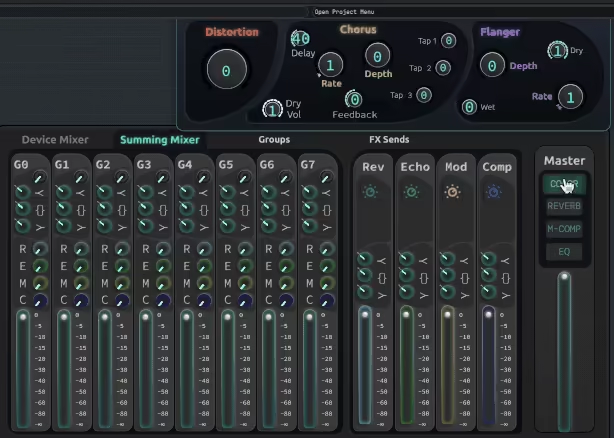
| Built-in Effects | Includes reverb, echo, flanger, mastering tools, and more | The FX stack isn’t just filler , I actually got some polished textures without leaving Audiocube. |
| Recording | One-click record to capture your whole session and export | I found it reassuring that all the randomness could be locked down into a usable take. |
| Themes | Visual customization for the interface | A small touch, but it made the workflow feel more personal and less sterile. |
Features
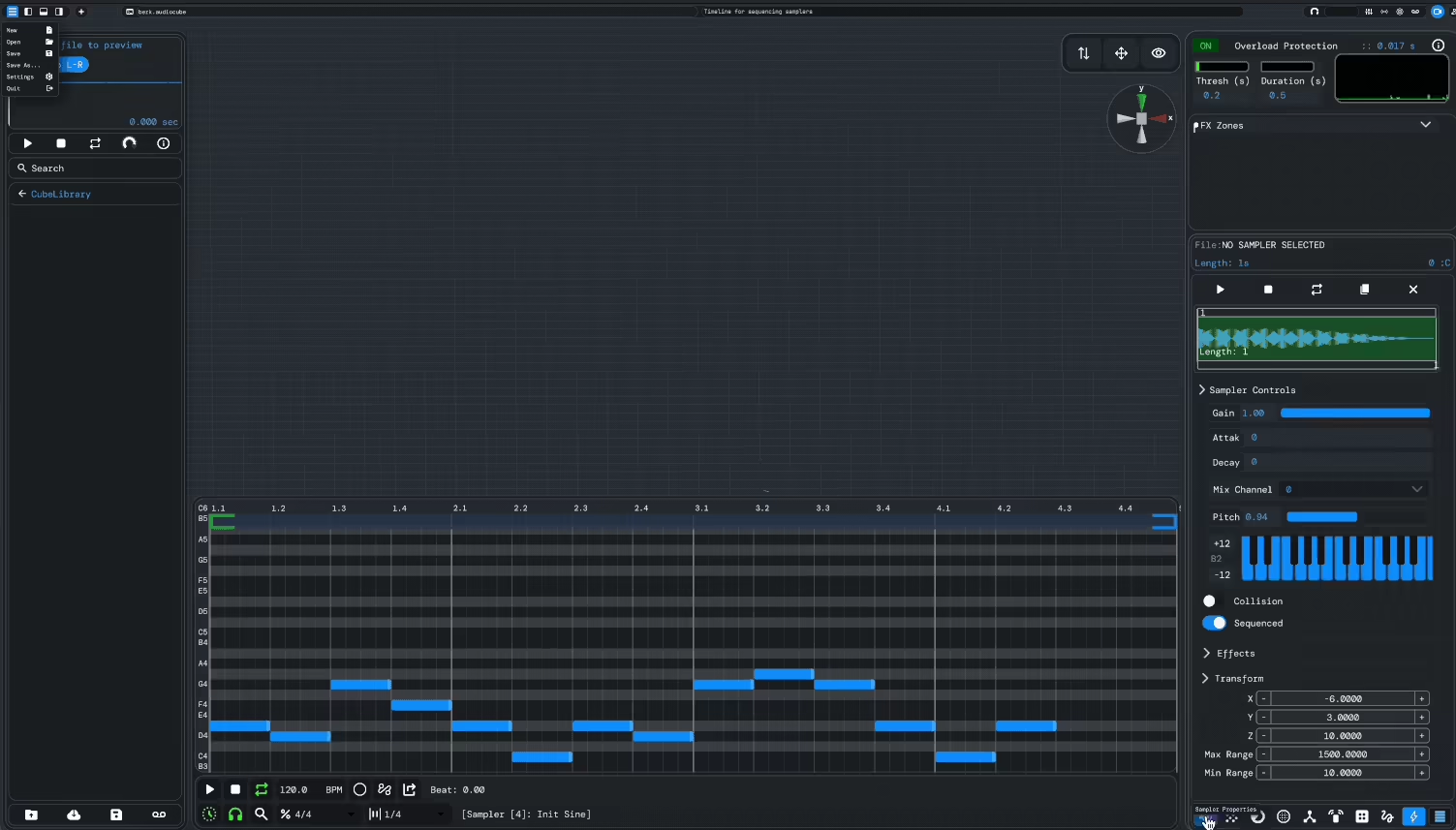
- Samplers
The samplers are where I started, and they instantly felt familiar but more playful. I could load up a sound, tweak filters, envelopes, and layer effects without ever feeling bogged down. The fact that I can clone samplers and move multiple devices together makes it easy to build something complex in just a few clicks.
- Emitters
This was the first time I felt like I was making music physics. Emitters literally throw out sound triggers that collide with objects, and every hit creates a tone or sample playback. It’s unpredictable in the best way, and I’ve caught myself laughing at the happy accidents it creates.
- Tickers
If emitters are chaos, tickers are order. They act like engines that spit out constant pulses at a rate I decide, perfect for creating rhythmic frameworks. I’ve used them to lock in grooves while the emitters go wild in the background, and the combo makes things feel alive.
- Sound Walls
Sound Walls honestly blew my mind. They let me simulate spatial audio environments, with reflections and reverb that make it sound like I’ve dropped my track inside an actual room. Turning up reflections or messing with occlusion instantly transforms the mood, and it’s addictive to play with.
- Effect Zones
These zones are like playgrounds for sound. I drop a sample or trigger inside one, and suddenly it bends, warps, or transforms depending on the effects I’ve stacked. It’s hands-on in a way that feels more like sculpting than mixing, and it pushes me to experiment more than I normally would.
- Sequencer
The sequencer ties everything together. I love how it gives me just enough control to structure ideas without boxing me into rigid grids. It’s not your standard DAW sequencer; it’s lighter, more experimental, and honestly feels like a sketchbook for sound.
- Built-in Effects
AudioCube comes with a ton of built-in effects, reverb, echo, flanger, and more, that slot right into any device. I don’t need third-party plugins to get creative textures. It’s all right there, and I can push sounds from clean to absolutely spaced-out in seconds.
- Recording & Export
When I hit record, everything I’ve built gets captured instantly, and exporting is painless. I’ve found it super satisfying to jam with emitters and tickers, then play it back like I’ve just recorded a live performance. It makes the whole process feel organic rather than clinical.
- Themes
This one surprised me. AudioCube has multiple visual themes. At first, I thought it was just cosmetic, but switching to a darker palette or a brighter layout really changes the vibe of my workflow. It’s small, but it makes long sessions more fun and less fatiguing.
Interface & Workflow
Interface
When I launched AudioCube, I was immediately struck by how modern and visually engaging the interface feels. Unlike traditional DAWs, which can look like a sea of grids and sliders, AudioCube presents a clean, almost futuristic 3D workspace. The windows are fully resizable, and the glassy UI elements with subtle transparency make everything easy to read while still feeling open and spacious.
I especially love the drag-and-drop design. Importing audio or MIDI files is effortless; I can literally grab a file from my desktop and drop it into the workspace, then instantly see it appear as a new device in my 3D environment. Navigation is intuitive too: zooming, rotating, and moving around the 3D space feels smooth and natural, making it easy to keep track of multiple sound sources at once.
Another thing that impressed me was the visual feedback from the devices themselves. Samplers, emitters, and logic boxes all respond dynamically in the 3D space, giving me a clear picture of how audio is interacting with its environment. The interface doesn’t just look nice; it actually communicates information in a way that helps me make better creative decisions faster.
Workflow
Once I started experimenting, I quickly realized that AudioCube isn’t just visually appealing; it fundamentally changes how I approach creating music. The workflow feels playful yet precise, letting me balance exploration with control. I can quickly place emitters, sound walls, and effect zones, then watch them interact in real time. It’s almost like sculpting sound in a virtual world.
The sequencer and MIDI editor integrate seamlessly into this 3D environment. I can create detailed patterns for samplers, emitters, and logic boxes, then immediately hear how they behave in the spatial context. Looping sections, duplicating notes, or fine-tuning timing is straightforward, and it never feels clunky like some traditional DAWs do when handling multiple devices.
Recording and playback are just as smooth. I can perform directly with the devices, hit record, and capture everything exactly as it happens. Even complex generative setups feel manageable, thanks to the visual clarity of the 3D workspace and the way AudioCube organizes devices and connections.
What I love most is the balance between precision and experimentation. If I want structured sequences, tickers, and logic boxes let me lock in timing and interactions. But if I just want to explore, I can unleash emitters and physics-driven nodes to create evolving textures that surprise me every time. The workflow encourages me to experiment, improvise, and discover new sonic possibilities without ever feeling lost.
First Impressions & Sound
The first time I opened AudioCube, I felt like I’d stepped into a completely new world of sound after years of my Logic experience. The 3D environment is immediately captivating, instead of staring at flat timelines or static tracks, I could place audio sources anywhere in space and literally “see” my music taking shape. I spent the first few minutes just moving samplers and emitters around, watching nodes collide, trigger sounds, and react to physics; it felt more like playing an instrument than using a DAW.
I started with a simple percussion loop, placing emitters across the virtual room and adjusting their gravity and collision behavior. The result was instant: evolving rhythms that felt organic and alive, like the sounds were performing themselves. Layering in a sampler with reverb and a subtle delay added depth, and I was amazed at how natural everything sounded; even complex interactions didn’t feel cluttered or artificial.
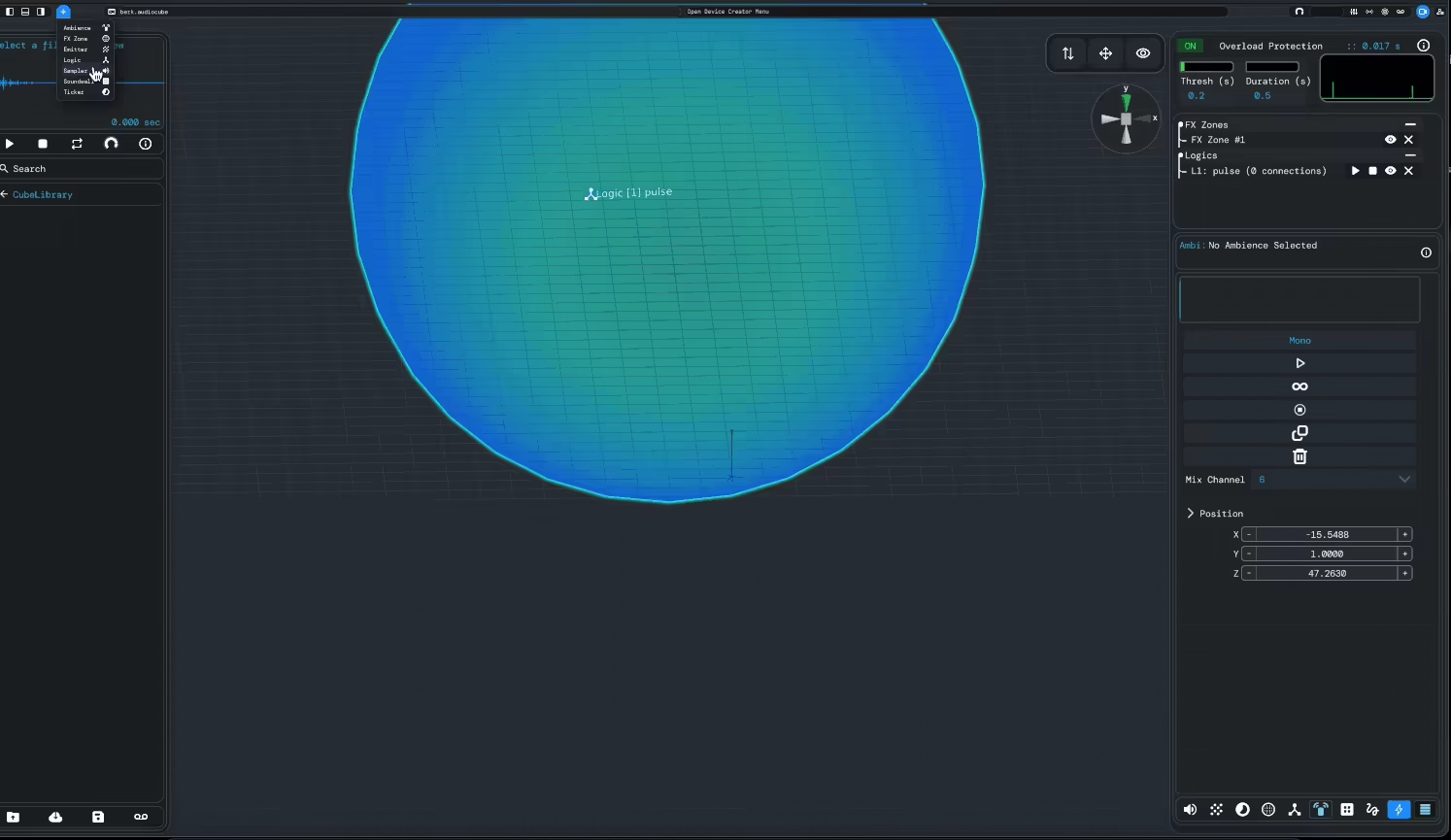
Next, I experimented with the Soundwalls and Effect Zones. By shaping a small virtual room with reflective walls and placing a few ambient sound emitters, I could hear the spatialization in real time. The acoustic simulation is astonishingly realistic: reflections, occlusion, and distance filtering made the environment feel tangible. I could hear each sound from every angle, and turning on HRTF-binauralization over headphones created a sense of presence that genuinely blew me away.
Moving on to generative setups, I combined tickers, logic boxes, and emitters to create evolving soundscapes. I loved how unpredictable the results were, sometimes chaotic, sometimes perfectly rhythmic, yet always musically interesting. I kept adjusting parameters, rotating devices, and tweaking paths, and every small change gave me new textures I hadn’t anticipated. It’s rare to find a tool that encourages both structured composition and spontaneous experimentation at the same time.
When I added a melodic sampler over the generative patterns, the depth and movement were immediately apparent. Using the 3D space as a compositional tool gave me control over stereo width, height, and distance, making my mixes feel immersive without any extra processing. Even exporting the final WAV maintained all of the spatial integrity, so my headphones captured exactly what I intended.
AudioCube doesn’t just sound good; it makes you think differently about music creation. Whether I’m crafting generative textures, composing in the MIDI editor, or fine-tuning a fully spatialized mix, every session feels like an experiment with endless possibilities. It’s precise, playful, and inspiring all at once, and I found myself losing hours just exploring what each device could do.

Performance & Compatibility
AudioCube is designed to run efficiently across multiple platforms while handling complex 3D audio projects with ease. During my testing, even large sessions with multiple emitters, samplers, and effect zones barely nudged my CPU.
The standalone application architecture means you don’t have to worry about plugin compatibility issues, and the optimized native builds for Windows, macOS (including Apple Silicon), and Linux ensure smooth performance across systems.
The software’s spatial audio engine, MIDI sequencing, and physics-driven generative devices all run in real time, which makes experimenting with evolving soundscapes and full 3D environments practical without overloading your machine.
| Category | Details |
| Platforms | Windows, macOS, Linux |
| Supported Hardware | CPU: Intel/AMD multi-core or Apple Silicon; RAM: 8GB+ recommended; GPU: OpenGL compatible |
| Software Format | Standalone application |
| Import Formats | .WAV, .MP3, .MID, .audiocube (project files) |
| Export Formats | High-fidelity .WAV with full spatialization and binauralization |
| MIDI Integration | Full MIDI editor, import/export MIDI clips, external MIDI controller support |
| System Load | Efficient real-time processing; low CPU impact even with multiple devices and spatial effects active |
| Cross-Platform Performance | Native builds optimized for each OS; consistent behavior and real-time spatial audio fidelity |
AudioCube’s cross-platform optimization and efficient engine make it an excellent choice for musicians, sound designers, and experimental composers who want a fully immersive, spatially precise workflow without sacrificing performance.
Last Words
Audiocube isn’t just another DAW, it’s a full 3D audio playground. From the moment I started placing sounds in its virtual environment, I felt like I was stepping into a completely new way of creating music. The combination of generative devices, Ripple spatial engine, and intuitive MIDI timeline makes experimenting with sound genuinely fun and inspiring.
What I love most is the freedom to move beyond the flat, linear workflows of traditional DAWs. I found myself tweaking soundwalls, animating emitters, and exploring effect zones in ways I never imagined possible. Every project felt like a little sonic universe that I could shape and explore.
For anyone interested in spatial audio, experimental music, or generative sound design, Audiocube offers a toolkit that’s both deep and approachable. Whether you’re creating ambient soundscapes, composing complex sequences, or just playing around with 3D sound, this software turns ordinary projects into something extraordinary.
It’s not just functional, it’s inspiring, playful, and a true step forward in immersive audio creation.

Berk Öztuna, a musician from Istanbul, is skilled in handpan, percussion, and guitar, performing and recording his own compositions globally. With expertise in music production and audio technology, he integrates virtual instruments and sound design tools seamlessly into his work. He also writes insightful articles on music production and gear for platforms like Plugin Noise and shares his music on Spotify and Instagram.
DONATE: Love our content? Help us keep Plugin Noise alive in the age of AI — Your donation fuels better content for music creators like you! You can donate here: pluginoise@gmail.com (Every amount counts.)